

On This Day in AI: January 14, 2025
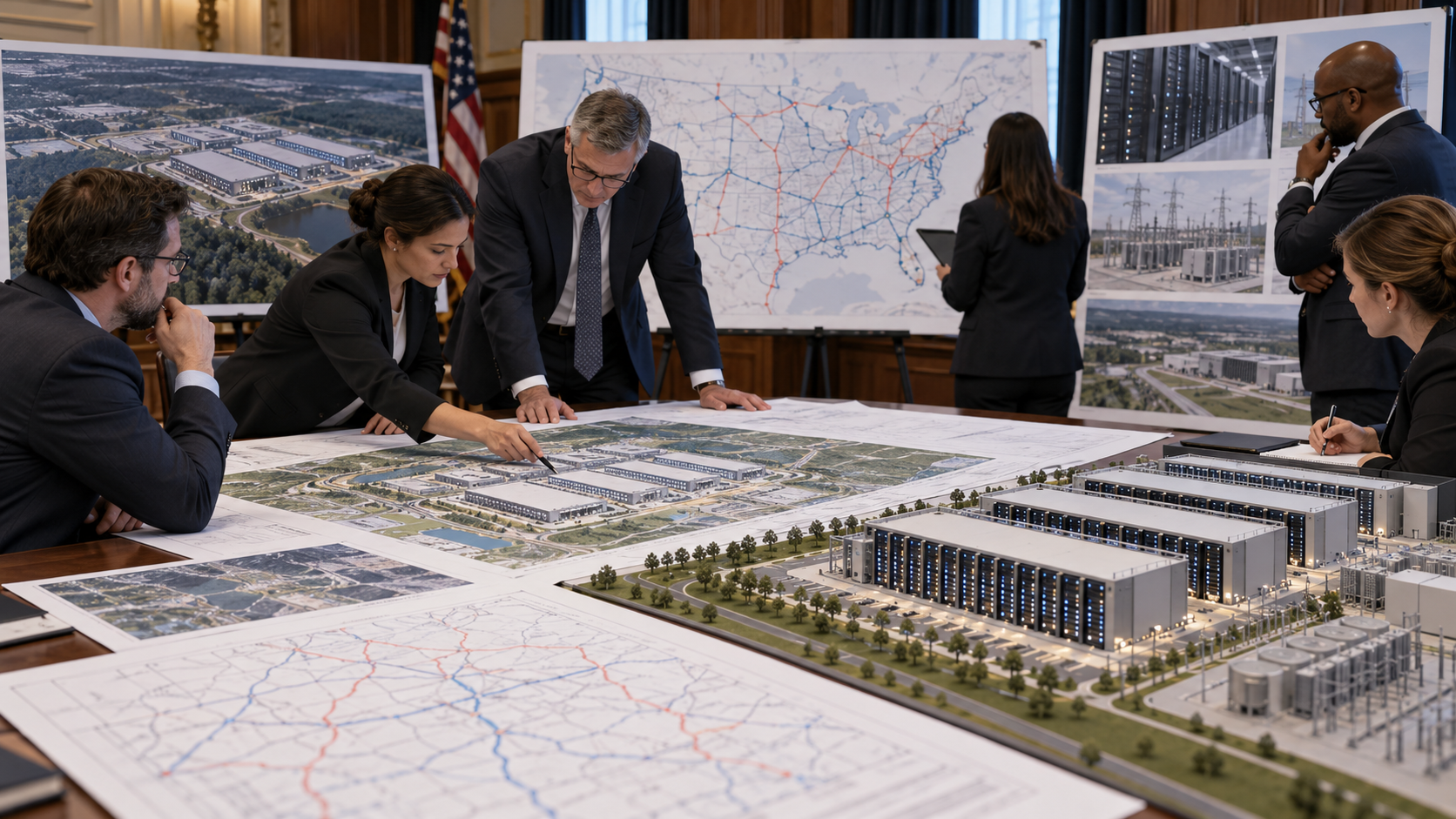
On January 14, 2025, in Washington, D.C., President Joe Biden signed an executive order directing federal agencies to accelerate development of large artificial intelligence data centers and new clean-power facilities on federal land. The order instructed the Departments of Defense and Energy to identify suitable sites and make them available through competitive leases. Developers using those sites would be expected to bring new electricity generation to the grid, cover construction and operating costs, and meet security and labor requirements. The administration framed the measure as a way to keep advanced AI infrastructure in the United States while preventing rapidly rising computing demand from simply drawing power away from households and existing businesses.
Training and operating frontier AI systems had begun to require enormous clusters of specialized chips, extensive cooling, and dependable electricity. Technology companies were planning campuses whose demand could rival that of industrial facilities, while utilities faced long queues for new generation and transmission. The order linked compute policy to energy policy: agencies were asked to streamline permitting, encourage geothermal, nuclear, solar, wind, and other clean resources, and protect sensitive systems from physical and cyber threats. It also called for strong environmental reviews, community engagement, prevailing-wage provisions, and attention to supply-chain security. Federal sites offered large parcels and existing government expertise, but any project still depended on technical studies, contracts, grid connections, and local conditions.
The January 14 action established a policy framework; it did not authorize one specific data center or produce immediate electricity. Because it arrived during the final week of the Biden administration, implementation would depend on later decisions by agencies and the incoming administration. That timing was an important limitation, as executive orders can be revised or replaced. The directive nevertheless captured a lasting shift in AI policy. Governments were no longer treating artificial intelligence only as software, research, or regulation. They were confronting the physical system beneath it: land, power plants, transmission, water, chips, construction labor, and secure facilities. The order also made clear that leadership in AI could create public costs if electricity and environmental planning lagged behind private demand. By tying access to federal land to new power resources and security conditions, the administration attempted to make infrastructure growth more deliberate. The event remains a useful marker of the moment when the scale of AI computing became a central issue in national energy and industrial strategy. Communities near proposed sites would still need credible information about jobs, noise, water, emissions, and long-term utility effects. Those local questions showed why national ambitions could not replace detailed planning or public accountability.
Large AI clusters combine specialized chips, cooling equipment, and round-the-clock electricity demand. Their scale can strain grid connections and compete with other planned uses.
The order treated power generation and computing capacity as one infrastructure problem rather than assuming utilities could absorb every new data-center request.
Defense and Energy were told to identify land for competitive leases. Developers would finance facilities and add electricity while meeting security, environmental, and labor conditions.
No project appeared automatically. Site studies, permits, contracts, community engagement, transmission, and generation still had to be completed.
The directive showed that AI leadership depends on land, energy, water, chips, construction, and secure operations as much as on models and software.
Its late timing made implementation uncertain, but the infrastructure questions it addressed continued across administrations and throughout the technology industry.
Explore more of "On This Day ..."
Discover more events from the same date across news, politics, technology, sports, and other fields. Each link highlights significant moments that shaped history on different fronts.