

On This Day in Pop: January 14, 1973
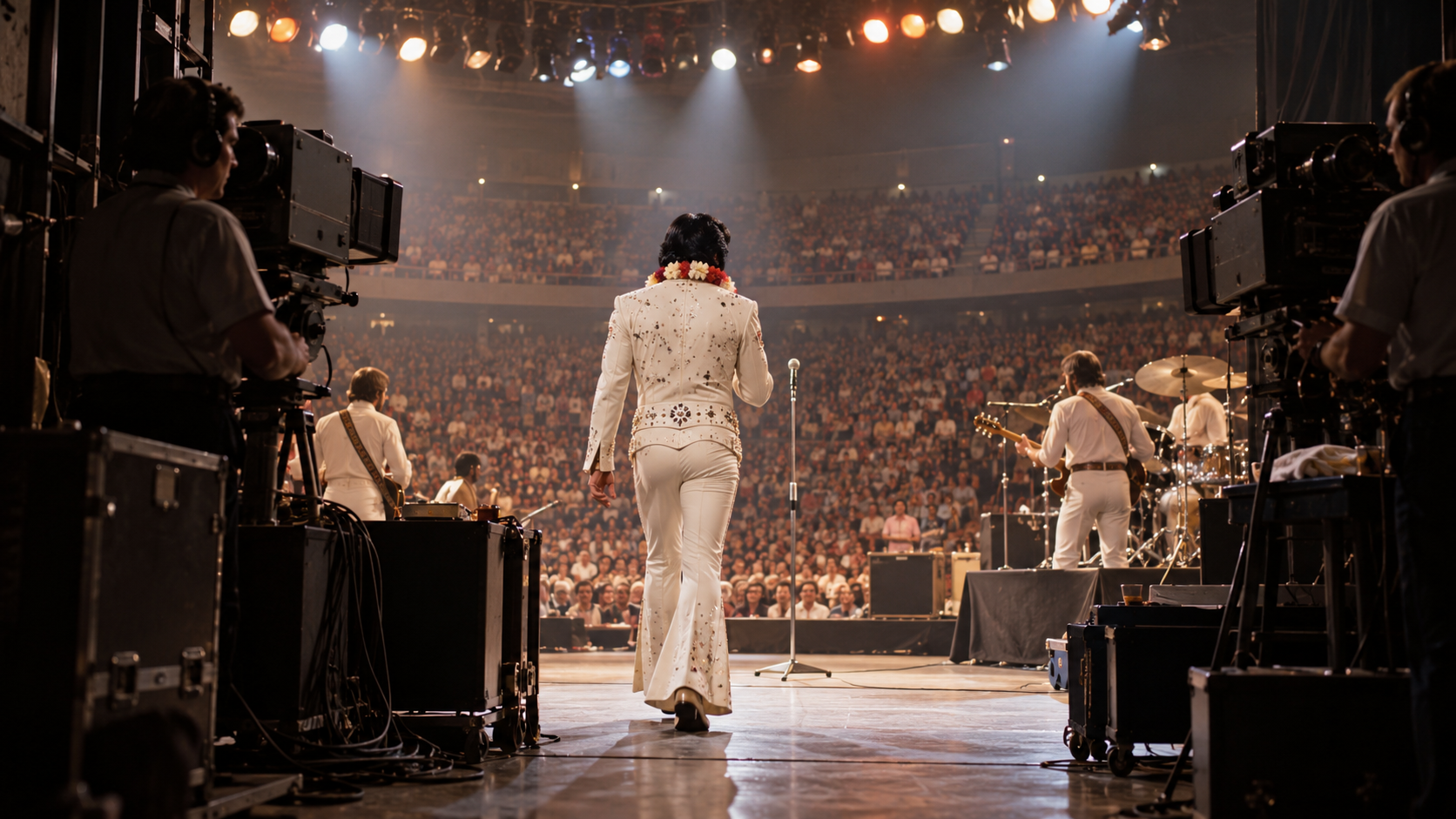
Elvis Presley walked onto the stage of the Honolulu International Center Arena shortly after midnight local time on January 14, 1973, for Aloha from Hawaii via Satellite. The concert was designed for television from the beginning. Producer Marty Pasetta arranged the arena, lighting and camera movement for a broadcast intended to reach audiences across the Pacific through satellite links. Presley wore the white American Eagle jumpsuit that became inseparable from the special and performed with his regular touring band, backing vocalists and orchestra. The program moved from “See See Rider” and recent hits to ballads, gospel-inflected material and familiar early songs, presenting a survey of his career rather than a simple Las Vegas set transferred to another venue.
The production was both global and carefully staged. A full rehearsal concert on January 12 provided backup material in case satellite transmission failed. The live program was seen as it happened in several Asian and Pacific markets, but not everywhere at once; the United States did not receive NBC’s expanded broadcast until April 4. Later publicity often repeated an audience of more than a billion viewers, a figure historians have questioned because international scheduling, population and television access make precise measurement impossible. The achievement does not depend on that number. In 1973, a concert broadcast across multiple countries by satellite still demonstrated a new scale for entertainment, turning a single arena performance into a coordinated international media event.
The special reached Presley at a complicated stage. He remained an extraordinary singer and commanding performer, yet his personal health and career management were becoming less stable. Aloha from Hawaii did not inaugurate live satellite television, and it was not literally watched by the entire world, but it pushed the form into pop spectacle. The broadcast joined music, costume, charity and communications technology in one tightly controlled image of stardom. Proceeds connected with the concert supported the Kui Lee Cancer Fund, while the televised performance and accompanying album renewed Presley’s presence on international charts. Its lasting importance lies in the template it offered: a concert could be planned as a worldwide screen event, with cameras, transmission paths and publicity as important to the experience as the seats in the arena. Decades of global benefit shows and livestreamed performances would build on that assumption. The broadcast also sharpened the template for later global entertainment specials, combining a star performance, satellite technology and an event-sized promotional campaign in one coordinated production.
The concert was staged for international television, with the arena design and camera plan developed around the needs of satellite transmission.
A rehearsal show two days earlier created backup material in case the live broadcast encountered technical trouble.
The January 14 feed reached Asian and Pacific markets first, while the U.S. broadcast followed in April with additional material.
Claims of more than a billion simultaneous viewers are disputed and should not be treated as a precise measured audience.
The special helped define the idea of the pop concert as a global television event rather than a performance limited to one venue.
Its white-suit imagery, charitable connection and international reach became central to Presley’s late-career public identity.
Explore more of "On This Day ..."
Discover more events from the same date across news, politics, technology, sports, and other fields. Each link highlights significant moments that shaped history on different fronts.