

On This Day in Pop: January 15, 1974
ABC premiered Happy Days on January 15, 1974, with “All the Way,” an episode centered on Milwaukee teenager Richie Cunningham and his anxious attempt to impress a date. Ron Howard played Richie, Marion Ross and Tom Bosley were his parents Marion and Howard, Erin Moran portrayed his sister Joanie, and Don Most played his friend Ralph. Henry Winkler appeared as Arthur Fonzarelli, initially a supporting motorcycle-riding character whose presence would soon expand. Created by Garry Marshall, the series had grown from a 1972 segment of Love, American Style. Its development also benefited from the success of the film American Graffiti, which demonstrated an audience for stories looking back at youth before the social upheavals of the later 1960s.
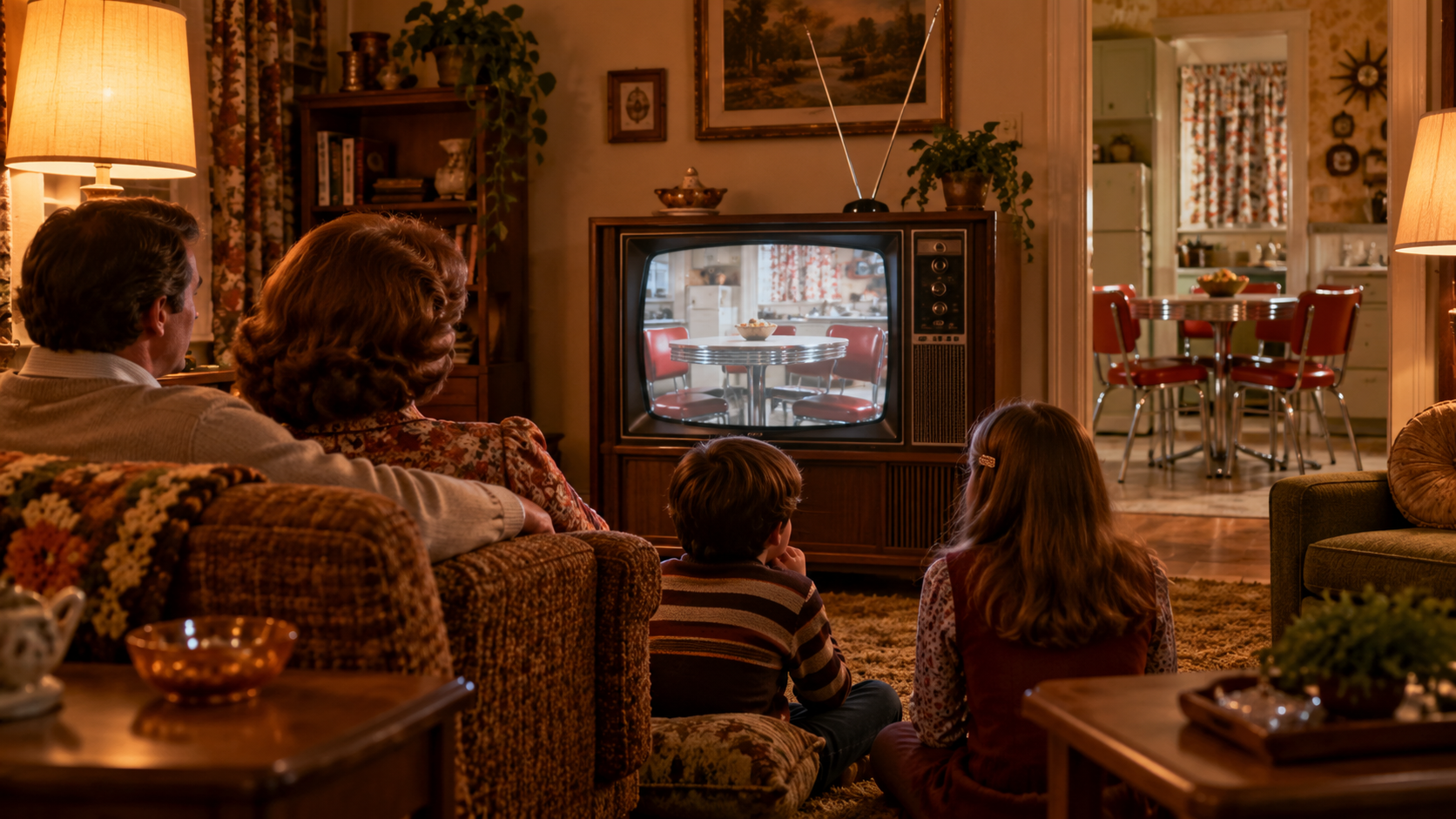
The premiere offered the 1950s less as documentary history than as a carefully arranged family memory. Chrome diners, varsity sweaters, jukebox music and clean suburban rooms created an accessible setting for stories about dating, friendship and generational rules. Howard’s unforced sincerity anchored the early episodes, while the Cunninghams’ kitchen and living room provided the stable household at the center of the show. The first season was filmed with a single camera and a laugh track, giving it a quieter look than the live-audience style it later adopted. As Winkler’s Fonzie became the breakout attraction, the program shifted toward broader comedy and made his leather jacket, thumbs-up approval and compressed vocabulary into national symbols.
Happy Days ran for 11 seasons and produced spinoffs including Laverne & Shirley and Mork & Mindy. Its enormous popularity influenced how television packages nostalgia: not as a neutral return to the past, but as a selective, comforting version shaped by the concerns of the present. The show premiered during a period of political distrust, economic strain and cultural conflict, which made its orderly households and solvable problems particularly inviting. That comfort could exclude realities of the 1950s that did not fit the format, including racial segregation and social inequality. Yet the series’ legacy also includes its durable ensemble, Marshall’s accessible comic storytelling and Winkler’s transformation of a stock tough guy into a character capable of loyalty and vulnerability. The premiere began a long conversation between television and nostalgia—one that continues whenever a recent decade is restaged as a simpler age. Its success showed how a sitcom could turn idealized nostalgia into a durable weekly world, inviting viewers to revisit an earlier America while speaking to contemporary family audiences.
The series developed from a Garry Marshall television pilot made before the success of American Graffiti revived interest in the 1950s.
Its first episodes emphasized Richie Cunningham’s family and friends, with Fonzie still a secondary figure.
Audience enthusiasm for Henry Winkler quickly changed the balance of the ensemble and the show’s comic style.
The program’s affectionate period setting was selective, presenting a safer and less diverse past than many Americans experienced.
Happy Days became the center of a major sitcom family that launched several spinoffs and strengthened ABC’s schedule.
Its approach remains a template for television nostalgia: recognizable objects, music and manners used to address contemporary hopes.
Explore more of "On This Day ..."
Discover more events from the same date across news, politics, technology, sports, and other fields. Each link highlights significant moments that shaped history on different fronts.