

Television Pilots Explainer
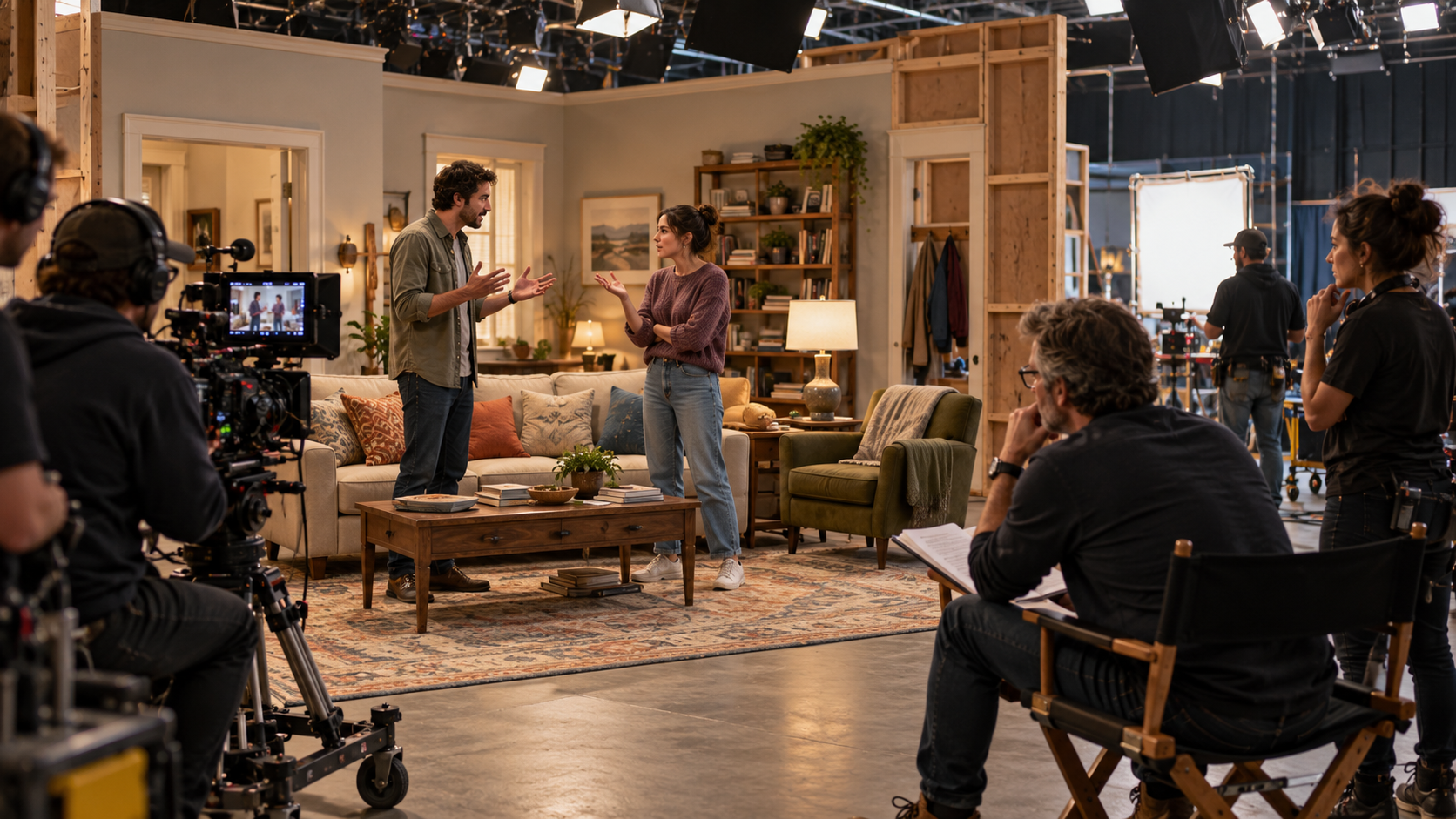
A television pilot is an episode produced to demonstrate the premise, characters, tone, and repeatable engine of a proposed series. Networks, studios, streamers, and producers can use it to judge whether the idea works on screen before committing to a season. A pilot often introduces the world as an audience would first encounter it, but it also serves an industrial purpose: it tests casting, design, pacing, budget, and collaboration. Some pilots air with few changes, while others are recut, partly reshot, or never released.
Development usually begins with a pitch and script, followed by notes, budgeting, casting, and production if the project receives a pilot order. Casting directors are often among the first collaborators brought into the process because the ensemble must suggest both immediate chemistry and long-term story potential. Sets, costumes, and workflows may be built under compressed schedules. The finished episode is screened for decision-makers and sometimes research audiences, although the weight given to testing varies widely among companies and projects.
A successful pilot must do two things that can pull in different directions. It needs to tell a satisfying episode, and it needs to promise many more. The script establishes recurring conflicts, relationships, and a reason for the characters to keep meeting. Exposition must orient viewers without freezing the drama. Some pilots present the inciting event that creates the series; others begin after the status quo already exists. A backdoor pilot introduces a potential spinoff within an episode or television movie connected to another property.
A series order does not guarantee that every pilot element survives. Roles may be recast, locations rebuilt, running time adjusted, and creative leadership changed. The first regular episode may have more resources or, conversely, a tighter budget. Viewers sometimes notice differences in hairstyles, sets, characterization, or visual style because the pilot was produced months before the rest. Those discontinuities reflect the pilot's experimental function rather than a failure to understand the future series. Modern ordering models are less uniform than the traditional broadcast pilot season. Some services commission several episodes or an entire short season, while others make presentations, proof-of-concept scenes, or writers-room commitments. The essential logic remains risk management through a representative sample. A pilot is evidence, not a miniature guarantee: executives are estimating whether a particular combination of premise, people, cost, and audience can sustain repetition, and creators are discovering what their written idea becomes when the production system actually runs. A practical way to read or discuss Television Pilots is to separate the basic definition from the choices made in a particular example. A pilot demonstrates the proposed series while testing whether its cast, world, tone, and production process can support continued episodes. Then identify who sets the relevant rules, which parts are creative decisions, and which parts follow from law, contracts, technology, or production limits. Examples that look similar on the surface can operate differently because their purpose, audience, timing, and surrounding agreements are different. Backdoor pilots place a possible new series inside an existing program or television movie, using the larger work to introduce its world. It is also useful to check whether a source is describing a formal industry category, an informal critical label, or one organization's current practice. Those distinctions prevent a memorable anecdote from becoming a false universal rule. The date and market matter too: tools, distribution systems, and standard agreements change, while older examples can preserve assumptions that no longer apply everywhere. When a claim sounds absolute, compare it with a second type of source and look for the conditions under which it is actually true. Finally, compare the visible result with the less visible work that produced it. Streaming and cable orders may skip a standalone pilot, but presentations and short initial orders still perform a similar proof-of-concept function. That approach keeps the explanation grounded while leaving room for reasonable disagreement about borderline cases.
A pilot demonstrates the proposed series while testing whether its cast, world, tone, and production process can support continued episodes.
The traditional path moves from pitch and script to pilot order, casting, production, screening, and a decision about a series commitment.
A strong pilot resolves an immediate dramatic question while establishing repeatable relationships and conflicts that can generate future stories.
Backdoor pilots place a possible new series inside an existing program or television movie, using the larger work to introduce its world.
Recasting, reshoots, set changes, and rewritten characters are common because the pilot reveals practical and creative problems before regular production.
Streaming and cable orders may skip a standalone pilot, but presentations and short initial orders still perform a similar proof-of-concept function.
Explore more "Explainers"
Discover additional explainers across politics, science, business, technology, and other fields. Each explainer breaks down a complex idea into clear, everyday language—helping you better understand how major concepts, systems, and debates shape the world around us.