

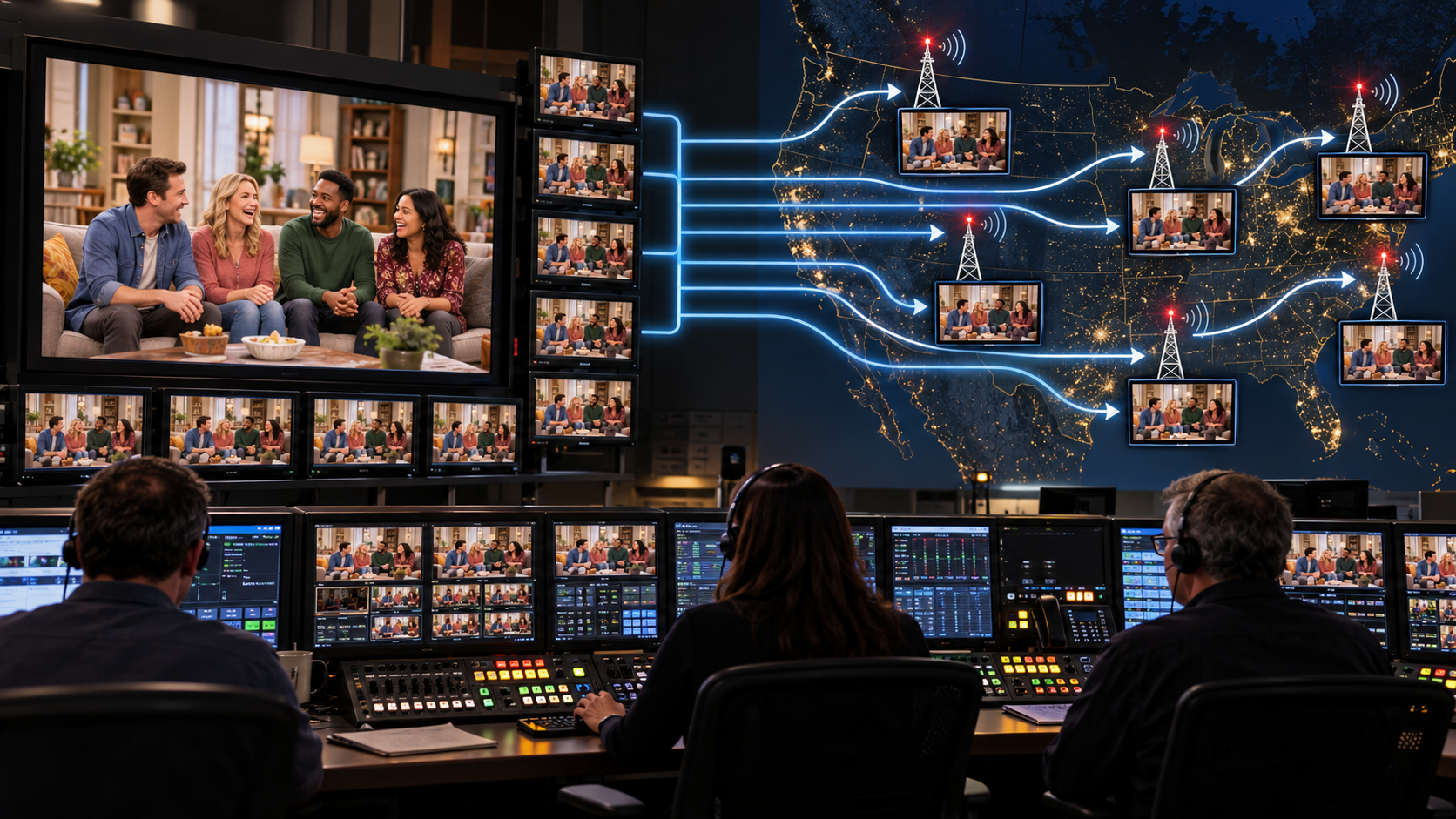
Television Syndication Explainer
Television syndication is the licensing of programs to multiple outlets rather than distributing them only through one network's original national schedule. In the United States, a local station can buy the right to air reruns or first-run syndicated programs within a market and time period. Cable channels and other services also license libraries, although industry usage can distinguish those deals from classic broadcast syndication. The basic idea is that rights are sold window by window, allowing one program to reach new audiences after or apart from its initial run.
Off-network syndication concerns episodes that first aired on a network or service and are later offered as reruns. A large episode library is valuable because stations can schedule the program frequently without immediate repetition. First-run syndication produces shows specifically for direct sale to stations or station groups; talk shows, game shows, court programs, and entertainment news have often used this model. A distributor markets the package, negotiates territory and exclusivity, and supplies episodes, promotional materials, and technical delivery.
Deals can involve cash license fees, advertising time retained by the distributor, or combinations of both. Stations choose slots based on local audience strategy, lead-ins, competition, and contractual limits. The same series may appear at different times in different cities. Ownership and profit participation can be complex because production companies, studios, performers, writers, directors, and other participants may have contractual interests. Syndication revenue historically helped successful series continue generating value long after their original production costs were incurred.
Syndicated episodes may not exactly match original broadcasts. Distributors can prepare versions with shorter running times to fit additional commercials, replace music when licenses are limited, update technical formats, or arrange episodes in a different order. Standards and captions must meet the receiving outlet's needs. Such edits can change rhythm or omit small scenes, which is why home-video or streaming versions sometimes feel different from familiar reruns. The underlying program remains recognizable even as its delivery package changes. Digital platforms have complicated the language without eliminating the principle. A studio may license one library to a subscription service, another free ad-supported channel, local broadcasters, and international outlets under separate terms. Availability can change when a window expires or another buyer obtains exclusivity. For viewers, syndication explains why an older show may become culturally present again and why different outlets carry different seasons or cuts. It is a system of repeated licensing that turns a finished series into a continuing programming asset. A practical way to read or discuss Television Syndication is to separate the basic definition from the choices made in a particular example. Syndication separates program distribution from one original network feed, licensing rights to multiple stations or other outlets. Then identify who sets the relevant rules, which parts are creative decisions, and which parts follow from law, contracts, technology, or production limits. Examples that look similar on the surface can operate differently because their purpose, audience, timing, and surrounding agreements are different. Cash fees, shared advertising inventory, or hybrid arrangements determine how the distributor and station exchange value. It is also useful to check whether a source is describing a formal industry category, an informal critical label, or one organization's current practice. Those distinctions prevent a memorable anecdote from becoming a false universal rule. The date and market matter too: tools, distribution systems, and standard agreements change, while older examples can preserve assumptions that no longer apply everywhere. When a claim sounds absolute, compare it with a second type of source and look for the conditions under which it is actually true. Finally, compare the visible result with the less visible work that produced it. Streaming licenses are not identical to classic local-station syndication, but both rely on limited rights windows and repeated exploitation of a library. That approach keeps the explanation grounded while leaving room for reasonable disagreement about borderline cases.
Syndication separates program distribution from one original network feed, licensing rights to multiple stations or other outlets.
Off-network syndication resells completed episodes as reruns, while first-run syndication creates new programs for direct distribution to participating stations.
A distributor assembles rights, markets the package, negotiates market and time limits, and delivers the approved technical versions.
Cash fees, shared advertising inventory, or hybrid arrangements determine how the distributor and station exchange value.
Episodes may be time-compressed, trimmed, reformatted, or supplied with changed music so they fit a later outlet's schedule and rights package.
Streaming licenses are not identical to classic local-station syndication, but both rely on limited rights windows and repeated exploitation of a library.
Explore more "Explainers"
Discover additional explainers across politics, science, business, technology, and other fields. Each explainer breaks down a complex idea into clear, everyday language—helping you better understand how major concepts, systems, and debates shape the world around us.