

Laugh Tracks Explainer
A laugh track is audience laughter recorded and placed in a television or film soundtrack. It may come from a live studio audience at the performance, from audience reactions recorded during a screening, from an effects library, or from a mixture of sources. The Television Academy identifies The Hank McCune Show's 1950 network run as an early use of laughter added to a filmed program without a studio audience, while engineer Charley Douglass became closely associated with developing and operating systems for editing laughter.
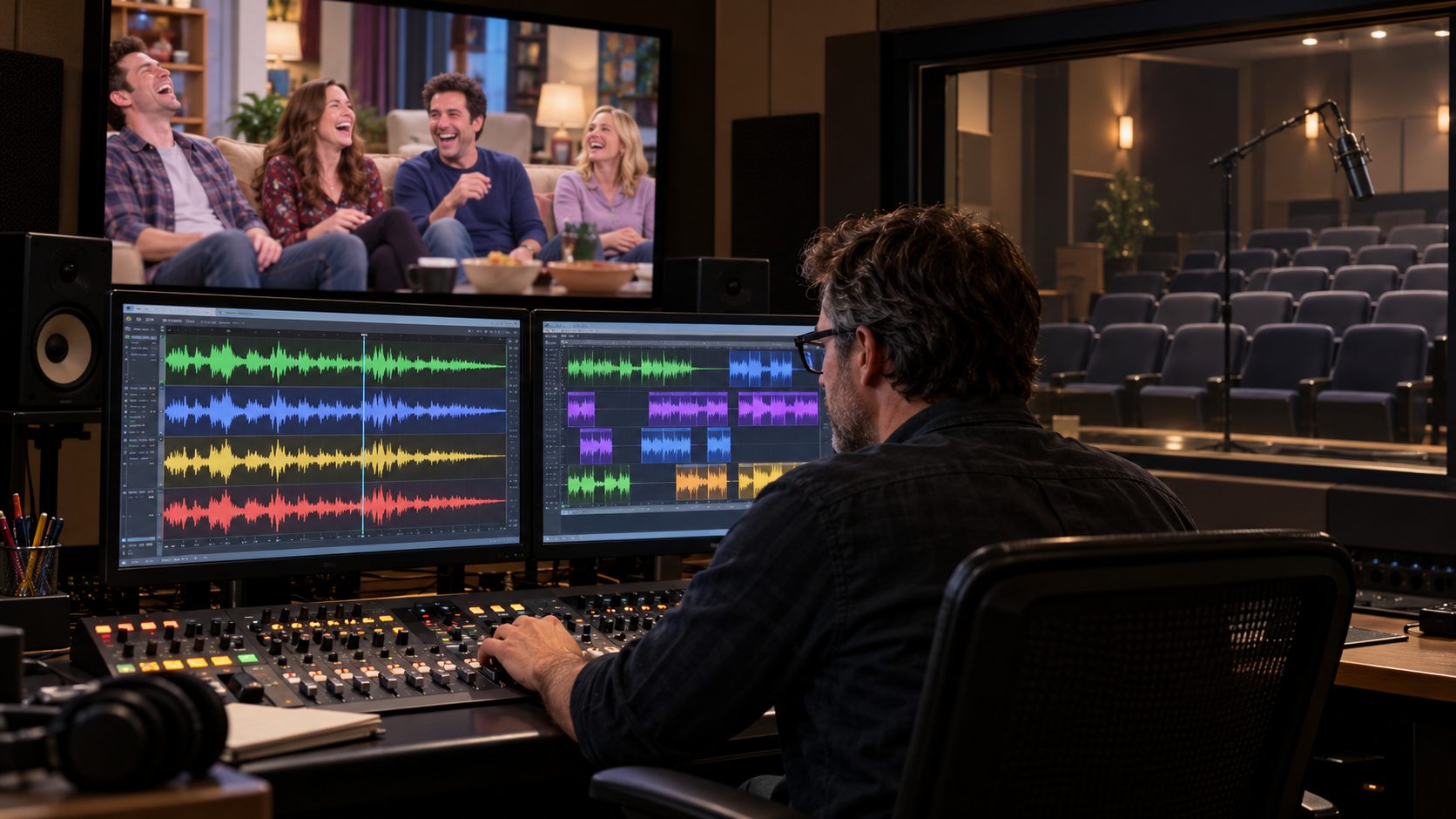
Multi-camera comedies often perform scenes before an audience, capturing microphones around the seating area. Retakes create complications because the audience already knows a joke, so editors may combine reactions from different takes or smooth changes in level. Single-camera shows can screen a completed episode to an audience or add selected laughter in post-production. In either case, sound editors and mixers control timing, intensity, duration, and acoustic perspective so reactions support the scene rather than sounding detached from it.
Laughter changes pacing. Performers may pause after punch lines, editors may hold a reaction shot, and writers may structure exchanges around the expected response. The track signals a communal viewing experience, making a home audience feel accompanied by other listeners. It can also clarify tone when a line is intentionally absurd or uncomfortable. Critics argue that canned laughter instructs viewers how to react or covers weak jokes, while supporters note that theater and live comedy have always depended on the energy and timing of a crowd.
Not every audible laugh is artificial, and not every live response reaches viewers untouched. Production sound must be balanced for broadcast; unusually long, weak, or disruptive reactions may be edited. Conversely, a show advertised as audience-free can still use musical timing, performance pauses, and reaction shots that perform some of the same guiding work. The meaningful distinction is not simply real versus fake, but how the soundtrack was constructed and what relationship the program wants between the performers and its audience. Contemporary comedy uses many approaches. Some series foreground a lively crowd, some mix laughter subtly, and others omit it to create intimacy, awkwardness, or realism. Removing a track from a scene designed around laughter can leave conspicuous pauses, just as adding laughter to a naturalistic scene can feel intrusive. The device is therefore part of form rather than a neutral layer. Evaluating it means listening to how it interacts with writing, performance, editing, and space, not assuming that its presence alone determines quality. A practical way to read or discuss Laugh Tracks is to separate the basic definition from the choices made in a particular example. Laugh tracks can contain live audience responses, library recordings, reactions from a separate screening, or edited combinations of all three. Then identify who sets the relevant rules, which parts are creative decisions, and which parts follow from law, contracts, technology, or production limits. Examples that look similar on the surface can operate differently because their purpose, audience, timing, and surrounding agreements are different. The track can create social energy and clarify comic tone, but an aggressive mix can feel like pressure or distraction. It is also useful to check whether a source is describing a formal industry category, an informal critical label, or one organization's current practice. Those distinctions prevent a memorable anecdote from becoming a false universal rule. The date and market matter too: tools, distribution systems, and standard agreements change, while older examples can preserve assumptions that no longer apply everywhere. When a claim sounds absolute, compare it with a second type of source and look for the conditions under which it is actually true. Finally, compare the visible result with the less visible work that produced it. The best comparison asks whether the chosen approach serves the show's style, because laughter designed into a scene cannot be removed neutrally. That approach keeps the explanation grounded while leaving room for reasonable disagreement about borderline cases.
Laugh tracks can contain live audience responses, library recordings, reactions from a separate screening, or edited combinations of all three.
Editors shape the reaction around retakes, dialogue clarity, and program length; even genuine audience laughter is usually part of a controlled mix.
Performers and editors leave room for anticipated reactions, so laughter affects the visual and verbal rhythm before post-production begins.
The track can create social energy and clarify comic tone, but an aggressive mix can feel like pressure or distraction.
A comedy without laughter often uses other cues—music, framing, silence, and reaction shots—to direct attention and establish tone.
The best comparison asks whether the chosen approach serves the show's style, because laughter designed into a scene cannot be removed neutrally.
Explore more "Explainers"
Discover additional explainers across politics, science, business, technology, and other fields. Each explainer breaks down a complex idea into clear, everyday language—helping you better understand how major concepts, systems, and debates shape the world around us.