

On This Day in Pop: January 19, 1953
I Love Lucy aired “Lucy Goes to the Hospital” on January 19, 1953, bringing the birth of Little Ricky to American television on the same day that star Lucille Ball gave birth to Desi Arnaz Jr. The scheduling was carefully coordinated: Ball’s real pregnancy had been incorporated into the series, but the episode was filmed weeks earlier so the production could continue safely. CBS and sponsor Philip Morris treated the subject cautiously. The scripts generally used the word “expecting” rather than “pregnant,” and a consultant reviewed the presentation for broadcast standards. Within those constraints, the series made pregnancy an extended family story instead of hiding the performer behind furniture or temporarily removing her from the program.
The episode’s comedy came from Ricky, Fred and Ethel rehearsing an elaborate plan for the trip to the hospital, only to panic when Lucy calmly announced that it was time. Its final scenes balanced sitcom confusion with tenderness as Ricky performed at his nightclub before rushing to meet his son. The broadcast drew an extraordinary audience; contemporary estimates commonly place it near 44 million viewers, representing most American television homes in an era with far fewer channels. The event became a national conversation and was famously compared with the audience for Dwight Eisenhower’s presidential inauguration the following day. Exact comparisons vary because early television measurement was imperfect, but the scale of attention is not in doubt.
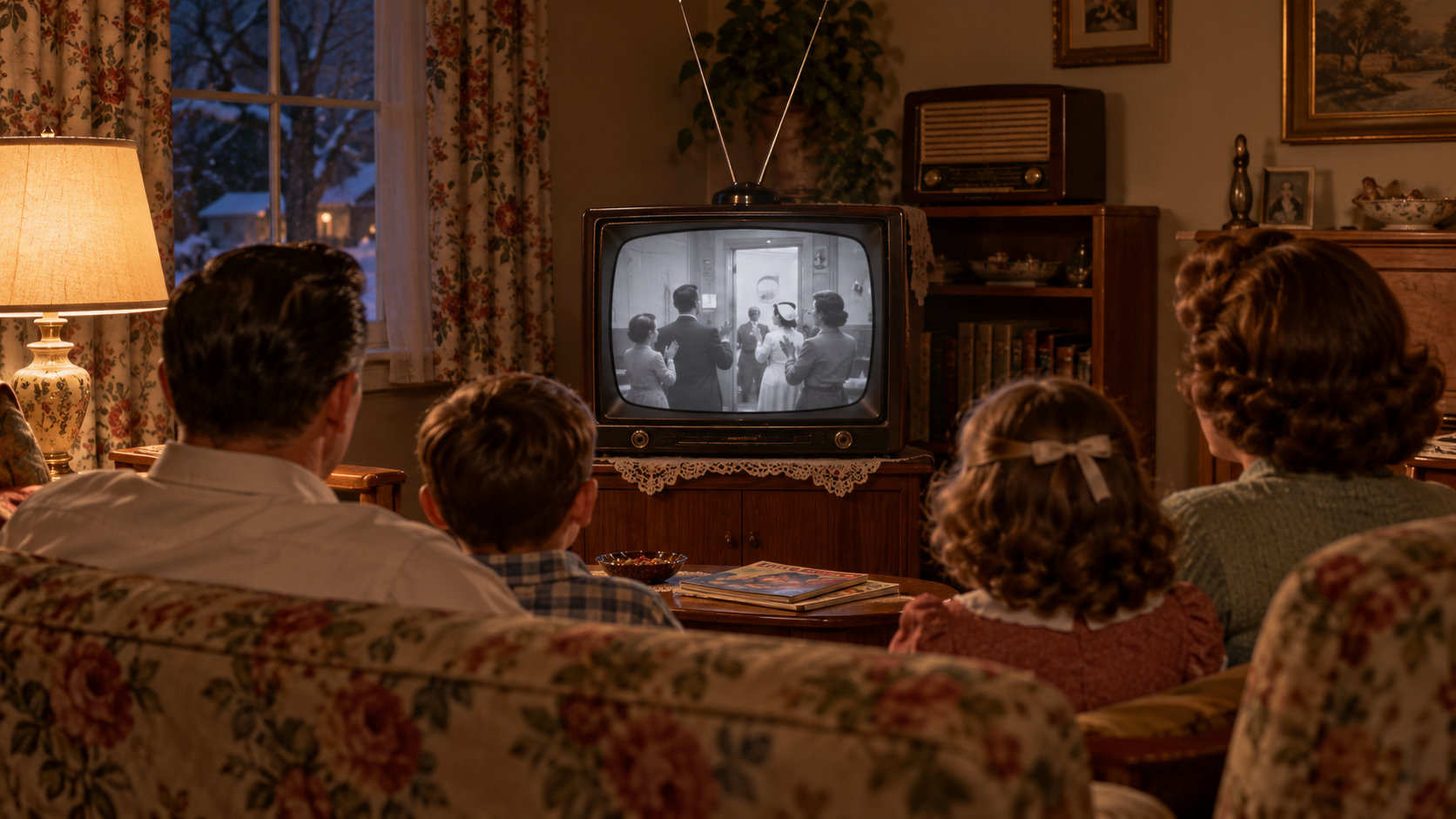
The episode demonstrated how quickly television had become a shared domestic ritual. I Love Lucy already benefited from Desilu’s multi-camera production on film, which created clear images, preserved performances and made high-quality reruns possible. The birth story added another layer by blending a fictional household with public awareness of the stars’ real marriage and pregnancy. That blend anticipated later celebrity culture, in which audiences follow performers across both scripted roles and personal news. It also pushed network television toward a more recognizable depiction of family life, although the careful language exposed the era’s restrictions. The achievement belongs not only to Ball and Arnaz but to writers, directors, camera crews and editors who turned a sensitive production problem into a coherent season-long arc. January 19 remains a landmark because one comic birth proved that a television episode could organize the attention of a country and make private family change feel like a national occasion. The story also strengthened the series’ image as a production willing to turn practical constraints into innovations that felt natural to viewers.
Ball’s real pregnancy was written into the series and synchronized with a prerecorded fictional birth.
Network standards allowed the story while discouraging direct language that now seems ordinary.
Audience estimates are enormous, though exact comparisons with political events should be treated cautiously.
The episode normalized pregnancy on television without escaping the restrictions of its broadcasting era.
Desilu’s filmed production methods helped the episode survive in unusually strong form for later viewers.
The broadcast showed television’s emerging power to turn a family sitcom into a shared national event.
Explore more of "On This Day ..."
Discover more events from the same date across news, politics, technology, sports, and other fields. Each link highlights significant moments that shaped history on different fronts.