

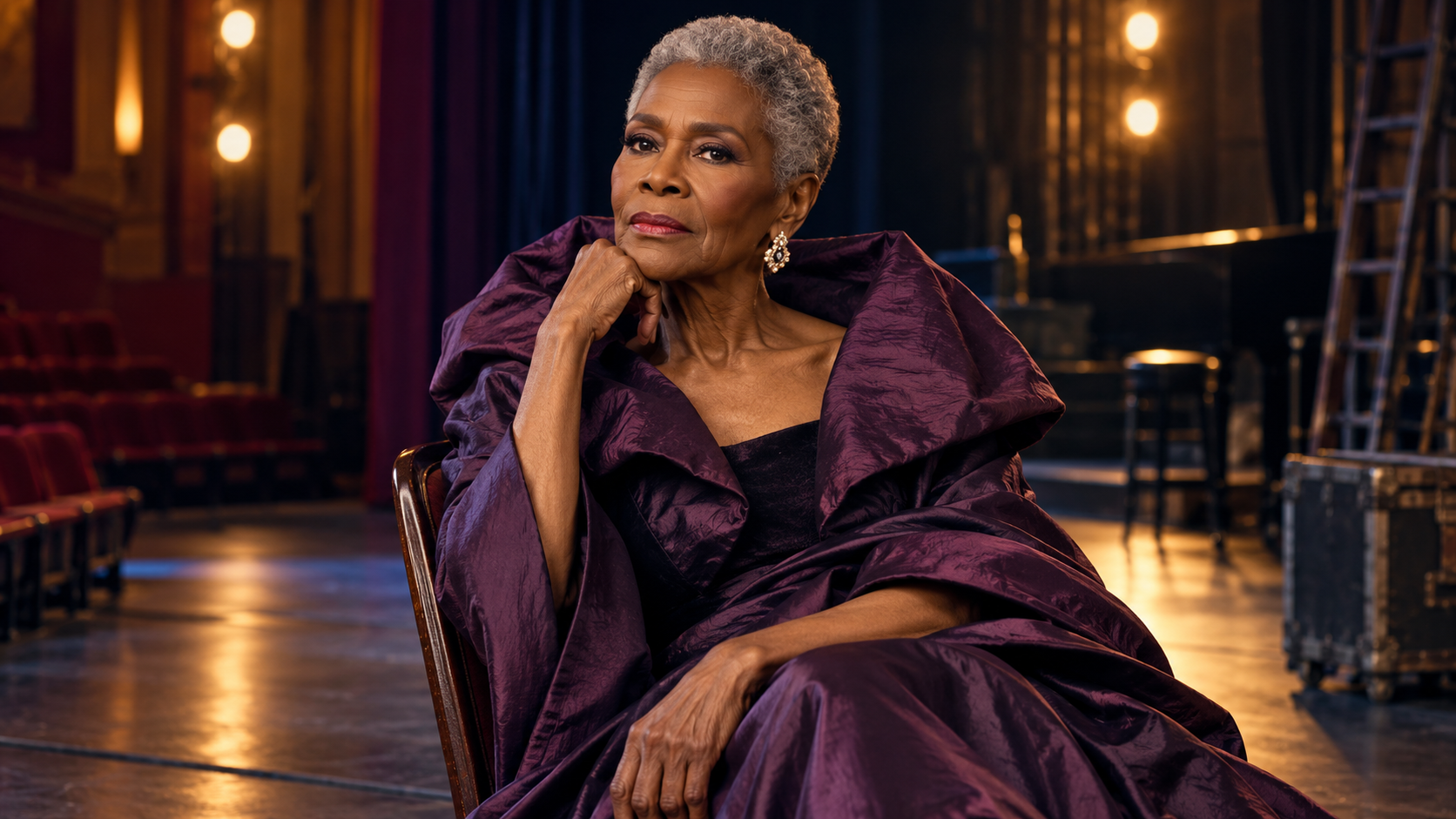
“Just as I am is my truth. It is me, plain and unvarnished.”
Cicely Tyson introduced her 2021 memoir Just as I Am with the declaration, “Just as I am is my truth. It is me, plain and unvarnished.” She contrasted that self with the glitter and garland attached to an award-winning career. The book appeared near the end of a life spent choosing roles with unusual care, often refusing characters she believed diminished Black women. The opening promises neither a rejection of achievement nor a performance of modesty. It announces that the public record—awards, photographs, famous performances—is incomplete without the daughter, mother, believer, observer, and private person who lived around it.
“Unvarnished” is a revealing word for an actor. Performance depends on artifice, transformation, rehearsal, light, and frame, yet truth can still emerge through those constructed forms. Tyson’s sentence does not claim that memory is a transparent window. A memoir arranges a life, selects scenes, and speaks from the perspective of age. Its honesty lies in acknowledging more than the polished legend permits: fear beside courage, injury beside recognition, doubt beside spiritual confidence. The whole self is not the self without craft; it is the self no longer reduced to the surface craft helped create.
Authenticity can become another marketable style, especially for celebrities asked to disclose pain as proof that they are real. No one owes the public every private detail, and omission is not automatically deception. Memory also changes, and another person may remember a shared event differently. “My truth” is strongest when it names the integrity of Tyson’s account rather than immunity from evidence. A personal narrative can be candid and still situated, shaped by what the teller knows and chooses to reveal.
The quote invites a useful exercise for anyone whose identity has hardened around a résumé, role, or reputation. Write two short descriptions: the version an audience would infer from visible achievements and the version that includes the relationships, losses, convictions, and ordinary practices that make those achievements meaningful. Notice what the public version leaves out and what can be shared without violating necessary privacy. Tyson’s line does not ask people to discard ceremony; she accepted and earned extraordinary honors. It asks that ceremony remain proportionate to a life. The person is always larger than the image, and mature self-knowledge can hold both the crafted public contribution and the unvarnished human source from which it came. That balance keeps humility from erasing accomplishment and acclaim from swallowing the person.
The sentence appears in the introductory description of Tyson’s 2021 memoir Just as I Am, published two days before her death. She distinguishes the full person telling the story from the awards and polished imagery attached to a six-decade career.
An unvarnished account can still be crafted and selective. Authenticity does not require surrendering privacy, and personal truth remains shaped by memory and perspective. The aim is wholeness, not compulsory disclosure or immunity from evidence.
Write one description based only on visible achievements and another that includes the relationships, convictions, losses, and ordinary habits behind them. Decide what can be shared honestly while preserving privacy, and keep public recognition in proportion to the whole person.
Explore more "Quotes of The Day"
Discover more notable quotes from influential voices across politics, science, business, technology, sports, and culture. Each quote offers insight into how ideas, beliefs, and decisions shape the world around us.