

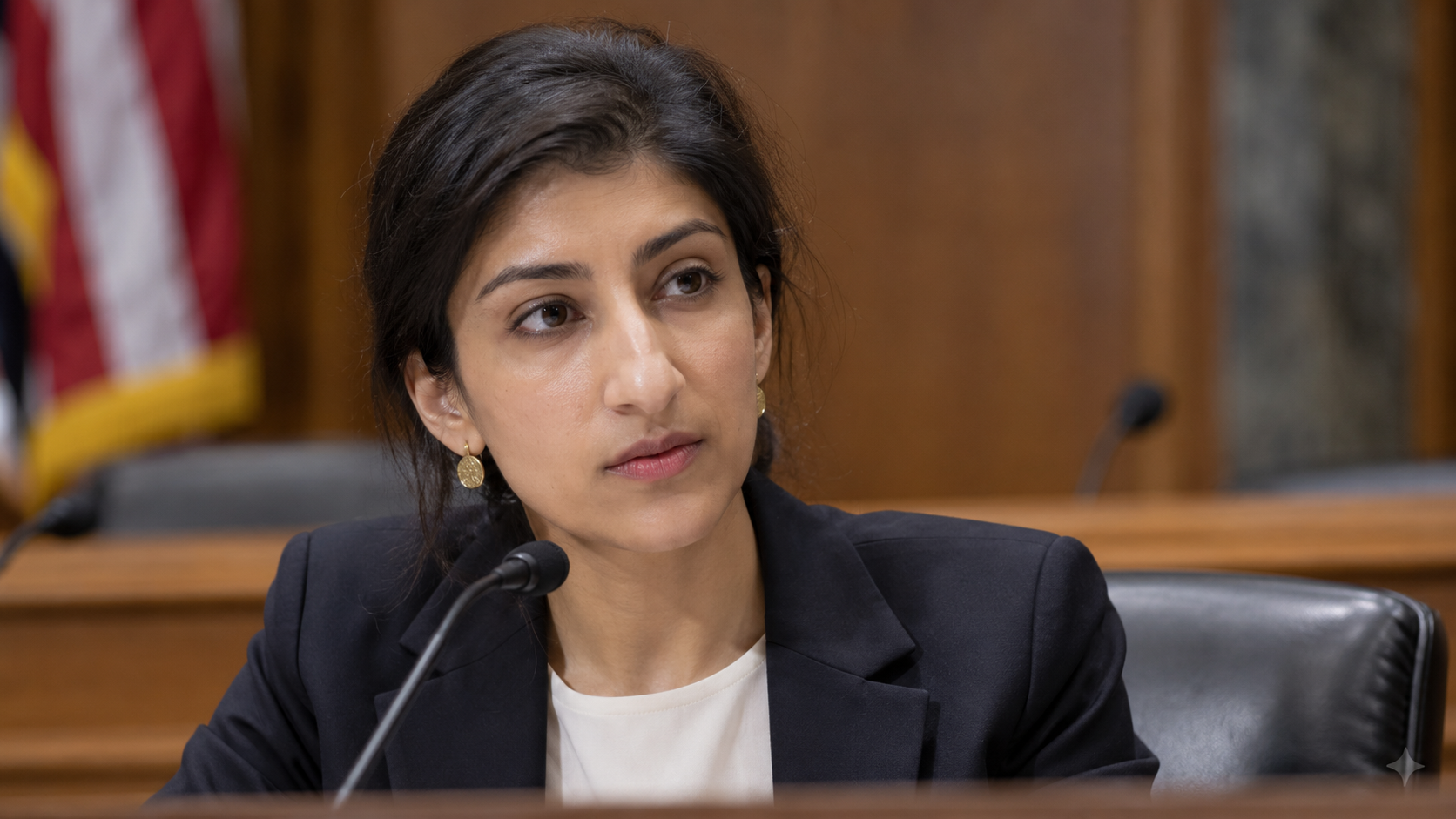
“There is no AI exemption to the laws on the books.”
Federal Trade Commission Chair Lina Khan used this sentence in an April 2023 statement issued with other U.S. enforcement agencies. The statement rejected the idea that artificial intelligence had emerged into an empty legal space. Consumer-protection rules, fair-credit requirements, equal-opportunity protections, and competition law already govern many outcomes that automated systems influence. Khan’s wording is deliberately plain because it addresses a common strategy: describing an old commercial practice as unprecedented technology and then implying that ordinary duties no longer apply. The quotation says that changing the tool does not erase the law governing the conduct.
That principle matters because AI can increase the scale and speed of familiar harms. A deceptive claim can be personalized for millions of people. A biased screening process can quietly affect housing, credit, employment, or insurance. A dominant company can control essential computing resources or use partnerships to weaken competition. None of those concerns becomes acceptable because a model is complex. Regulators still need evidence about design and operation, but the governing questions remain recognizable: Was the representation truthful? Was the practice unfair? Did the decision discriminate? Did market power prevent meaningful choice or entry?
The quote does not mean every AI problem is fully covered by current statutes or that enforcement is mechanically simple. Models can cross jurisdictions, change after release, and rely on supply chains that obscure responsibility. Some harms may require new legislation, technical standards, or stronger agency resources. Existing law also has gaps, and litigation can move more slowly than software deployment. Khan’s point is narrower and more immediate: uncertainty at the frontier is not permission to ignore rules that clearly apply. Firms remain responsible for substantiating claims and examining effects across the people they serve.
For responsible developers, this legal continuity can be useful rather than hostile. It gives product teams concrete obligations to include in design reviews: truthful marketing, lawful data practices, nondiscrimination, security, documentation, and routes for redress. It also discourages the habit of treating ethics as a voluntary layer added after launch. Compliance cannot guarantee that a system is wise, but it establishes a floor below which experimentation should not fall. The law asks who benefited, who was harmed, what evidence supported the claim, and whether the company had power to prevent the outcome. Khan’s sentence is ultimately a test of institutional seriousness. If a familiar harm is delivered through a new model, the novelty of the mechanism should sharpen investigation, not dissolve responsibility. Rights and duties travel with the decision, regardless of the software used.
Khan’s statement accompanied a joint warning that automated systems remain subject to existing federal enforcement authority.
The agencies emphasized fraud, discrimination, deceptive capability claims, and unlawful business practices.
AI may change the mechanism of a decision without changing the legal rights affected by that decision.
Credit, employment, competition, privacy, and consumer protection remain concrete areas of responsibility.
Companies need evidence for performance claims and must test whether results hold across relevant groups and settings.
Documentation and redress are essential because complexity does not transfer accountability to the model.
Explore more "Quotes of The Day"
Continue exploring how writers, thinkers, artists, and advocates have described the choices that shape an everyday life.