

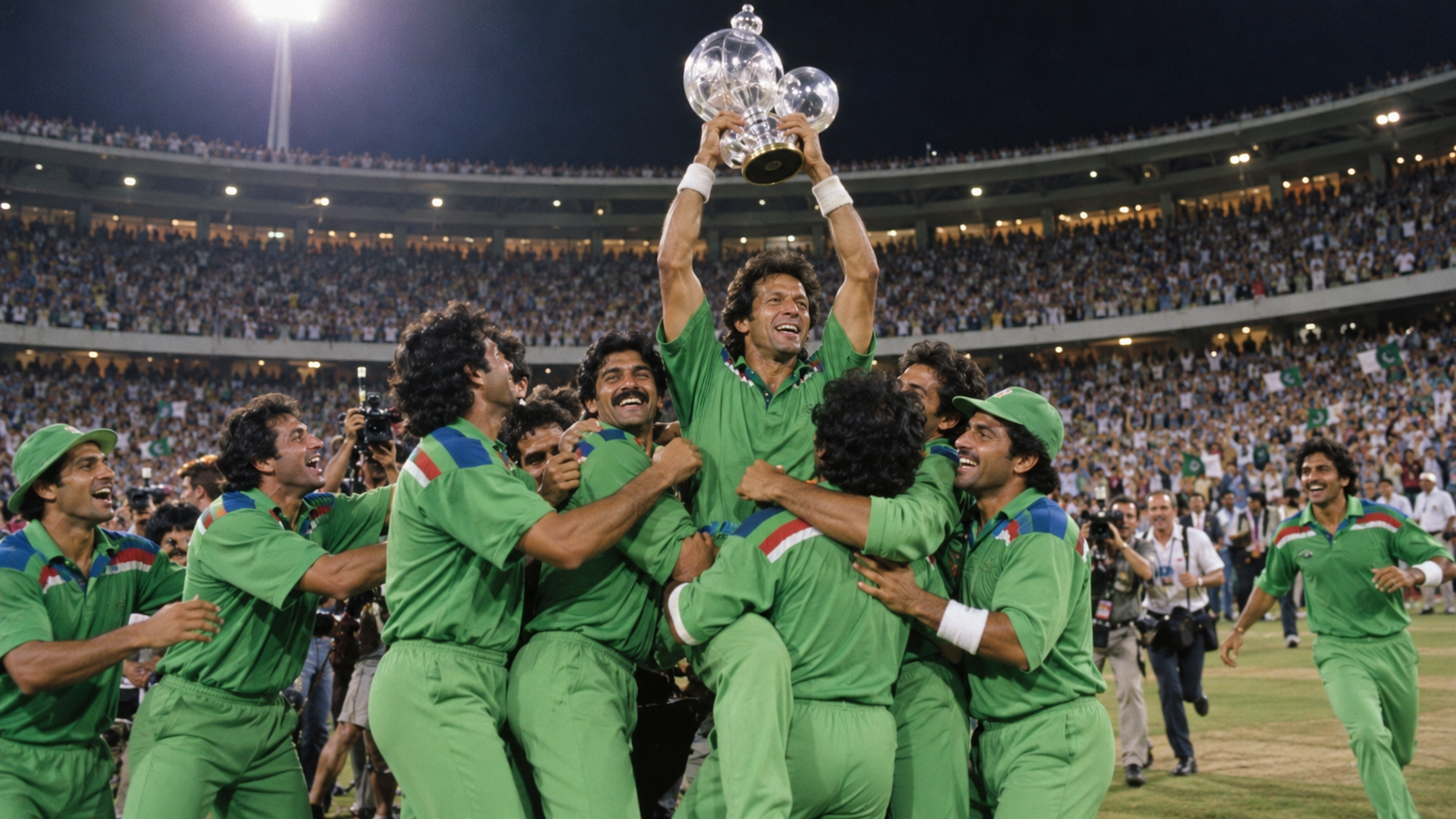
On This Day in Sports: March 25, 1992
On March 25, 1992, Pakistan defeated England by 22 runs at the Melbourne Cricket Ground to win its first men’s Cricket World Cup. Captain Imran Khan scored 72 after promoting himself in the batting order, steadying an innings that had begun slowly. Pakistan reached 249 for six, then bowled England out for 227 in the final over before a vast crowd.
Imran and Javed Miandad rebuilt the innings with a 139-run partnership after Pakistan slipped to 24 for two. Their patience created room for Inzamam-ul-Haq and Wasim Akram to accelerate late. Akram then shaped the chase with two famous deliveries in the same over, dismissing Allan Lamb and Chris Lewis as the ball moved in opposite directions. He finished with three wickets and was named player of the match.
The championship completed an improbable recovery. Pakistan had struggled in the round-robin stage and was dismissed for 74 against England in a match saved by rain. Imran rallied his squad around the image of a “cornered tiger,” and a sequence of victories carried it into the semifinals. Beating New Zealand there set up a rematch against an experienced England side appearing in its second consecutive final.
The victory gave Pakistan a lasting national sporting memory and strengthened the careers of players who influenced international cricket for years. Imran retired from the international game after lifting the trophy, completing his playing career at its highest point. The 1992 tournament also introduced colored clothing, white balls and night matches to the World Cup, making Pakistan’s triumph part of a broader modernization of the sport’s global showcase.
Pakistan scored 249 for six after choosing to bat.
Imran Khan led the innings with 72 runs.
Pakistan dismissed England for 227.
Wasim Akram took three wickets and earned player-of-the-match honors.
The 22-run victory delivered Pakistan’s first men’s World Cup.
Imran retired from international cricket after the triumph.
Explore more "On This Day in Sports"
Discover more landmark games, records, championships, and turning points from sports history. Each day revisits the athletes, teams, and moments that shaped competition and culture.