

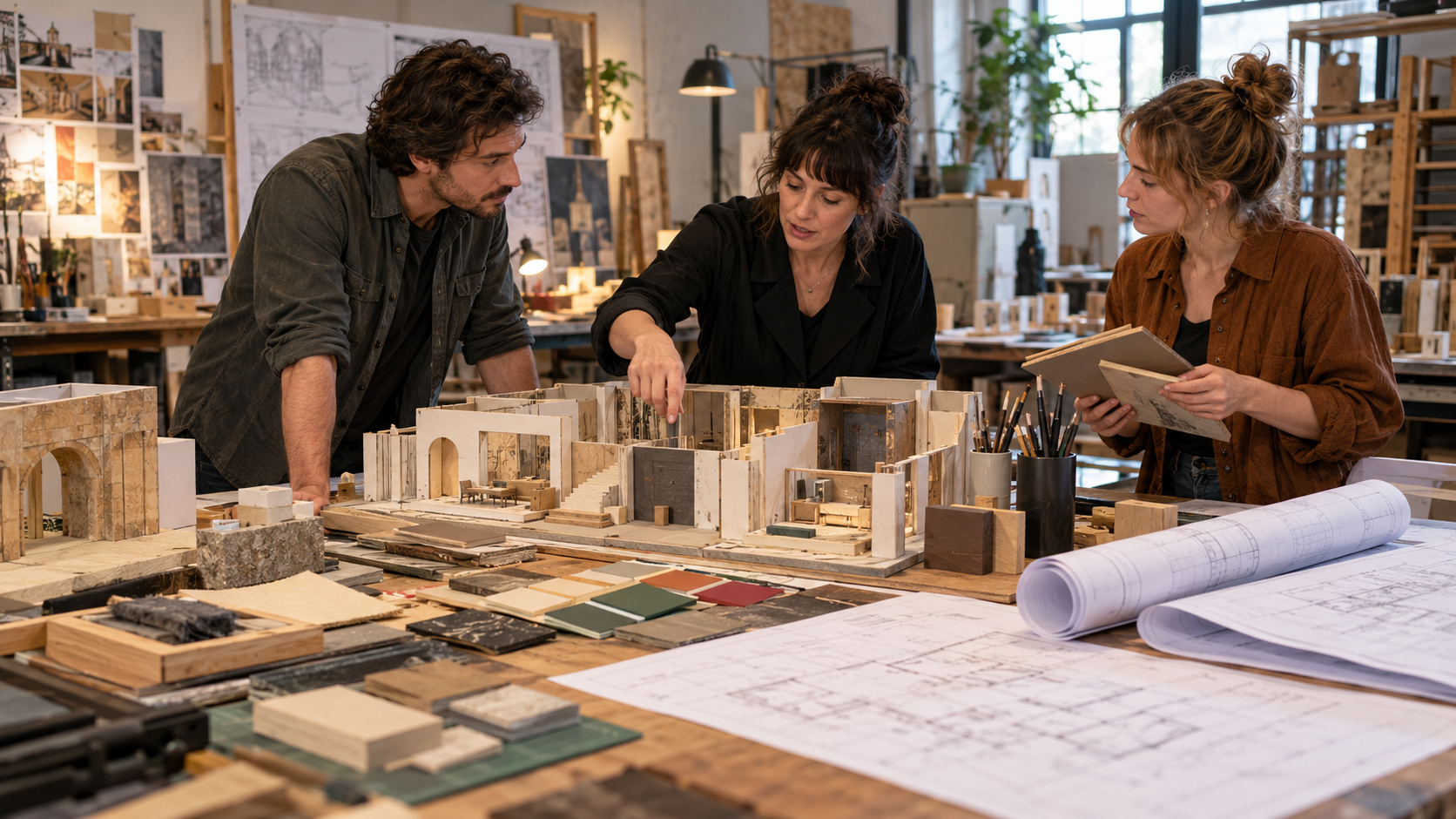
Production Design Explainer
Production design is the creation of a film or television project's overall physical visual world. The production designer interprets the screenplay with the director and producer, then develops an approach to sets, locations, architecture, color, texture, props, graphics, and spatial organization. The role is broader than decorating a room. It asks what the story's environments communicate about period, place, class, character, and tone, and how those environments will function for actors, cameras, lighting, sound, stunts, and effects.
The process usually begins with research and a script breakdown. Designers identify every required environment, note recurring locations, and separate what can be found from what must be built or altered. Concept art, reference boards, models, plans, and digital visualizations help departments agree on scale and style. A location may provide authentic architecture but need substantial dressing, while a studio set can include removable walls, controlled ceilings, and repeatable access. The choice depends on creative needs, schedule, budget, permits, logistics, and the number of scenes to be photographed.
The production designer leads an art department that can include supervising art directors, art directors, draftspersons, set decorators, buyers, construction teams, scenic artists, graphic artists, prop staff, and coordinators. Responsibilities vary by production and region, but the central task is communication: drawings must become safe, buildable spaces; dressing must support the visual plan; and every item visible to the camera must feel appropriate to the fictional world. The designer also collaborates closely with costume, cinematography, locations, visual effects, and special effects so adjacent decisions do not conflict.
Design is constrained, and constraint can produce invention. A story may require ten locations while the budget supports three builds, leading the team to redress one space or combine elements. Materials that look convincing to the camera may differ from real construction because walls need to move, floors must bear equipment, and finishes must survive repeated takes. Historical work balances documentation with narrative clarity, while fantasy still needs consistent rules. The goal is not a museum display but an environment that reads immediately and sustains the production process. Viewers often notice spectacular sets, yet subtle design may be equally important. The wear on a countertop, distance between rooms, clutter on a desk, or repetition of a color can reveal relationships without dialogue. Production design should not be confused with cinematography, although the two are inseparable on screen: design supplies spaces and surfaces, while camera and light determine how they are seen. To evaluate the craft, look for recurring visual logic and ask whether the world feels inhabited, supports the action, and changes meaningfully with the story. A practical way to read or discuss Production Design is to begin with the basic definition and then identify the choices made in a particular example. Production design establishes the coherent physical look of a screen story through environments, architecture, sets, props, graphics, color, and texture. Next, ask who sets the relevant rules, who performs the work, and which results follow from creative judgment, law, contracts, technology, budget, or production limits. Similar-looking examples can operate differently because their audience, market, format, timing, and agreements are different. The production designer leads the art department and coordinates its work with cinematography, costume, locations, props, construction, and visual effects. It also helps to distinguish a formal industry category from an informal critical label or one organization's current practice. That separation keeps a memorable anecdote from becoming a false universal rule. Dates and territories matter: tools, distribution systems, audience behavior, and standard agreements change, while older examples can preserve assumptions that no longer apply everywhere. When a claim sounds absolute, compare it with a second kind of source and look for the conditions under which the claim is true. Then trace the process from the visible result back through the less visible decisions, handoffs, and quality checks that produced it. Strong design supports character and action without demanding attention; small spatial and material choices may carry as much meaning as a large showcase set. Finally, compare the example with a contrasting case and note which part of the definition still holds. This method keeps the explanation grounded, highlights the people and systems behind the outcome, and leaves room for reasonable disagreement about hybrid or borderline cases.
Production design establishes the coherent physical look of a screen story through environments, architecture, sets, props, graphics, color, and texture.
A script breakdown turns narrative needs into a practical list of spaces, periods, objects, builds, location changes, and departmental requirements.
Found locations offer existing detail, while constructed sets provide control over walls, ceilings, access, camera placement, lighting, sound, and repeated use.
The production designer leads the art department and coordinates its work with cinematography, costume, locations, props, construction, and visual effects.
Budget and schedule shape design choices, but economical redressing, modular construction, selective detail, and controlled sightlines can preserve a coherent world.
Strong design supports character and action without demanding attention; small spatial and material choices may carry as much meaning as a large showcase set.
Explore more "Explainers"
Discover additional explainers across politics, science, business, technology, and other fields. Each explainer breaks down a complex idea into clear, everyday language—helping you better understand how major concepts, systems, and debates shape the world around us.