

On This Day in Pop: February 7, 1964
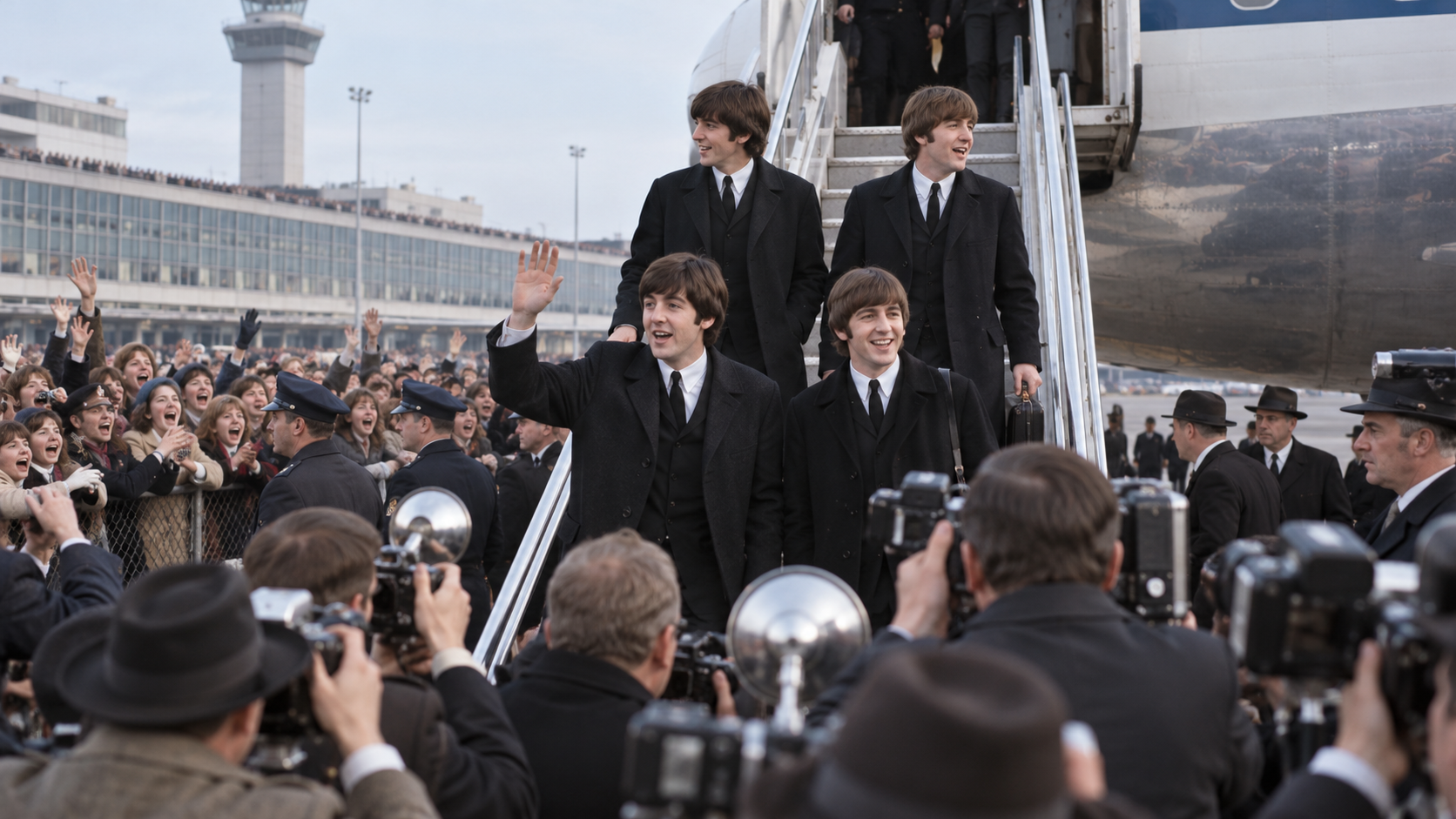
On February 7, 1964, the Beatles arrived at John F. Kennedy International Airport in New York on Pan Am Flight 101. “I Want to Hold Your Hand” was already No. 1 in the United States, so the visit began with the force of a hit rather than the uncertainty of an introduction. Crowds of young fans gathered behind barriers, their noise following John Lennon, Paul McCartney, George Harrison and Ringo Starr from the airplane into a press conference watched closely by American reporters. Viewed in its own time, the occasion was more than a neat calendar marker. It sat where entertainment, technology, publicity and public appetite met, and each of those forces helped determine who encountered it and what they made of it. Remembering the setting keeps the story grounded in decisions made by artists, producers, distributors and audiences rather than turning a complicated cultural shift into a single flash of inevitability.
The exchange with the press displayed an important part of the group’s appeal. Their answers were quick, irreverent and coordinated, allowing the four musicians to meet skeptical questions without appearing defensive. Television cameras could capture personality as readily as music, and the Beatles understood the possibilities of that attention. Managers, record executives, broadcasters, journalists, police and airport staff all helped turn the landing into an organized event, while the fans’ response supplied a level of excitement no publicity plan could fully manufacture. The response also shows how popular culture accumulates momentum. A performance, release or institutional choice can feel self-contained on the day it happens, yet its meaning expands through reviews, broadcasts, sales, conversation and imitation. Those channels do not affect every person in the same way, but together they can turn a dated event into a shared reference point, one that later work either follows, revises or pushes against.
Two days later, the Beatles appeared on The Ed Sullivan Show, and their early American visit continued with concerts and broadcasts. The airport footage endured because it compressed several changes into a single scene: youth culture asserting itself in public, transatlantic media moving at new speed and a band learning to navigate celebrity in real time. The reception did not create their music or guarantee their future, but it made the scale of American interest impossible to dismiss. Arrivals by later stars would often be measured against the tumult at Kennedy. That longer view is why the date remains useful. It provides a precise doorway into changes that unfolded unevenly and involved many contributors, including people whose labor was less visible than the headline names. The surviving recordings, films, photographs and documents let new audiences reconsider both the achievement and its limits. Pop history is strongest when celebration is paired with context, and this anniversary offers room for both.
The Beatles landed at John F. Kennedy International Airport on February 7, 1964, aboard Pan Am Flight 101.
The setting and sequence matter because they show how the Beatles’ first triumphant American arrival reached the public on this particular date.
Thousands of cheering fans and a sharp airport press conference transformed an arrival into a live media spectacle.
The first response came through the era’s available channels, from press and broadcast coverage to ticket buyers, listeners or viewers.
The welcome became a defining image of Beatlemania and set the tone for the group’s first American television appearances and concerts.
Its reputation has continued to develop through preservation, scholarship, revival and the interpretations of later audiences.
Explore more of "On This Day ..."
Discover more events from the same date across news, politics, technology, sports, and other fields. Each link highlights significant moments that shaped history on different fronts.