

On This Day in Pop: February 8, 1960
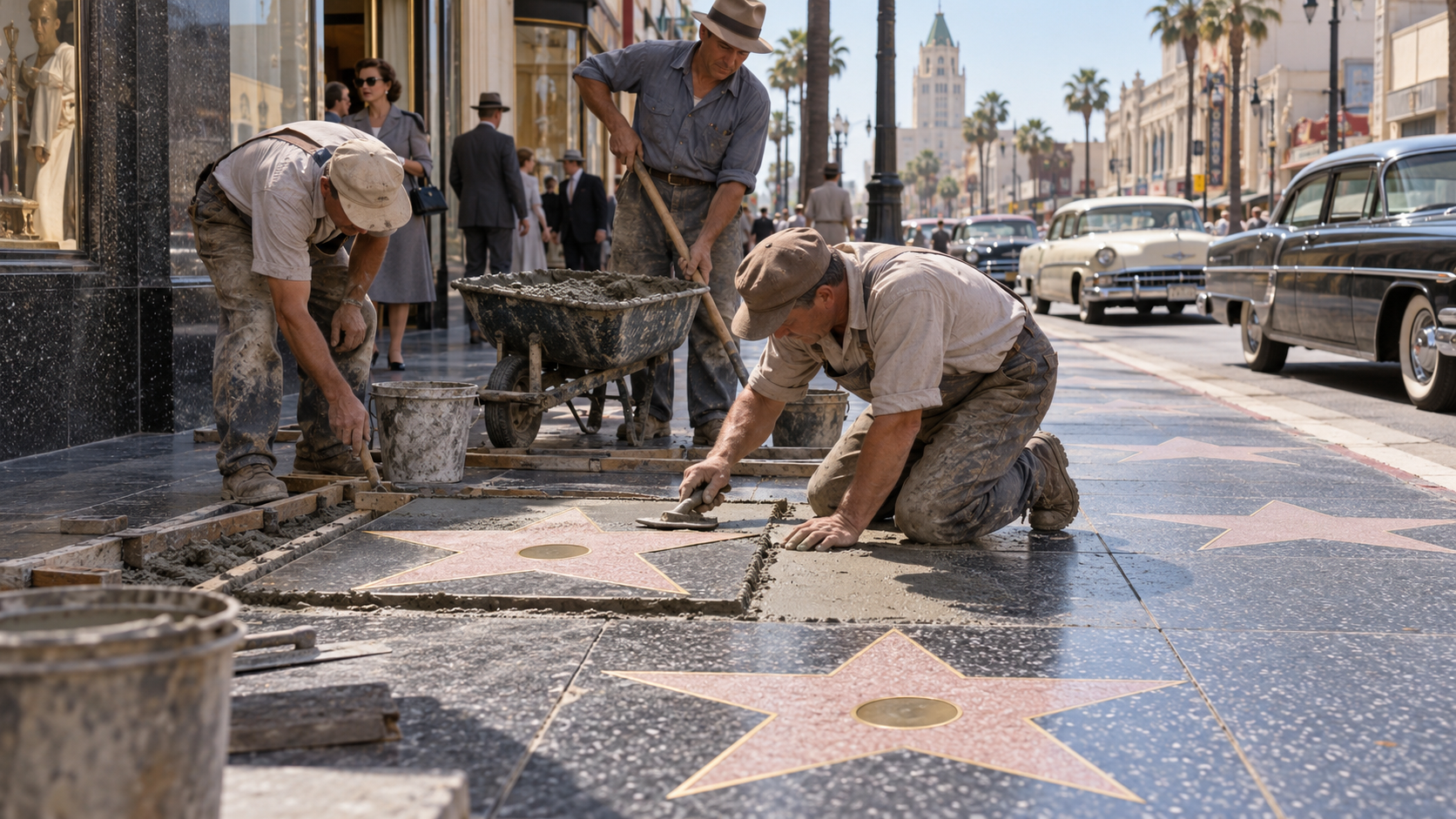
On February 8, 1960, work began on the permanent Hollywood Walk of Fame, bringing a civic promotion conceived in the 1950s into the pavement itself. The design used terrazzo stars set into sidewalks along Hollywood Boulevard and Vine Street, with symbols identifying fields of entertainment. What might have been a temporary publicity device became part of the neighborhood’s physical infrastructure, placing the names of performers, creators and media figures beneath the feet of residents and visitors. Viewed in its own time, the occasion was more than a neat calendar marker. It sat where entertainment, technology, publicity and public appetite met, and each of those forces helped determine who encountered it and what they made of it. Remembering the setting keeps the story grounded in decisions made by artists, producers, distributors and audiences rather than turning a complicated cultural shift into a single flash of inevitability.
The project joined business interests, local government, property owners and the Hollywood Chamber of Commerce at a moment when the district wanted to reinforce its association with the entertainment industry. Selecting honorees required rules and committees, while construction required durable materials and a repeatable visual system. The result was both democratic and selective: anyone could walk the route without buying a ticket, but institutional decisions determined whose accomplishments were represented and how categories were defined. The response also shows how popular culture accumulates momentum. A performance, release or institutional choice can feel self-contained on the day it happens, yet its meaning expands through reviews, broadcasts, sales, conversation and imitation. Those channels do not affect every person in the same way, but together they can turn a dated event into a shared reference point, one that later work either follows, revises or pushes against.
Over time, ceremonies for new stars became media events of their own, and the route expanded into a global tourist destination. The Walk of Fame is not a complete history of entertainment, nor does a star settle every argument about merit or reputation. Its omissions, additions and occasional controversies reveal how canons are built and revised. Yet its physical continuity is powerful. A visitor can move across decades and disciplines in a few blocks, encountering film, television, music, radio and performance as overlapping parts of one public cultural map. That longer view is why the date remains useful. It provides a precise doorway into changes that unfolded unevenly and involved many contributors, including people whose labor was less visible than the headline names. The surviving recordings, films, photographs and documents let new audiences reconsider both the achievement and its limits. Pop history is strongest when celebration is paired with context, and this anniversary offers room for both.
Construction on the permanent Hollywood Walk of Fame began on February 8, 1960, after years of planning and test designs.
The setting and sequence matter because they show how construction of the Hollywood Walk of Fame reached the public on this particular date.
The project embedded entertainment honors into an everyday sidewalk rather than placing them inside a museum or private industry ceremony.
The first response came through the era’s available channels, from press and broadcast coverage to ticket buyers, listeners or viewers.
The star-lined route became a tourism landmark and a living record of changing ideas about fame, achievement and public memory.
Its reputation has continued to develop through preservation, scholarship, revival and the interpretations of later audiences.
Explore more of "On This Day ..."
Discover more events from the same date across news, politics, technology, sports, and other fields. Each link highlights significant moments that shaped history on different fronts.