

On This Day in Pop: February 9, 1964
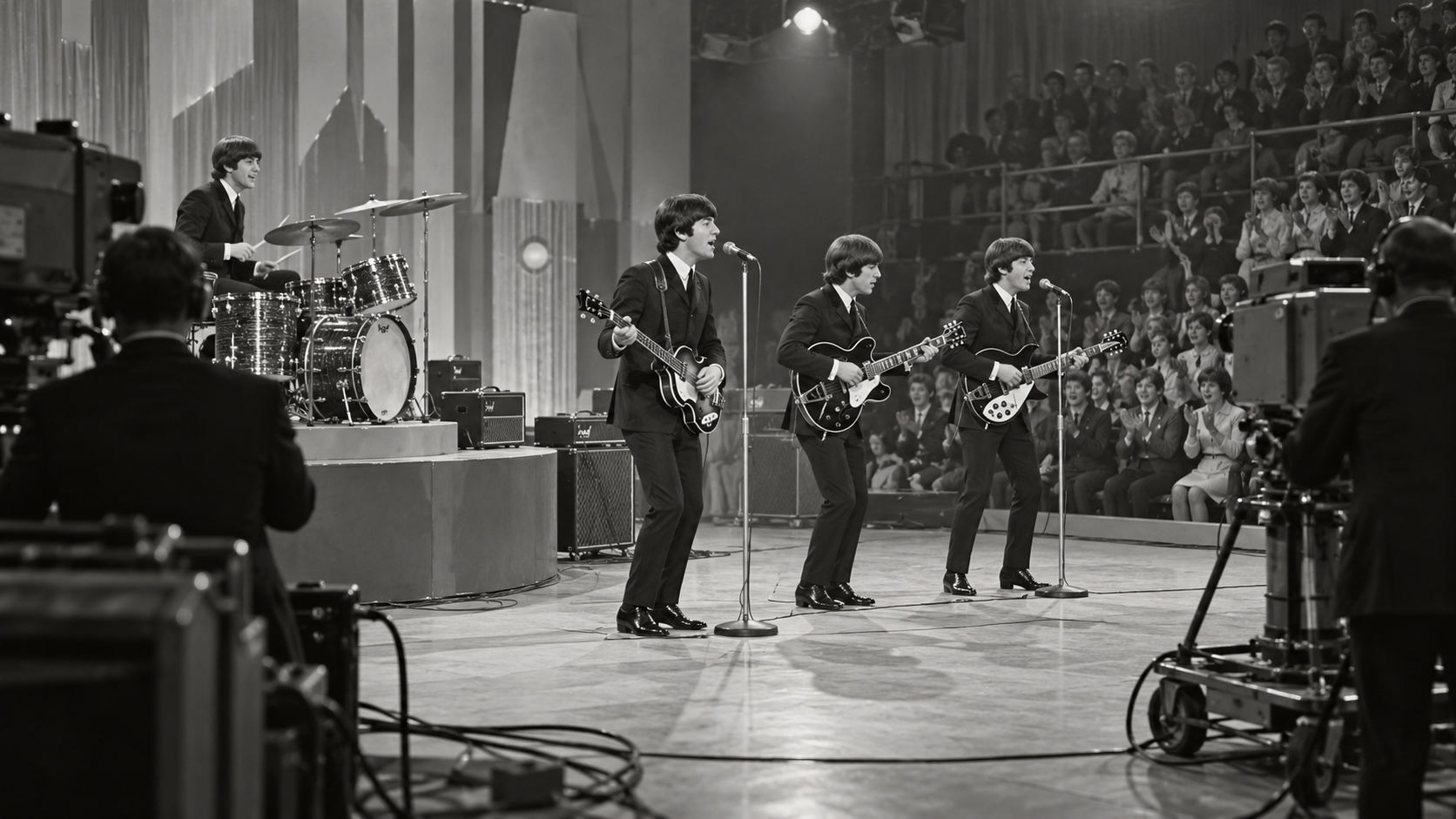
On February 9, 1964, the Beatles stepped onto the stage of The Ed Sullivan Show in New York for their first live American television performance. They opened with “All My Loving,” followed by “Till There Was You” and “She Loves You,” then returned later in the broadcast for two more songs. Cameras alternated between the musicians and an audience alive with screams, allowing viewers at home to experience both the performance and the intensity surrounding it. Viewed in its own time, the occasion was more than a neat calendar marker. It sat where entertainment, technology, publicity and public appetite met, and each of those forces helped determine who encountered it and what they made of it. Remembering the setting keeps the story grounded in decisions made by artists, producers, distributors and audiences rather than turning a complicated cultural shift into a single flash of inevitability.
The booking joined a well-established Sunday-night variety program with a youth phenomenon moving faster than many adults could interpret. Ed Sullivan’s show reached households across regions and generations, giving the moment a scale that record sales alone could not provide. The Beatles were polished from years of club work and touring, yet the presentation also emphasized their novelty: matching suits, distinctive haircuts, compact stage formation and songs that invited immediate response. The broadcast’s huge audience made recognition nearly instantaneous. The response also shows how popular culture accumulates momentum. A performance, release or institutional choice can feel self-contained on the day it happens, yet its meaning expands through reviews, broadcasts, sales, conversation and imitation. Those channels do not affect every person in the same way, but together they can turn a dated event into a shared reference point, one that later work either follows, revises or pushes against.
It is tempting to describe one television night as the moment everything changed, but the appearance depended on developments already underway: British success, American radio play, advance publicity, a No. 1 single and thousands of engaged fans. What the Sullivan broadcast did was gather those forces into a common experience. Musicians later recalled watching and deciding to form bands; families remembered arguing across generational lines. The performance remains shorthand for television at its most unifying, when a scheduled broadcast could make popular culture seem to happen everywhere at once. That longer view is why the date remains useful. It provides a precise doorway into changes that unfolded unevenly and involved many contributors, including people whose labor was less visible than the headline names. The surviving recordings, films, photographs and documents let new audiences reconsider both the achievement and its limits. Pop history is strongest when celebration is paired with context, and this anniversary offers room for both.
The Beatles performed live on The Ed Sullivan Show on February 9, 1964, during their first American visit.
The setting and sequence matter because they show how the Beatles’ first live Ed Sullivan Show appearance reached the public on this particular date.
The broadcast placed the group before an audience estimated at more than 70 million and made teenage excitement part of the national spectacle.
The first response came through the era’s available channels, from press and broadcast coverage to ticket buyers, listeners or viewers.
The appearance became a benchmark for television’s power to create a shared pop event across the United States.
Its reputation has continued to develop through preservation, scholarship, revival and the interpretations of later audiences.
Explore more of "On This Day ..."
Discover more events from the same date across news, politics, technology, sports, and other fields. Each link highlights significant moments that shaped history on different fronts.