

On This Day in Pop: February 26, 2012
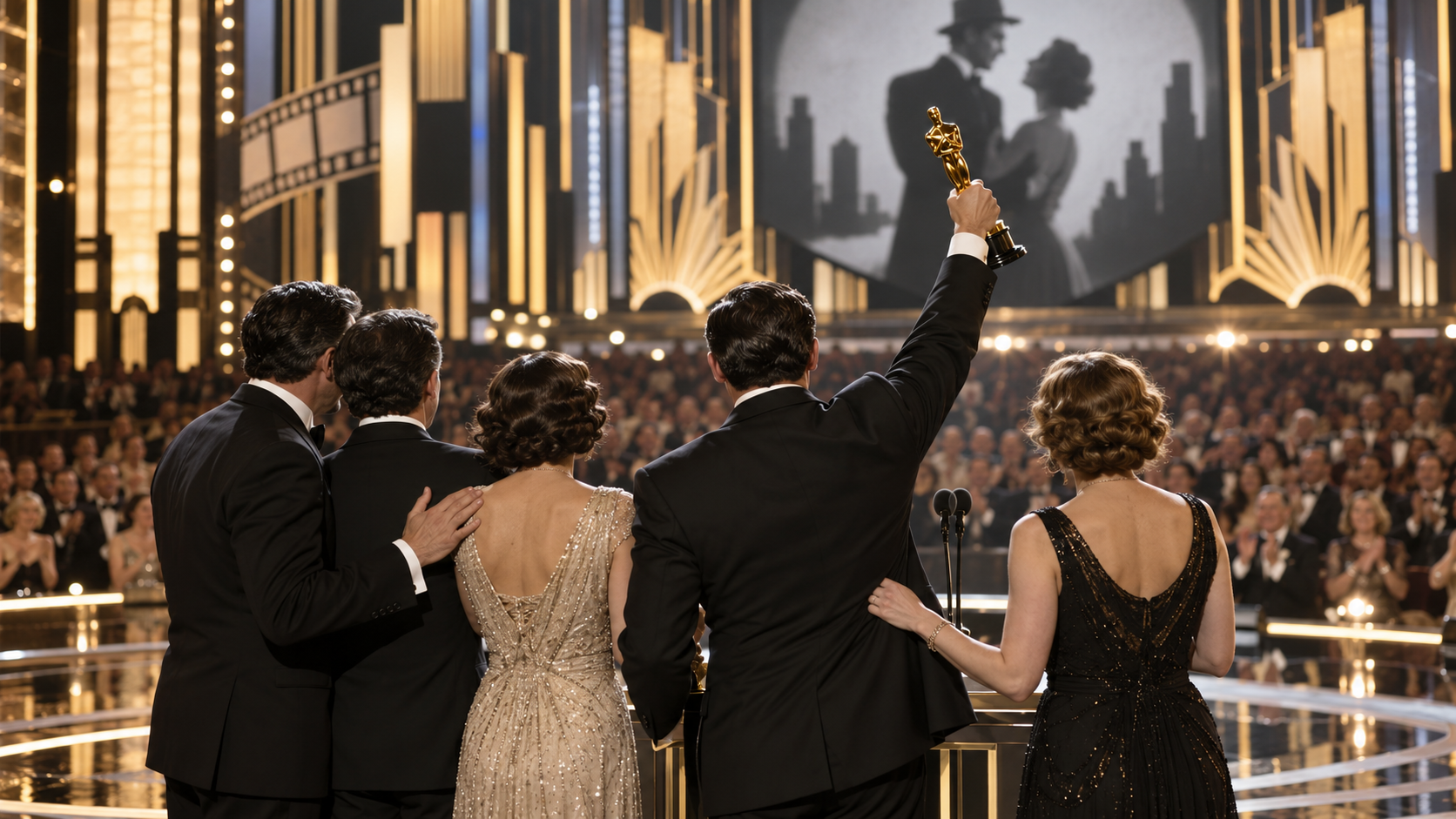
On February 26, 2012, The Artist won the Academy Award for Best Picture. Michel Hazanavicius’s black-and-white film tells the story of silent-screen star George Valentin, played by Jean Dujardin, as synchronized sound overturns his career and creates opportunities for Peppy Miller, played by Bérénice Bejo. Although made in the twenty-first century, it communicates mainly through performance, framing, editing, intertitles and Ludovic Bource’s score, asking viewers to notice tools that dialogue-heavy cinema can make less visible. Viewed in its own time, the occasion was more than a neat calendar marker. It sat where entertainment, technology, publicity and public appetite met, and each of those forces helped determine who encountered it and what they made of it. Remembering the setting keeps the story grounded in decisions made by artists, producers, distributors and audiences rather than turning a complicated cultural shift into a single flash of inevitability.
The film won five Oscars: Best Picture, director for Hazanavicius, actor for Dujardin, costume design and original score. Its awards run turned a modestly scaled French production into an international event. The premise looks backward, but its central anxiety is familiar in any creative industry facing technological change: an established artist mistakes a new format for a passing fad, while another learns how to move between old and new. A carefully placed burst of sound makes that transition psychologically immediate. The response also shows how popular culture accumulates momentum. A performance, release or institutional choice can feel self-contained on the day it happens, yet its meaning expands through reviews, broadcasts, sales, conversation and imitation. Those channels do not affect every person in the same way, but together they can turn a dated event into a shared reference point, one that later work either follows, revises or pushes against.
The Artist’s success prompted renewed discussion of silent film, though its affectionate pastiche should not substitute for the enormous variety of work made before talkies. Its Hollywood setting also turns industrial history into a personal romance, simplifying harsh economic and artistic upheaval for emotional clarity. Even so, the Best Picture win was striking. A contemporary audience accepted long stretches without spoken dialogue because image, gesture and music carried the story. The result affirmed that innovation can sometimes come through rediscovery, when older forms are treated as active techniques rather than museum pieces. That longer view is why the date remains useful. It provides a precise doorway into changes that unfolded unevenly and involved many contributors, including people whose labor was less visible than the headline names. The surviving recordings, films, photographs and documents let new audiences reconsider both the achievement and its limits. Pop history is strongest when celebration is paired with context, and this anniversary offers room for both.
At the Academy Awards on February 26, 2012, The Artist won Best Picture and four additional Oscars.
The setting and sequence matter because they show how the Best Picture victory of The Artist reached the public on this particular date.
The mostly silent, black-and-white French production also won for directing, lead actor, costume design and original score.
The first response came through the era’s available channels, from press and broadcast coverage to ticket buyers, listeners or viewers.
Its victory renewed popular attention to silent-film technique and demonstrated that an unconventional presentation could connect with a broad modern audience.
Its reputation has continued to develop through preservation, scholarship, revival and the interpretations of later audiences.
Explore more of "On This Day ..."
Discover more events from the same date across news, politics, technology, sports, and other fields. Each link highlights significant moments that shaped history on different fronts.