

On This Day in Pop: February 27, 1935
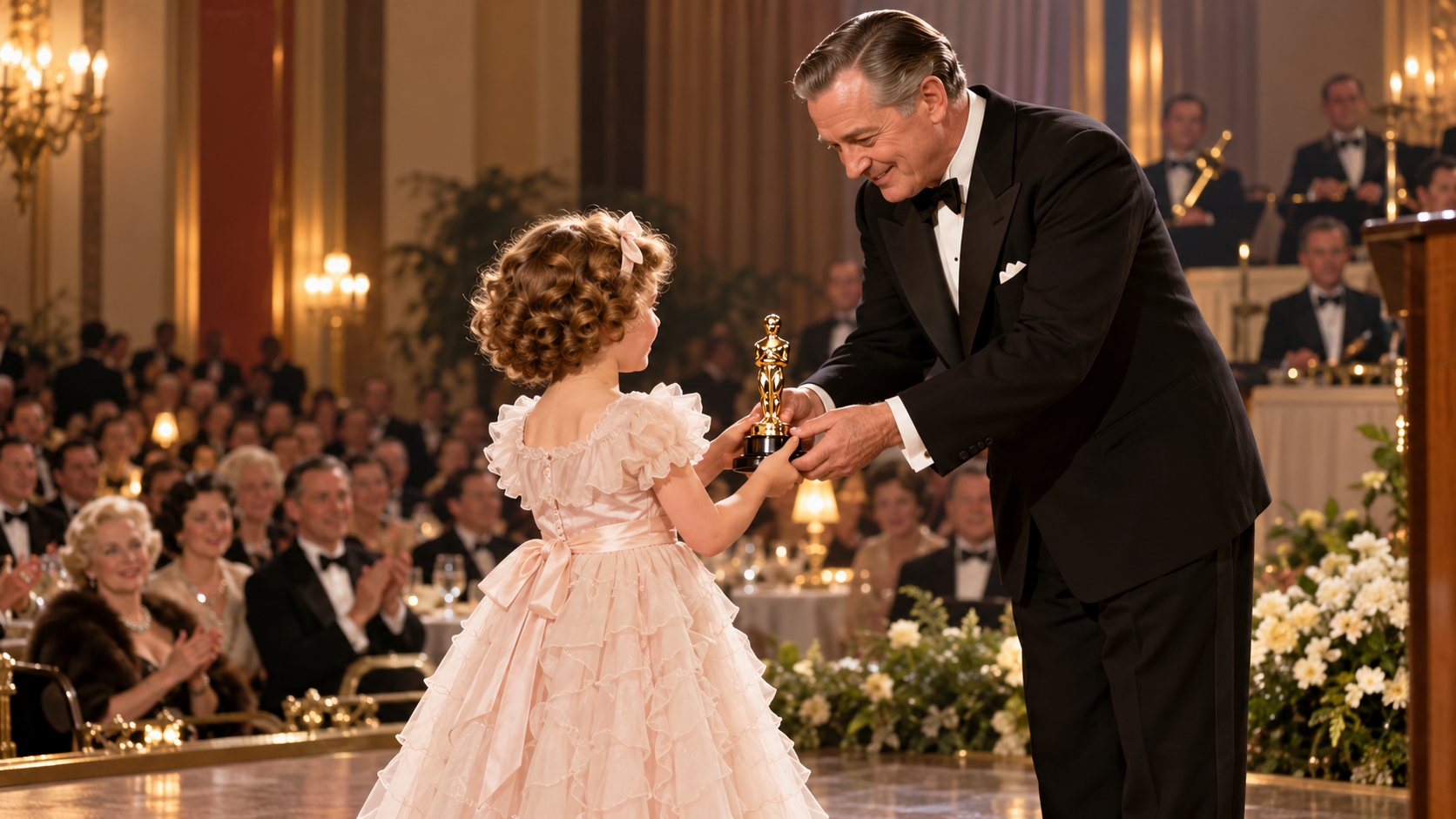
On February 27, 1935, Shirley Temple received the first Academy Juvenile Award at the seventh Academy Awards. She was six years old and already one of the film industry’s most recognizable performers. During 1934, pictures including Bright Eyes, Little Miss Marker and Baby Take a Bow showcased her singing, dancing, comic timing and practiced emotional directness. The special miniature trophy allowed the Academy to honor a child whose popularity did not fit comfortably into the standard competitive acting categories. Viewed in its own time, the occasion was more than a neat calendar marker. It sat where entertainment, technology, publicity and public appetite met, and each of those forces helped determine who encountered it and what they made of it. Remembering the setting keeps the story grounded in decisions made by artists, producers, distributors and audiences rather than turning a complicated cultural shift into a single flash of inevitability.
Temple’s rise came during the Great Depression, when studios sold her optimism as an answer to public hardship. Her screen characters often softened stern adults, repaired families or crossed social divisions through charm and persistence. That image required disciplined work: choreography, repeated takes, publicity appearances and a production system organized by adults around a very young performer. Audiences encountered apparent spontaneity, but it was supported by training, direction, editing, costume, music and a powerful studio campaign. The response also shows how popular culture accumulates momentum. A performance, release or institutional choice can feel self-contained on the day it happens, yet its meaning expands through reviews, broadcasts, sales, conversation and imitation. Those channels do not affect every person in the same way, but together they can turn a dated event into a shared reference point, one that later work either follows, revises or pushes against.
The Juvenile Award continued intermittently until 1961, recognizing young performers outside ordinary competition. Temple later moved away from acting and entered public service and diplomacy, complicating the idea that childhood celebrity defined her entire life. Her early films also contain racial stereotypes and social fantasies that require historical scrutiny alongside admiration for her talent. The 1935 honor remains a milestone because it reveals Hollywood formalizing the child star as a special category—celebrated for extraordinary skill, marketed as national reassurance and burdened with expectations few children could fully choose. That longer view is why the date remains useful. It provides a precise doorway into changes that unfolded unevenly and involved many contributors, including people whose labor was less visible than the headline names. The surviving recordings, films, photographs and documents let new audiences reconsider both the achievement and its limits. Pop history is strongest when celebration is paired with context, and this anniversary offers room for both.
At the Academy Awards on February 27, 1935, six-year-old Shirley Temple received the first special Juvenile Award.
The setting and sequence matter because they show how Shirley Temple’s Academy Juvenile Award reached the public on this particular date.
The miniature trophy recognized her “outstanding contribution” to screen entertainment during 1934, when she became a leading box-office attraction.
The first response came through the era’s available channels, from press and broadcast coverage to ticket buyers, listeners or viewers.
The honor confirmed the power of child stardom while leaving later generations to examine the labor, image-making and expectations behind it.
Its reputation has continued to develop through preservation, scholarship, revival and the interpretations of later audiences.
Explore more of "On This Day ..."
Discover more events from the same date across news, politics, technology, sports, and other fields. Each link highlights significant moments that shaped history on different fronts.