

On This Day in Pop: January 1, 1954
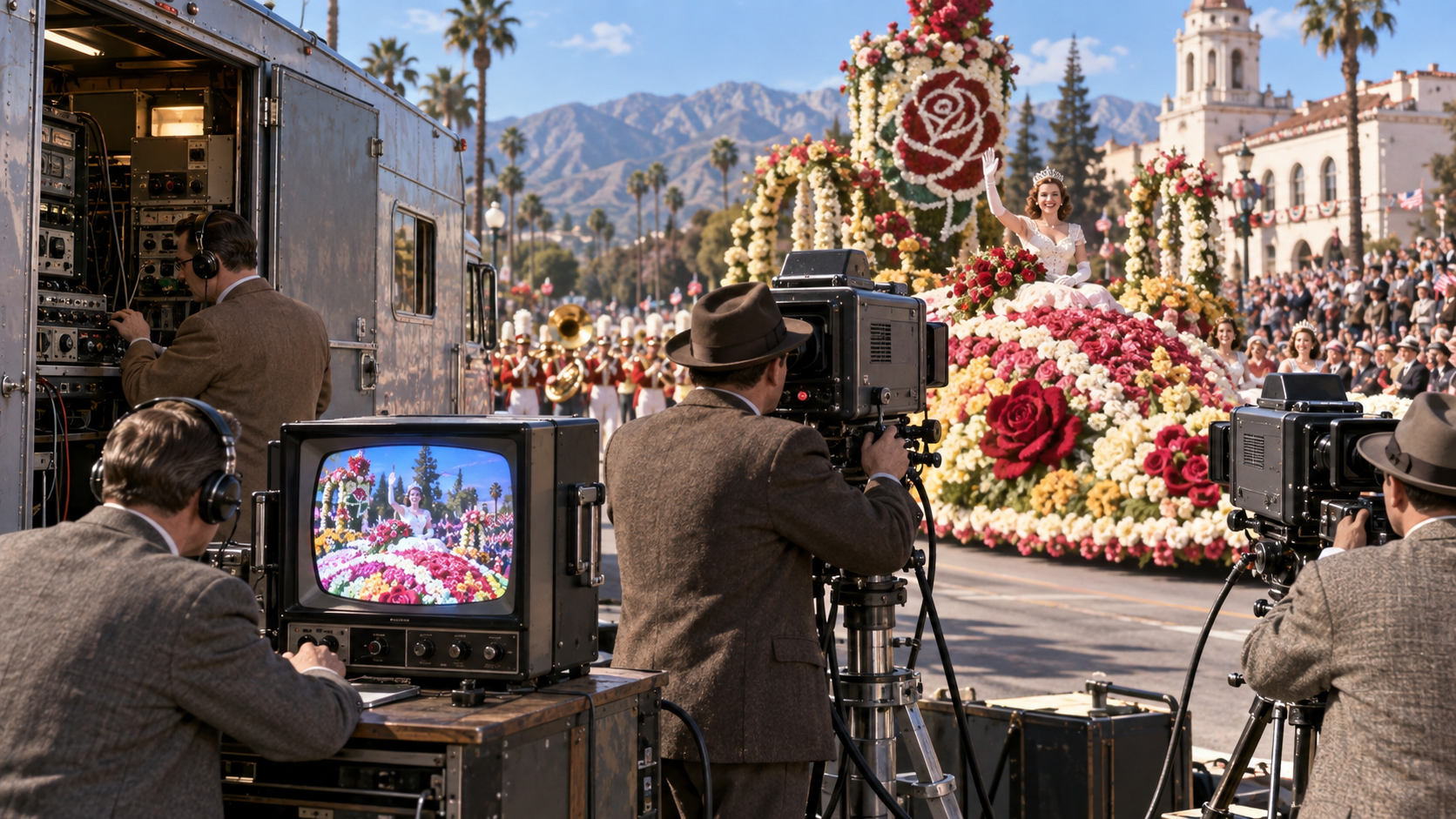
On January 1, 1954, NBC televised the Tournament of Roses Parade from Pasadena using the United States’ newly approved compatible color television system. The program was carried from coast to coast and reached 23 cities, making it the first nationwide broadcast built around the National Television System Committee color standard. Flower-covered floats, marching bands, uniforms, and Southern California sunshine supplied an ideal demonstration of what color could add to a familiar spectacle. For the television industry, the telecast was more than holiday entertainment: it was a public proof that a color signal could travel through the existing broadcast network while ordinary black-and-white receivers continued to display a usable monochrome picture.
That compatibility solved a problem that had stalled color television. An earlier system authorized by federal regulators could not be viewed properly on the millions of black-and-white sets already in American homes. Manufacturers and broadcasters then cooperated through the NTSC to develop a different technical standard, and the Federal Communications Commission approved it in December 1953. The Rose Parade arrived only weeks later. NBC and its parent company, RCA, deployed specially built cameras, control equipment, and network links to turn the route into a live color production. The engineering achievement depended on precise coordination, because early color cameras were large, light-hungry, complex machines and the national relay system had been designed during the monochrome era.
The audience able to see the parade in color was tiny. Consumer receivers using the new standard were not yet broadly available, and early sets would be expensive when they reached stores later in 1954. Many viewers therefore watched the same transmission in black and white, while invited groups and industry observers gathered around prototype color displays. That limitation made the event simultaneously historic and incomplete. NBC had demonstrated a workable mass-broadcast format, but it had not created a mass color audience overnight. Broadcasters still needed more color programs, manufacturers needed affordable and reliable sets, and stations needed costly new equipment before the technology could move from exhibition to everyday habit.
Color adoption proceeded slowly through the 1950s and accelerated during the 1960s as prices fell and networks expanded their schedules. The 1954 parade nevertheless established the template: a major live event could sell a new medium by making visual abundance part of the story. Parades, sports, variety shows, and spectaculars became especially effective showcases because their value was immediately visible without explanation. The Tournament of Roses also remained intertwined with broadcasting innovation, returning each New Year as a shared national ritual. Its first compatible coast-to-coast colorcast marks the point when color television stopped being merely a laboratory contest and entered popular culture as a practical, if still exclusive, viewing experience.
The compatible NTSC standard was designed so one broadcast could serve both new color receivers and the huge installed base of monochrome sets. Protecting viewers’ existing purchases was essential to winning regulatory and commercial support.
The FCC approved the revised color system in December 1953. NBC moved quickly, choosing the Rose Parade because flowers, costumes, and clear outdoor light made the improvement obvious even to observers unfamiliar with television engineering.
Engineers had to balance three color components, manage more demanding cameras, and move the live signal through a network assembled for black-and-white service. The production was an operating test as well as a show.
Very few households owned a compatible color set on broadcast day. The transmission’s importance therefore rests on the national system it demonstrated, not on the size of its original color-viewing audience.
RCA and other manufacturers spent the following years trying to lower prices and improve picture quality. Network schedules gradually added color programs until the technology became a standard household expectation.
The telecast helped establish a lasting bond between new display technology and event programming. Decades later, broadcasters would use sports and spectacles in much the same way to promote high definition and other formats.
Explore more of "On This Day ..."
Discover more events from the same date across news, politics, technology, sports, and other fields. Each link highlights significant moments that shaped history on different fronts.