

How Soccer Penalty-Kick Encroachment Works Explainer
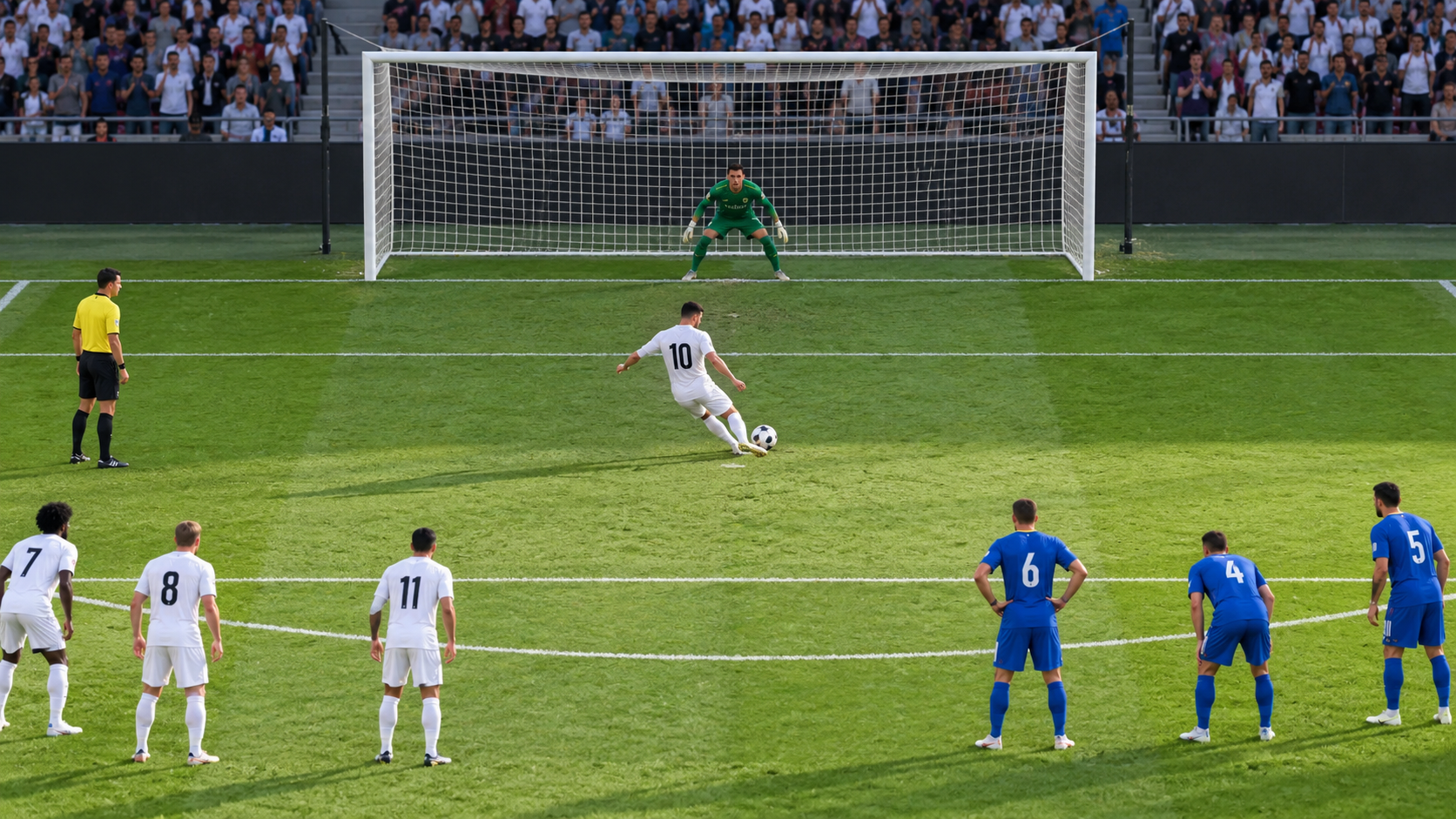
At a penalty kick, every player except the identified kicker and defending goalkeeper must be outside the penalty area, behind the penalty mark, and at least 9.15 metres from the ball. The penalty arc helps officials judge that distance. Entering too soon is called encroachment.
The consequence depends on who encroaches and whether the kick becomes a goal. If only an attacking teammate commits an offence and the ball enters the goal, the kick is retaken; if it does not, the defense normally receives an indirect free kick. A defending player's clear encroachment can produce a retake when it affects an unsuccessful kick.
Goalkeeper offences are judged separately. The keeper must have at least part of one foot touching, in line with, or behind the goal line when the ball is kicked. An early movement that materially affects a miss or save can lead to a retake and disciplinary action under the law.
Officials focus on offences that clearly affect play rather than every marginal step. When players from both teams commit relevant offences, a retake is generally ordered. The simplest viewing guide is to check the arc and penalty-area line at the instant the kicker strikes the ball.
Outside the penalty area, behind the penalty mark, and at least 9.15 metres from the ball.
Officials apply the law to clear encroachment, especially when the player becomes involved in the rebound or otherwise affects the outcome.
Keep at least part of one foot touching, level with, or behind the goal line when the ball is kicked.
Explore more "Explainers"
Discover additional explainers across politics, science, business, technology, and other fields. Each explainer breaks down a complex idea into clear, everyday language—helping you better understand how major concepts, systems, and debates shape the world around us.