

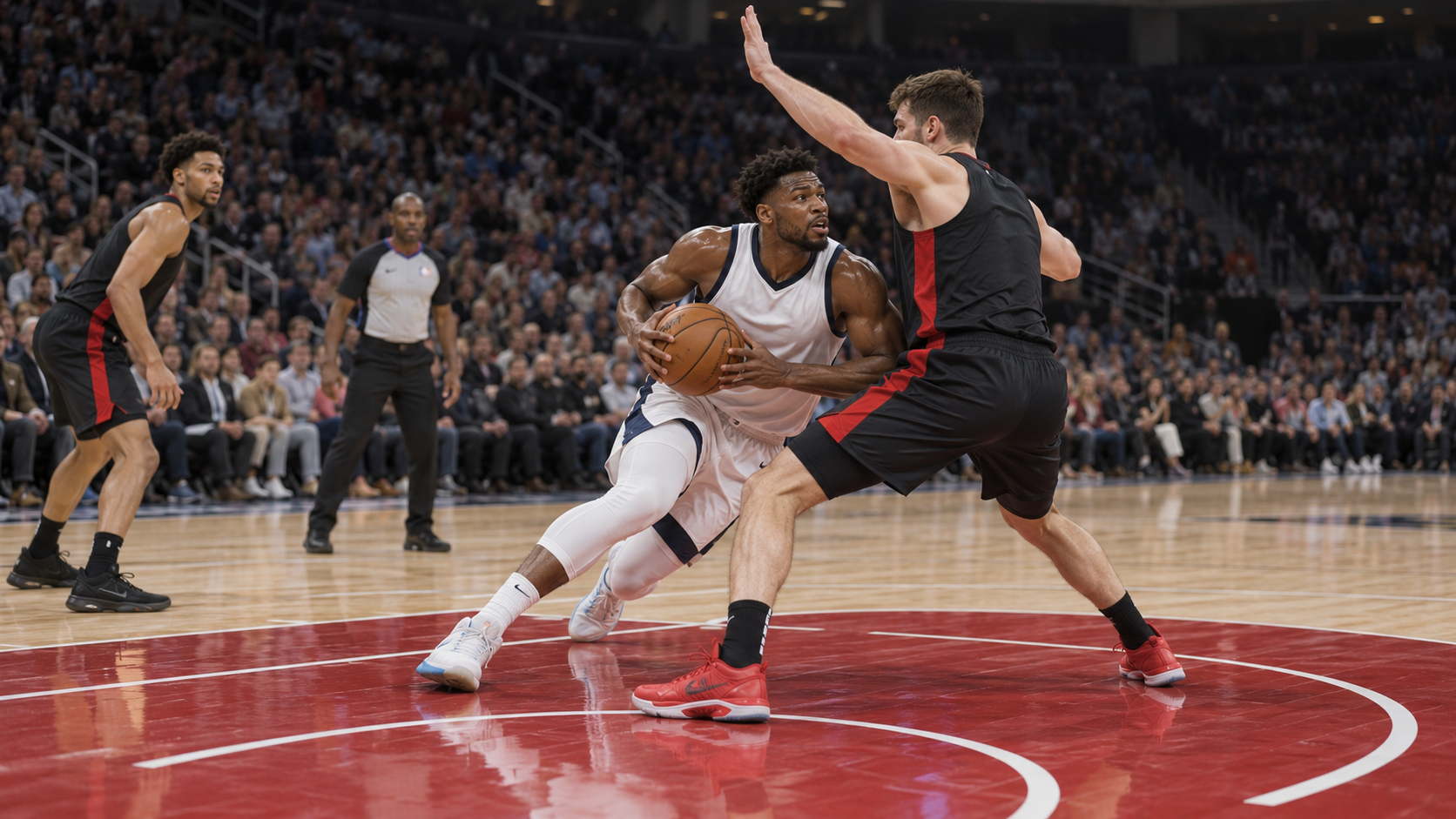
How Basketball Charging and Blocking Calls Work Explainer
A charging foul is called when an offensive player makes illegal contact with a defender who has established a legal guarding position. A blocking foul is charged when the defender has not gained that position in time or moves illegally into the attacker's path.
Legal guarding position begins when the defender faces the opponent with both feet on the floor. The defender may then move laterally or backward and does not have to remain perfectly still. The key question is whether the defender reached the spot before the offensive player began the protected upward shooting motion.
The restricted-area arc under the basket limits many secondary-defender charge calls. A defender with a foot on or inside the arc generally cannot draw an offensive foul on an airborne drive, though exceptions apply for primary defenders and certain lower-defensive-box situations.
Officials evaluate torso contact, timing, direction, and whether either player created abnormal contact. Replays may make a close collision look obvious in hindsight, but the ruling is based on the players' positions and movements at game speed. The arc and the defender's chest are the best visual clues.
No. After establishing legal position, a defender may move laterally or backward to maintain it.
It prevents many secondary defenders from drawing a charge while positioned on or inside the arc.
They focus on torso contact, legal position, timing, and which player created the illegal displacement.
Explore more "Explainers"
Discover additional explainers across politics, science, business, technology, and other fields. Each explainer breaks down a complex idea into clear, everyday language—helping you better understand how major concepts, systems, and debates shape the world around us.