

How Rugby Penalty Tries Work Explainer
A penalty try is awarded when foul play prevents a try that probably would have been scored, or prevents it from being scored in a more advantageous position. The referee does not need the attacking team to ground the ball because the illegal act stopped that outcome.
The award is worth seven points automatically. No conversion kick follows, which reflects the law's assumption that the prevented try would have been scored beneath the posts. Play restarts as it would after a converted try.
The referee also considers discipline for the offending player. A yellow or red card may accompany the penalty try when the foul warrants it; the automatic seven points do not replace individual sanctions. Repeated team infringements can influence that decision.
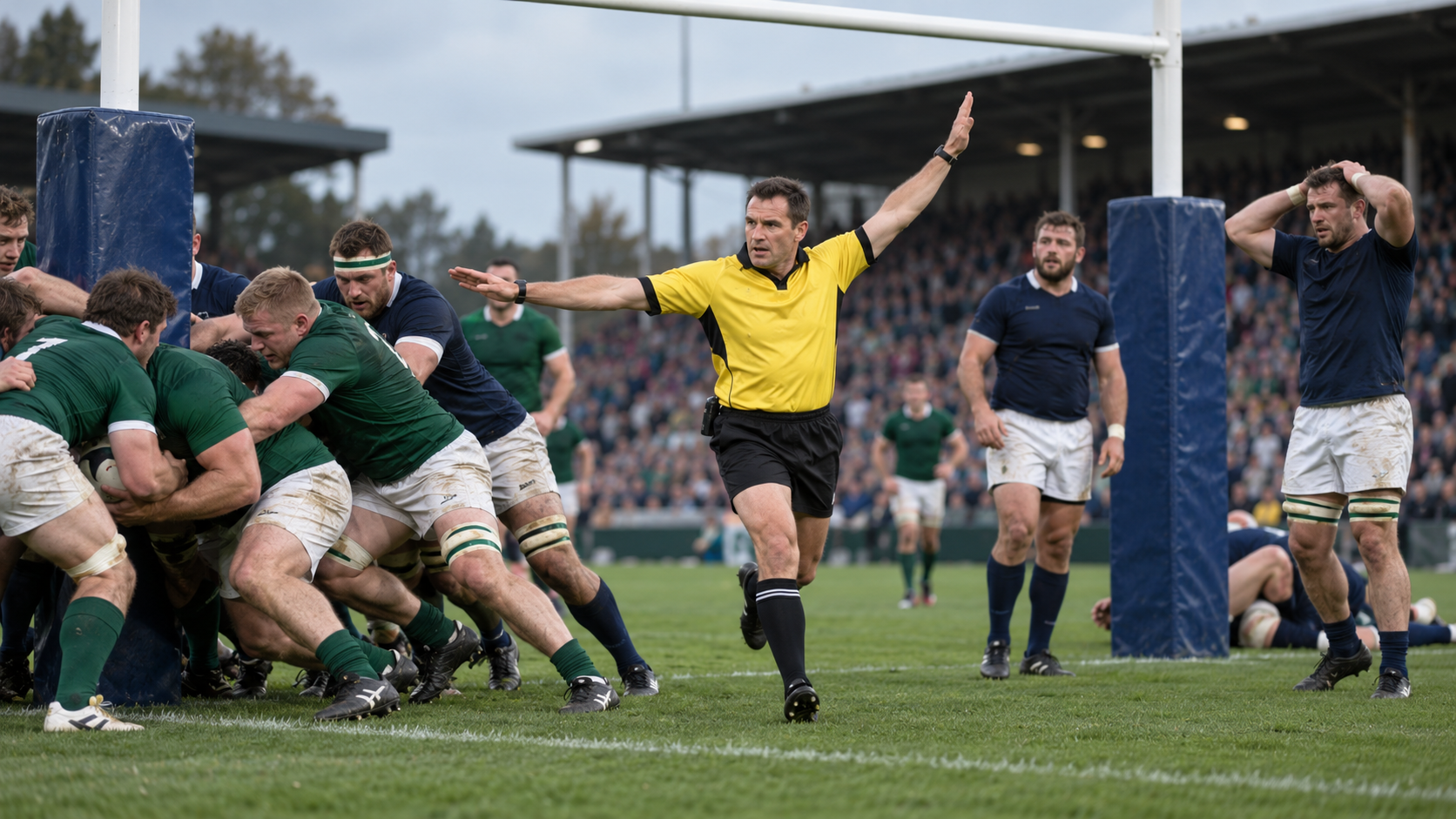
Common examples include collapsing a driving maul near the line, tackling a player without the ball, or deliberately knocking the ball dead when a try was probable. The standard is probability, not absolute certainty. Watch the referee run under the posts and raise an arm for the signal.
Seven points are awarded automatically.
No. The value already includes the equivalent of a successful conversion.
Yes. The referee may issue a yellow or red card when the foul play merits an individual sanction.
Explore more "Explainers"
Discover additional explainers across politics, science, business, technology, and other fields. Each explainer breaks down a complex idea into clear, everyday language—helping you better understand how major concepts, systems, and debates shape the world around us.