

How NFL Intentional Grounding Works Explainer
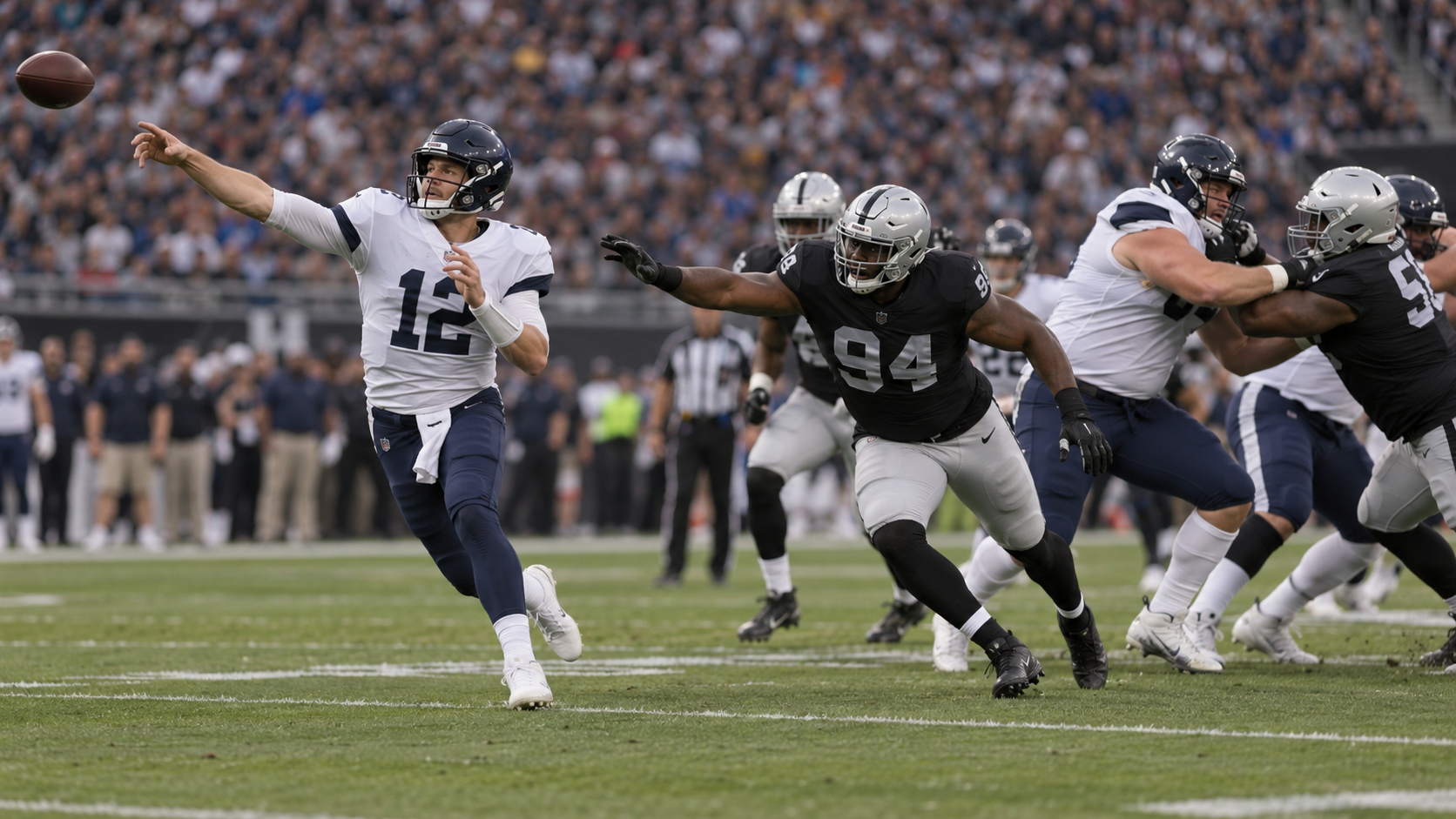
Intentional grounding is called when a passer facing imminent loss of yardage throws a forward pass without a realistic chance of completion in an area lacking an eligible receiver. The rule prevents a quarterback from escaping a sack simply by discarding the ball illegally.
A passer outside the tackle box receives an important exception if the pass lands beyond the line of scrimmage, including beyond it out of bounds. The passer must have moved outside the area between the original positions of the offensive tackles before throwing.
Stopping the clock is another concern. A quarterback may immediately spike the ball after taking a hand-to-hand snap to stop the clock, but a delayed spike or one from shotgun formation can be grounding. Contact that significantly affects the throw may also change the ruling.
The penalty includes loss of down and yardage from the appropriate spot, creating a result similar to a sack. If it occurs in the offense's end zone, it is a safety. Viewers should locate the tackles, line of scrimmage, nearby receiver, and landing point.
Yes, when outside the tackle box and the pass reaches or crosses the line of scrimmage.
Inside the tackle box, the throw needs a realistic chance of completion near an eligible receiver.
The rules create an exception for an immediate spike after a hand-to-hand snap to stop the clock.
Explore more "Explainers"
Discover additional explainers across politics, science, business, technology, and other fields. Each explainer breaks down a complex idea into clear, everyday language—helping you better understand how major concepts, systems, and debates shape the world around us.