

How Basketball Flagrant Fouls Work Explainer
In the NBA, a flagrant foul is contact judged more serious than an ordinary personal foul. Flagrant Foul Penalty 1 covers unnecessary contact, while Flagrant Foul Penalty 2 covers contact that is both unnecessary and excessive.
Officials consider windup, impact, follow-through, risk of injury, severity, and whether the contact was a legitimate basketball play. Intent can matter but is not required; reckless contact can be flagrant even when the player says no harm was intended.
A Flagrant 1 gives the offended team two free throws and possession. A Flagrant 2 carries the same team penalty and automatically ejects the offender. League review may later assess fines, points, or suspensions under the disciplinary system.
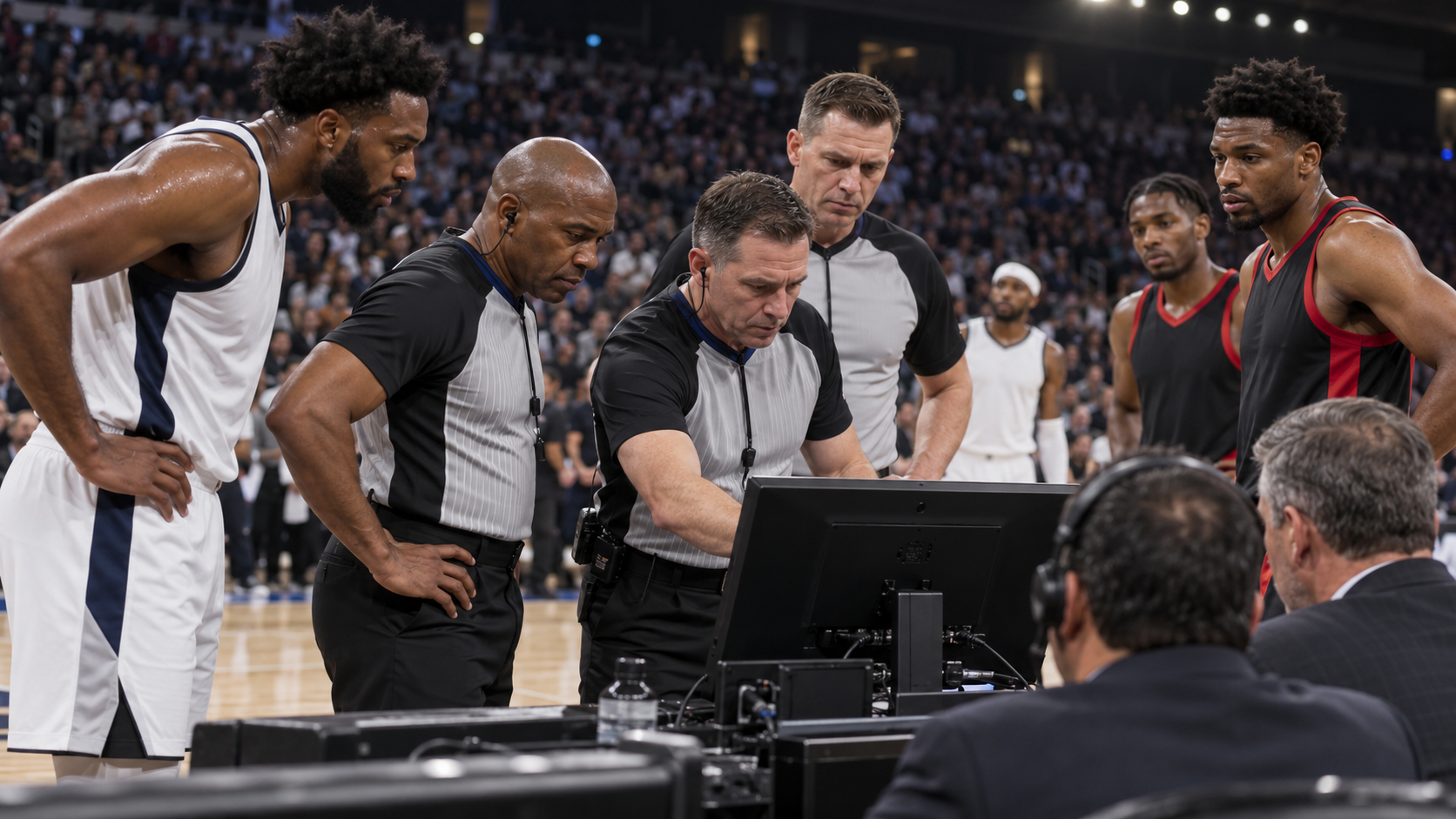
Referees may use instant replay after an eligible foul call to determine whether it meets a flagrant standard and which level applies. The slow-motion view helps identify force and point of contact, but officials also consider the full-speed sequence and context.
Unnecessary contact that results in two free throws and possession for the offended team.
Unnecessary and excessive contact; it brings two free throws, possession, and the offender's ejection.
No. Officials may rule reckless or dangerous contact flagrant without finding deliberate intent.
Explore more "Explainers"
Discover additional explainers across politics, science, business, technology, and other fields. Each explainer breaks down a complex idea into clear, everyday language—helping you better understand how major concepts, systems, and debates shape the world around us.