

How Soccer Indirect Free Kicks Work Explainer
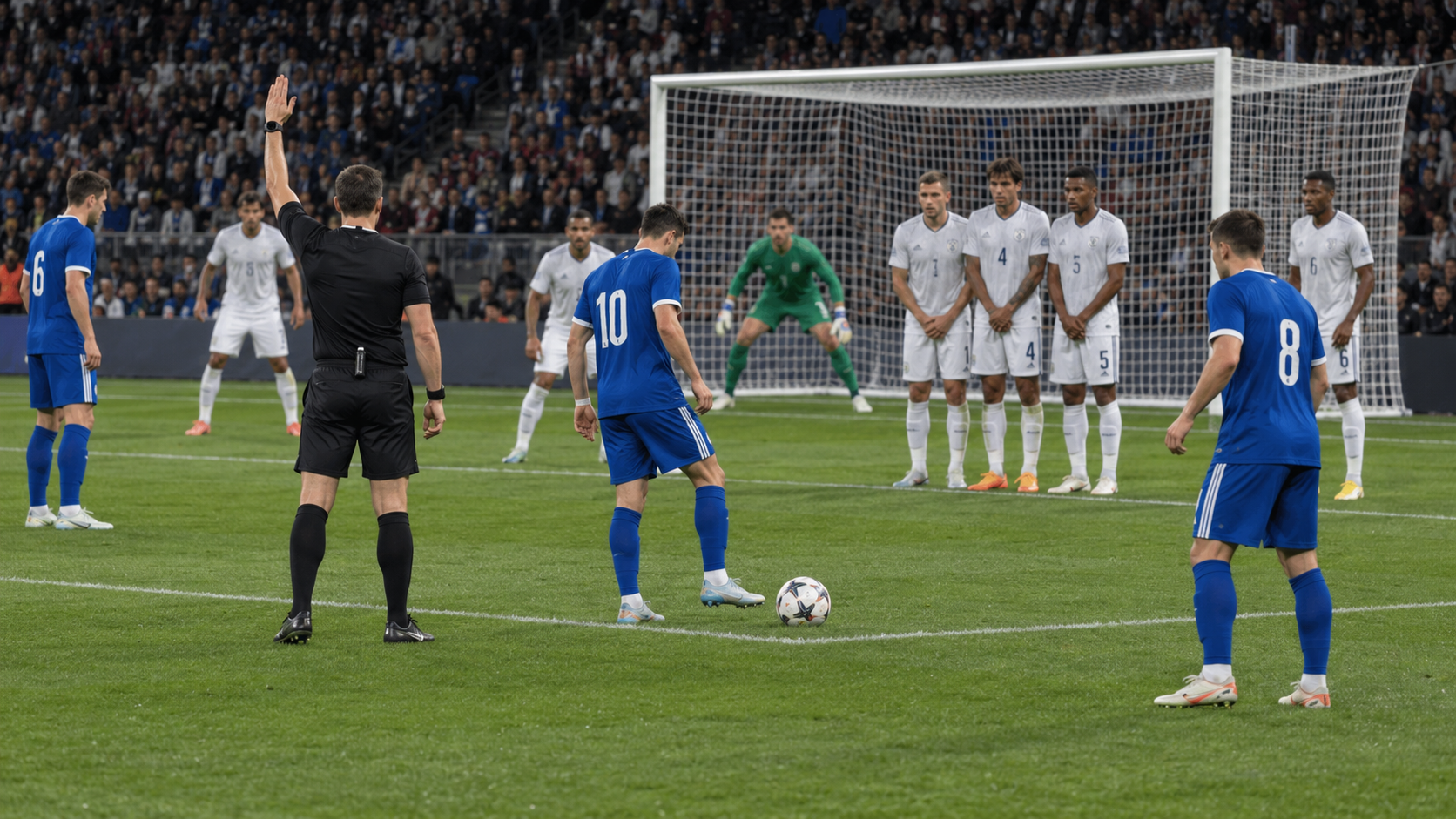
An indirect free kick is a restart from which the kicker cannot score directly. The ball must touch another player before entering the goal. The referee signals the restart by raising one arm overhead and keeps it raised until that second touch or until the ball goes out.
Indirect kicks follow non-contact and technical offences such as dangerous play without contact, offside, certain goalkeeper handling violations, or impeding an opponent without contact. Direct free kicks are used for the physical fouls listed separately in the Laws.
If an indirect kick goes straight into the opponents' goal, the restart is a goal kick. If it goes directly into the kicker's own goal, the opponents receive a corner kick. A slight touch by any player makes a later goal eligible to count.
Defenders normally must remain 9.15 metres away until the ball is in play, with special positioning for kicks close to the goal line. The raised arm is the easiest clue. If the arm drops after a touch, the ball can now enter either goal under normal play.
No. Another player must touch the ball before it enters the goal.
By holding one arm overhead until the second touch or until the ball goes out of play.
No goal is awarded; play restarts with a goal kick.
Explore more "Explainers"
Discover additional explainers across politics, science, business, technology, and other fields. Each explainer breaks down a complex idea into clear, everyday language—helping you better understand how major concepts, systems, and debates shape the world around us.