

How Swimming Individual Medley Order Works Explainer
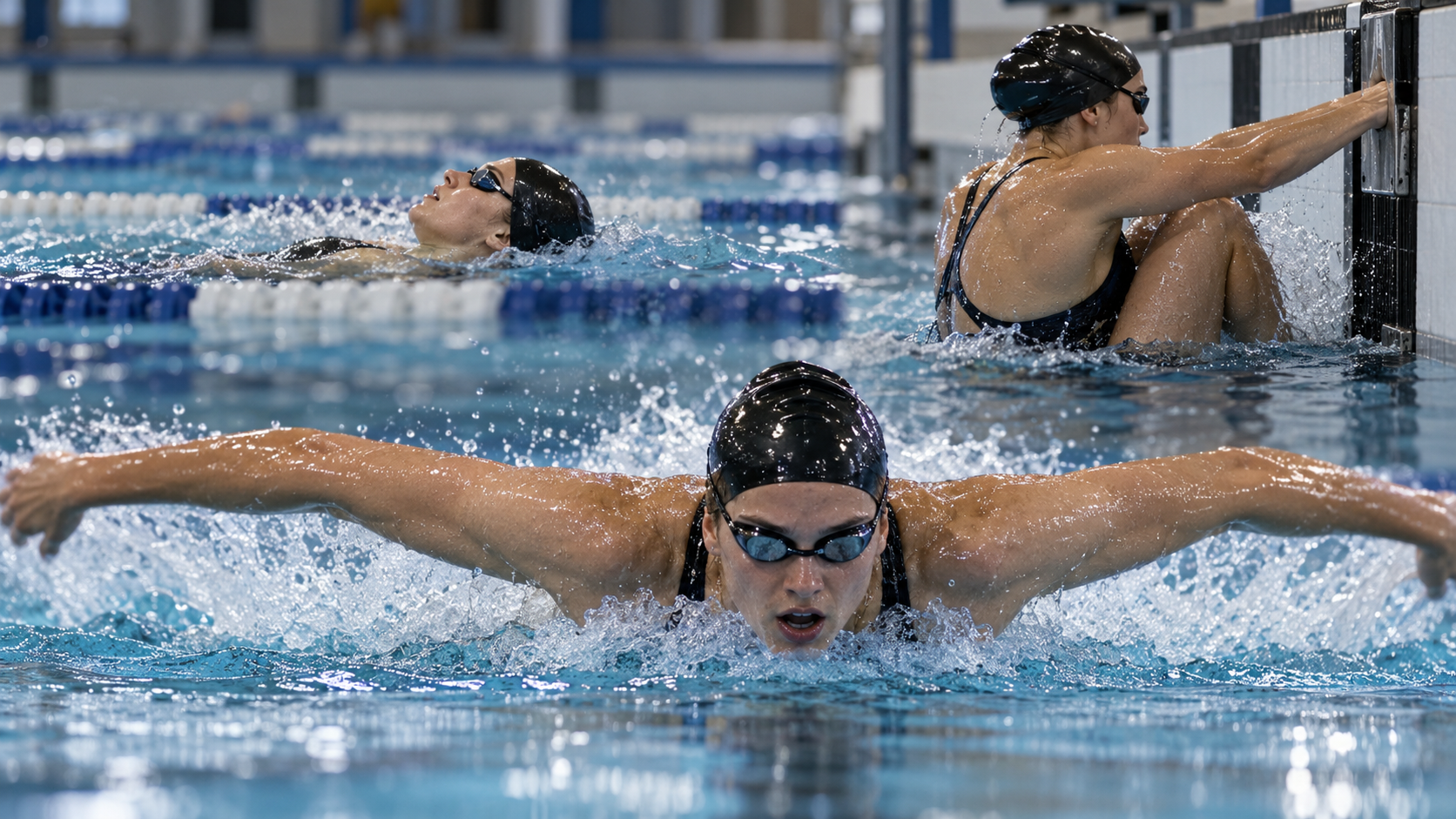
An individual medley race requires one swimmer to use four strokes in a fixed order: butterfly, backstroke, breaststroke, then freestyle. Each stroke covers one quarter of the total distance, so a 200-metre event contains 50 metres of each.
Every section must follow that stroke's rules, including starts, turns, and finishes. The transitions are especially important because the finish of one stroke must be completed legally before the swimmer begins the next. Backstroke-to-breaststroke often demands the most precise wall timing.
Freestyle in a medley means any stroke other than butterfly, backstroke, or breaststroke. Most swimmers use front crawl because it is fastest. Switching into one of the earlier three strokes during that final quarter can cause a disqualification.
Medley relay order is different: backstroke, breaststroke, butterfly, freestyle. The relay starts in the water for the backstroke swimmer, which explains the change. A simple memory aid is IM equals fly-back-breast-free; relay begins with back.
Butterfly, backstroke, breaststroke, then freestyle.
Any stroke except butterfly, backstroke, or breaststroke; front crawl is the usual choice.
The medley relay starts with backstroke so the first swimmer can begin in the water without conflicting with an incoming teammate.
Explore more "Explainers"
Discover additional explainers across politics, science, business, technology, and other fields. Each explainer breaks down a complex idea into clear, everyday language—helping you better understand how major concepts, systems, and debates shape the world around us.