

How Rugby Knock-Ons Work Explainer
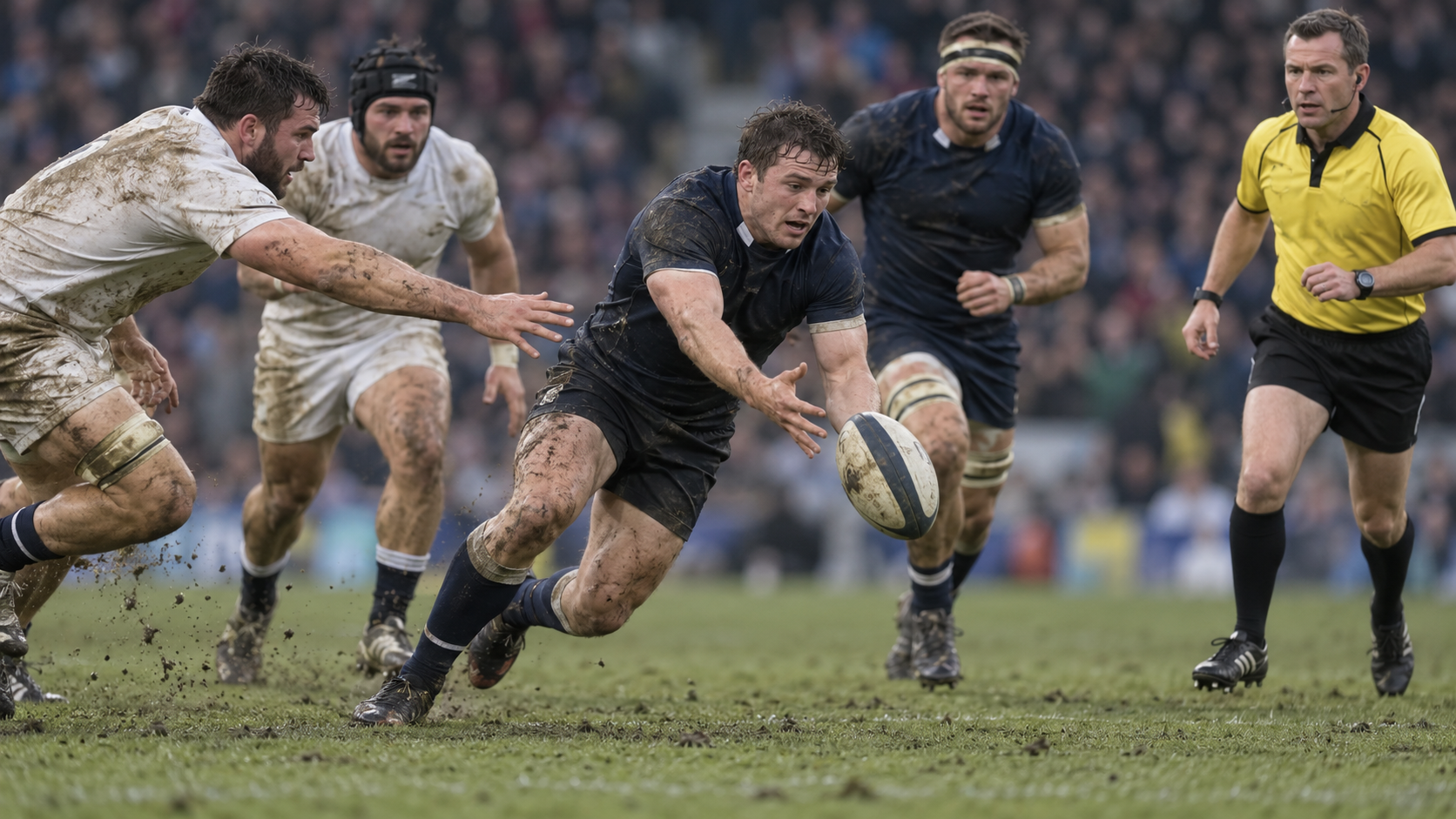
A knock-on, called a knock forward in the Laws, occurs when a player loses possession and the ball travels toward the opponents' dead-ball line after touching the hand or arm, then hits the ground or another player before the original player catches it.
Accidental knock-ons usually produce a scrum for the non-offending team. Advantage may allow play to continue if the opponents gain a real tactical or territorial benefit. If no advantage develops, the referee returns to the location of the infringement.
A deliberate knock-on is foul play and brings a penalty, often with a yellow card when it stops a promising attack. A penalty try is possible if the deliberate act prevents a probable try. Officials consider whether the player had a realistic chance to catch the ball.
The ball moving forward is not enough by itself; the player's action and the direction relative to the field matter. A legal pass that drifts forward because of momentum is judged from the hands. Watch the initial contact, not only where the ball lands.
A scrum is awarded to the non-offending team unless advantage is successfully played.
Yes. It is a penalty offence and may also bring a yellow card or penalty try.
No. Officials judge whether the player propelled or lost the ball forward from the hand or arm under the Law.
Explore more "Explainers"
Discover additional explainers across politics, science, business, technology, and other fields. Each explainer breaks down a complex idea into clear, everyday language—helping you better understand how major concepts, systems, and debates shape the world around us.