

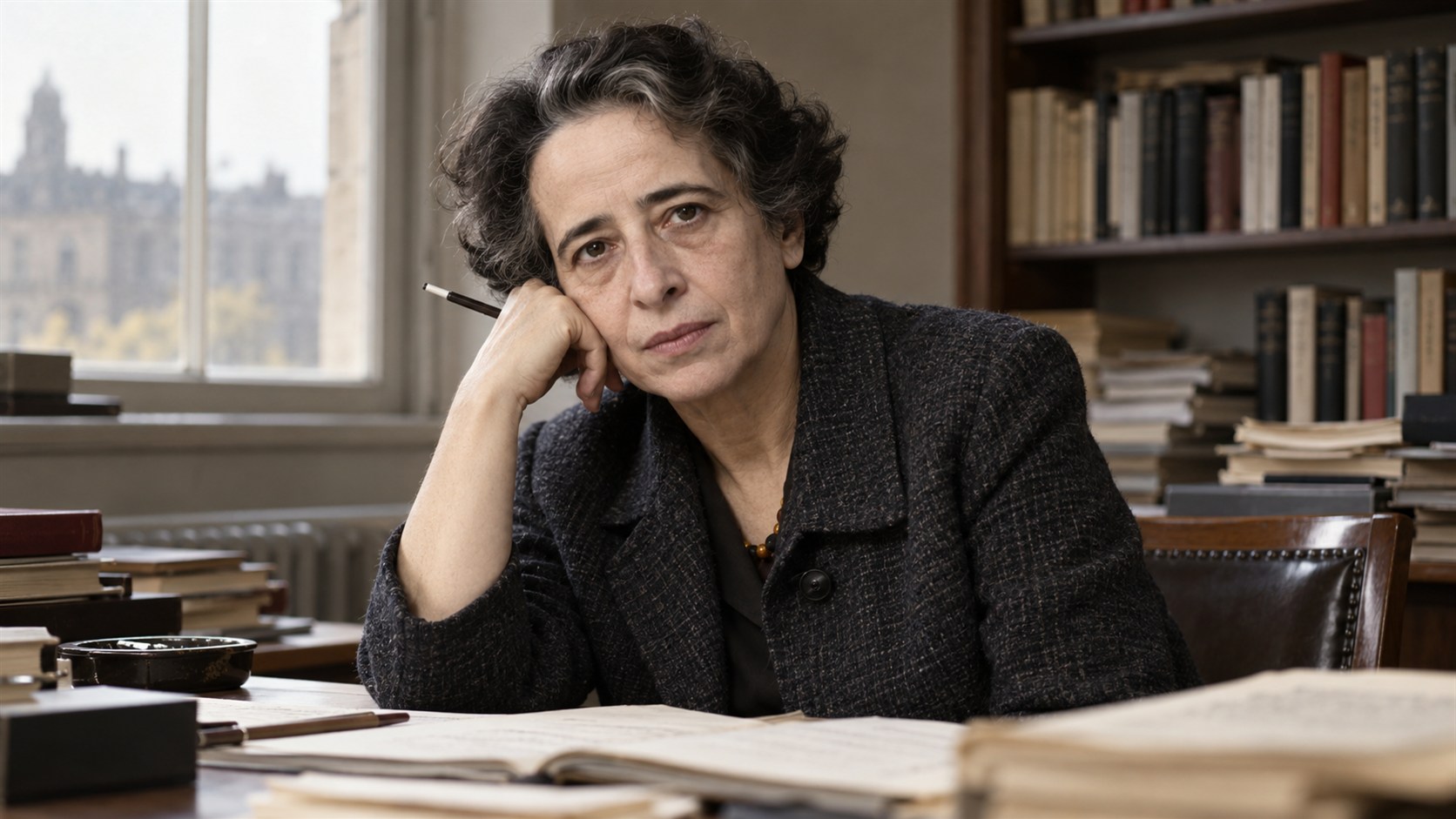
“Action is, in fact, the one miracle-working faculty of man.”
In The Human Condition, Hannah Arendt said “Action is, in fact, the one miracle-working faculty of man.” The source described action as the human capacity to begin something new within a world of relationships, consequences, and mortality. Arendt’s miracle is political possibility grounded in plural human action, not supernatural rescue or personal wishfulness. November 11 is the article’s position in this calendar series, not a claim that the words originated on that day. The documented setting is 1958; keeping the two dates separate protects the quotation from becoming a free-floating slogan and gives readers evidence for judging its proper reach.
People are not limited to repeating automatic processes because speech and action can introduce an unforeseen beginning among others. Its relevance becomes clearer because algorithmic prediction and institutional routine can make the future feel predetermined even though collective choices still alter public life. A measured application would be to identify one routine treated as inevitable, convene the people affected, and test a responsible alternative with clear review points. Starting at that scale respects uncertainty and turns an appealing idea into evidence. It also creates a pause between intention and consequence, where the people affected can correct assumptions or propose a better method.
The important qualification is that newness is not automatically good, control over outcomes is limited, and action creates obligations to judge, repair, and sometimes forgive. Compact language gains force by leaving conditions outside the frame, so responsible interpretation has to restore them. Resources, power, safety, health, culture, and timing can change what action is available. The fairest reading asks who benefits, who carries the risk, and what evidence could require a different conclusion. It also checks the sentence against the larger work instead of borrowing its authority for an unrelated argument. That discipline matters because familiar quotations are often repeated after their original tension, audience, and purpose have disappeared from view.
Algorithmic prediction and institutional routine can make the future feel predetermined even though collective choices still alter public life. Under those conditions, the words remain a useful prompt for clearer attention. Try to identify one routine treated as inevitable, convene the people affected, and test a responsible alternative with clear review points. Then review the outcome for clarity, dignity, connection, access, and agency. Arendt’s miracle is political possibility grounded in plural human action, not supernatural rescue or personal wishfulness. If the method fails those tests, revise the method instead of defending the slogan. Practical wisdom grows when a strong sentence remains answerable to lived consequences.
Hannah Arendt used the line in The Human Condition, documented in 1958. The source described action as the human capacity to begin something new within a world of relationships, consequences, and mortality.
Arendt’s miracle is political possibility grounded in plural human action, not supernatural rescue or personal wishfulness. November 11 is only this series placement; it is not presented as the date when the words originated.
People are not limited to repeating automatic processes because speech and action can introduce an unforeseen beginning among others.
Newness is not automatically good, control over outcomes is limited, and action creates obligations to judge, repair, and sometimes forgive.
Algorithmic prediction and institutional routine can make the future feel predetermined even though collective choices still alter public life.
A measured way to act on the idea is to identify one routine treated as inevitable, convene the people affected, and test a responsible alternative with clear review points.
Explore more "Quotes of The Day"
Continue exploring how writers, thinkers, artists, and advocates have described the choices that shape an everyday life.