

On This Day in Pop: March 15, 1956
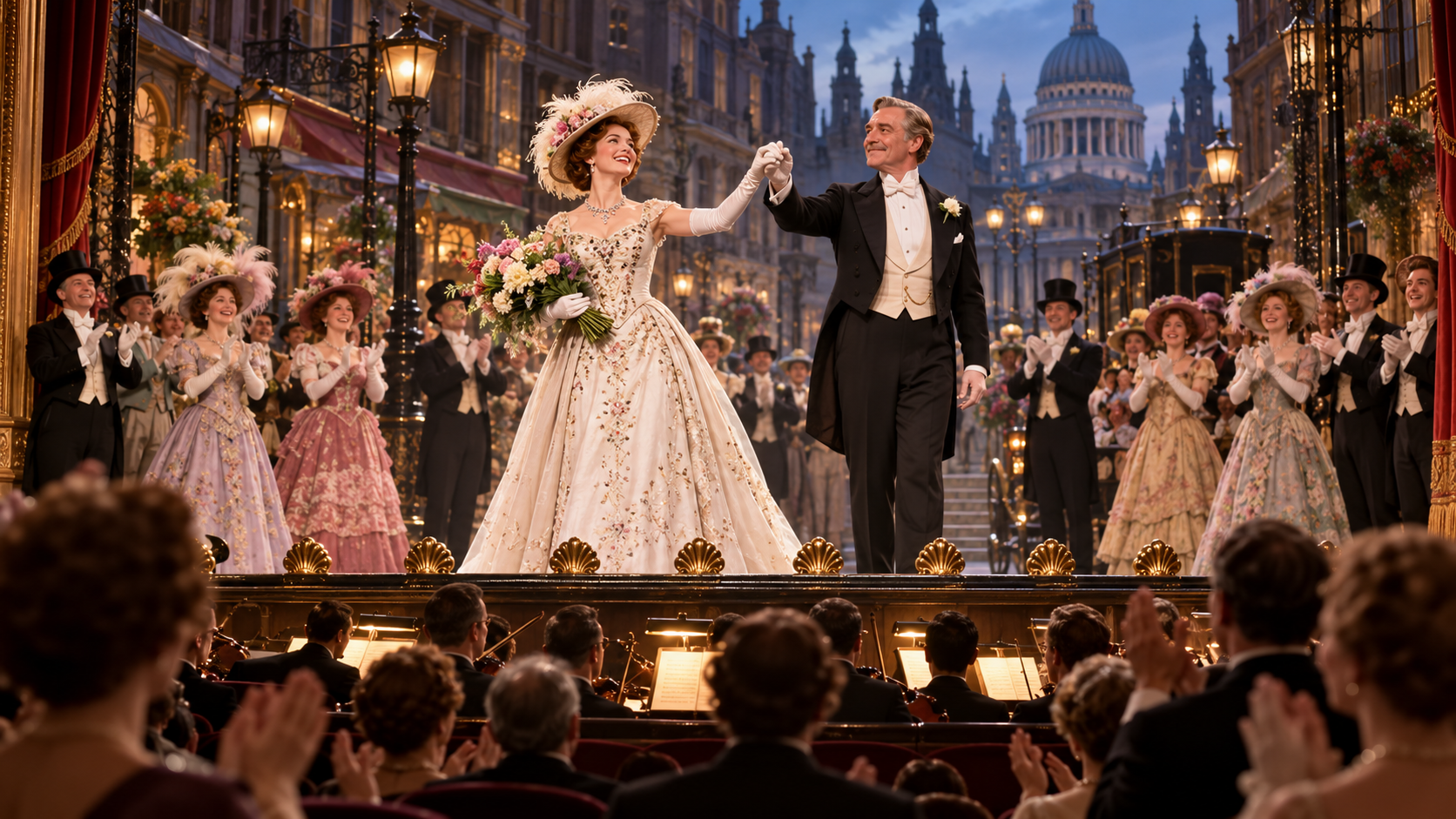
On March 15, 1956, My Fair Lady opened at Broadway’s Mark Hellinger Theatre with Julie Andrews as Eliza Doolittle and Rex Harrison as Henry Higgins. Alan Jay Lerner and Frederick Loewe adapted George Bernard Shaw’s Pygmalion, preserving the battle over speech, class and self-determination while adding songs. Moss Hart directed a production whose wit, costumes and melodic confidence made a difficult source seem inevitable as musical theater. Seen in its own time, the occasion was more than a tidy calendar entry. It emerged from choices by performers, writers, technicians, executives and audiences, each working within the opportunities and constraints of the period. Restoring that setting keeps the story human and specific instead of treating a complicated cultural shift as inevitable.
Songs including “Wouldn’t It Be Loverly?,” “I Could Have Danced All Night” and “The Rain in Spain” carried character and argument rather than stopping the story. Harrison’s rhythmically spoken approach solved the challenge of giving Higgins music, while Andrews revealed both comic precision and vocal radiance. The production also depends on a discomfort still debated: Higgins tries to remake Eliza as a social experiment, and her growing independence complicates the show’s romance. The reaction also shows how popular culture gathers momentum. A premiere, broadcast, release or public appearance can feel self-contained on the day, yet its meaning expands through reviews, radio, television, sales, conversation and imitation. Those channels reach people unevenly, but together they can turn one event into a reference point that later work follows, revises or rejects.
My Fair Lady ran 2,717 Broadway performances, won six Tony Awards and generated a hit cast recording before the 1964 film extended its reach. Revivals continue to reassess the ending and the balance of power between Eliza and Higgins. Opening night matters not only as the start of a blockbuster, but as the moment an intellectually thorny adaptation proved that sophistication and mass appeal could share a stage. That longer view is why the date still matters. It opens a door onto changes involving many contributors, including people whose labor was less visible than the headline names. Recordings, films, photographs and documents allow later audiences to reconsider both the achievement and its limits. Pop history is strongest when celebration is paired with context, and this anniversary leaves room for both. Its afterlife also shows that cultural memory is active: anniversaries, restorations, reissues and fresh criticism keep changing which details receive attention and which assumptions are questioned. Looking back does not mean pretending everyone experienced the moment alike; it means noticing the distance between a public milestone, the industry around it and the private reactions beyond the spotlight.
The Lerner and Loewe adaptation opened with Julie Andrews and Rex Harrison after an out-of-town tryout refined its difficult material.
The setting and sequence matter because they show how My Fair Lady’s Broadway opening reached the public on this particular date.
Critical enthusiasm, memorable songs and star performances turned the production into one of Broadway’s longest-running hits of its era.
The immediate response traveled through the era’s available channels, from press and broadcast coverage to ticket buyers, listeners and viewers.
The musical entered the standard repertory while revivals continue debating class, gender, language and Eliza’s autonomy.
Its reputation has kept developing through preservation, scholarship, revival and the interpretations of later audiences.
Explore more of "On This Day ..."
Discover more events from the same date across news, politics, technology, sports, and other fields. Each link highlights significant moments that shaped history on different fronts.