

On This Day in Pop: March 21, 1980
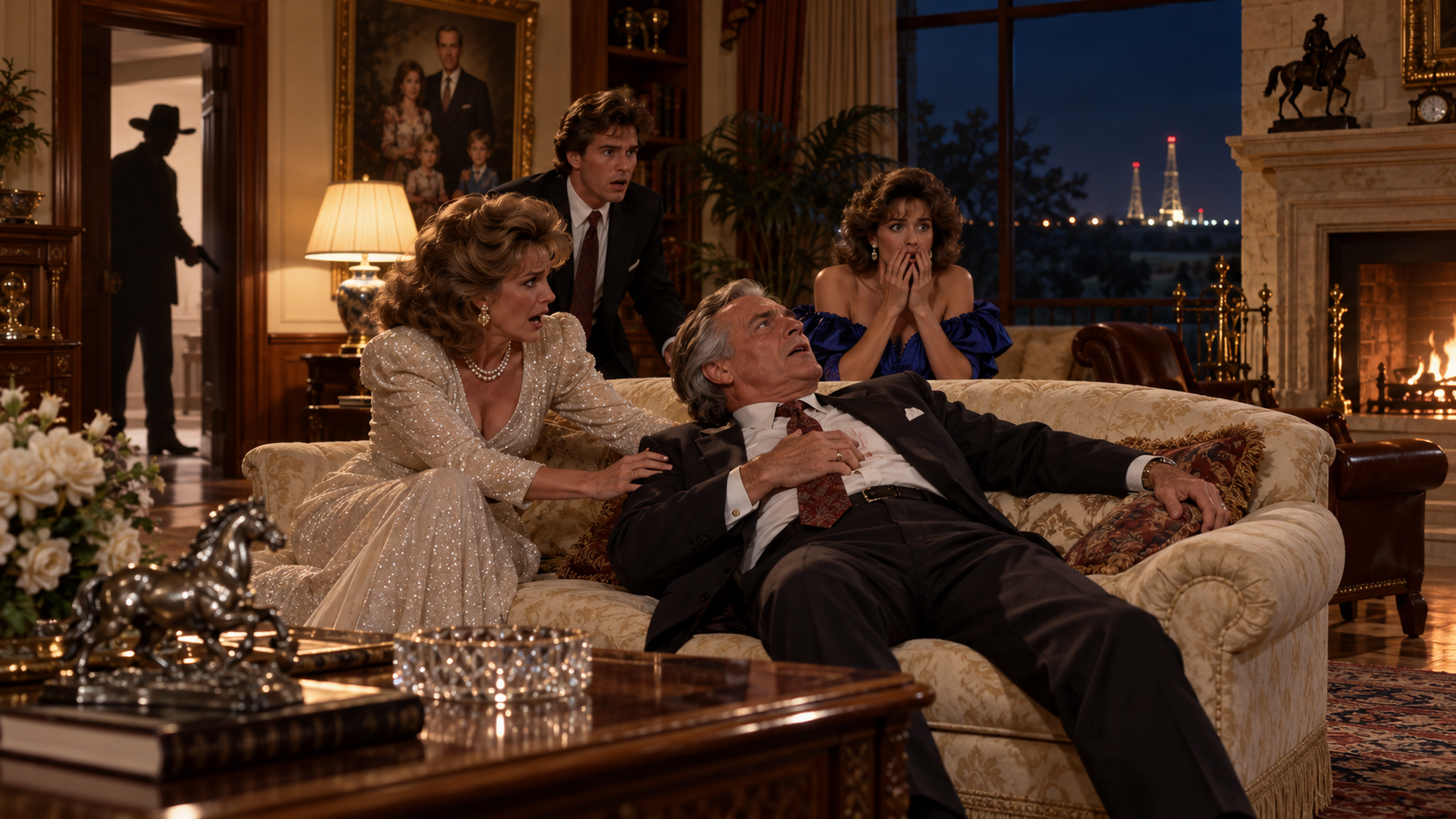
On March 21, 1980, the CBS drama Dallas ended its third season with oil baron J.R. Ewing shot by an unseen attacker. Larry Hagman had made J.R. charming, cruel and endlessly provocative, giving almost every character a reason to want revenge. The episode withheld the gunman’s identity and sent the question “Who shot J.R.?” beyond television discussion into headlines, advertising, politics and everyday conversation. Seen in its own time, the occasion was more than a tidy calendar entry. It emerged from choices by performers, writers, technicians, executives and audiences, each working within the opportunities and constraints of the period. Restoring that setting keeps the story human and specific instead of treating a complicated cultural shift as inevitable.
The mystery exploited the long summer gap before new episodes returned, allowing speculation to multiply without social media or streaming spoilers. CBS promoted suspects, cast members guarded the secret and viewers revisited relationships for clues. Production uncertainty, including Hagman’s contract negotiations, added another layer of suspense. The reveal in November drew an enormous audience and demonstrated the commercial power of delaying narrative resolution across a season break. The reaction also shows how popular culture gathers momentum. A premiere, broadcast, release or public appearance can feel self-contained on the day, yet its meaning expands through reviews, radio, television, sales, conversation and imitation. Those channels reach people unevenly, but together they can turn one event into a reference point that later work follows, revises or rejects.
Television had used cliffhangers before, but Dallas turned one into an international participatory campaign. Later serial dramas adopted similar finales, while modern platforms refined suspense into the binge and the viral theory. The episode also reveals how a concentrated broadcast system could make a fictional question nearly unavoidable. Its afterlife survives whenever a series ends on one irresistible uncertainty and asks the public to keep the story alive. That longer view is why the date still matters. It opens a door onto changes involving many contributors, including people whose labor was less visible than the headline names. Recordings, films, photographs and documents allow later audiences to reconsider both the achievement and its limits. Pop history is strongest when celebration is paired with context, and this anniversary leaves room for both. Its afterlife also shows that cultural memory is active: anniversaries, restorations, reissues and fresh criticism keep changing which details receive attention and which assumptions are questioned. Looking back does not mean pretending everyone experienced the moment alike; it means noticing the distance between a public milestone, the industry around it and the private reactions beyond the spotlight. The tension between the immediate event and the story later told about it is part of what makes this episode worth revisiting instead of merely listing.
The season finale left J.R. Ewing wounded and hid the attacker’s identity after a year of betrayals created many plausible suspects.
The setting and sequence matter because they show how the Who shot J.R. cliffhanger reached the public on this particular date.
Months of promotion and speculation turned a soap-opera plot into a shared media event before the reveal drew a huge audience.
The immediate response traveled through the era’s available channels, from press and broadcast coverage to ticket buyers, listeners and viewers.
The cliffhanger became a model for serialized television marketing and for using audience theories to sustain attention between seasons.
Its reputation has kept developing through preservation, scholarship, revival and the interpretations of later audiences.
Explore more of "On This Day ..."
Discover more events from the same date across news, politics, technology, sports, and other fields. Each link highlights significant moments that shaped history on different fronts.