

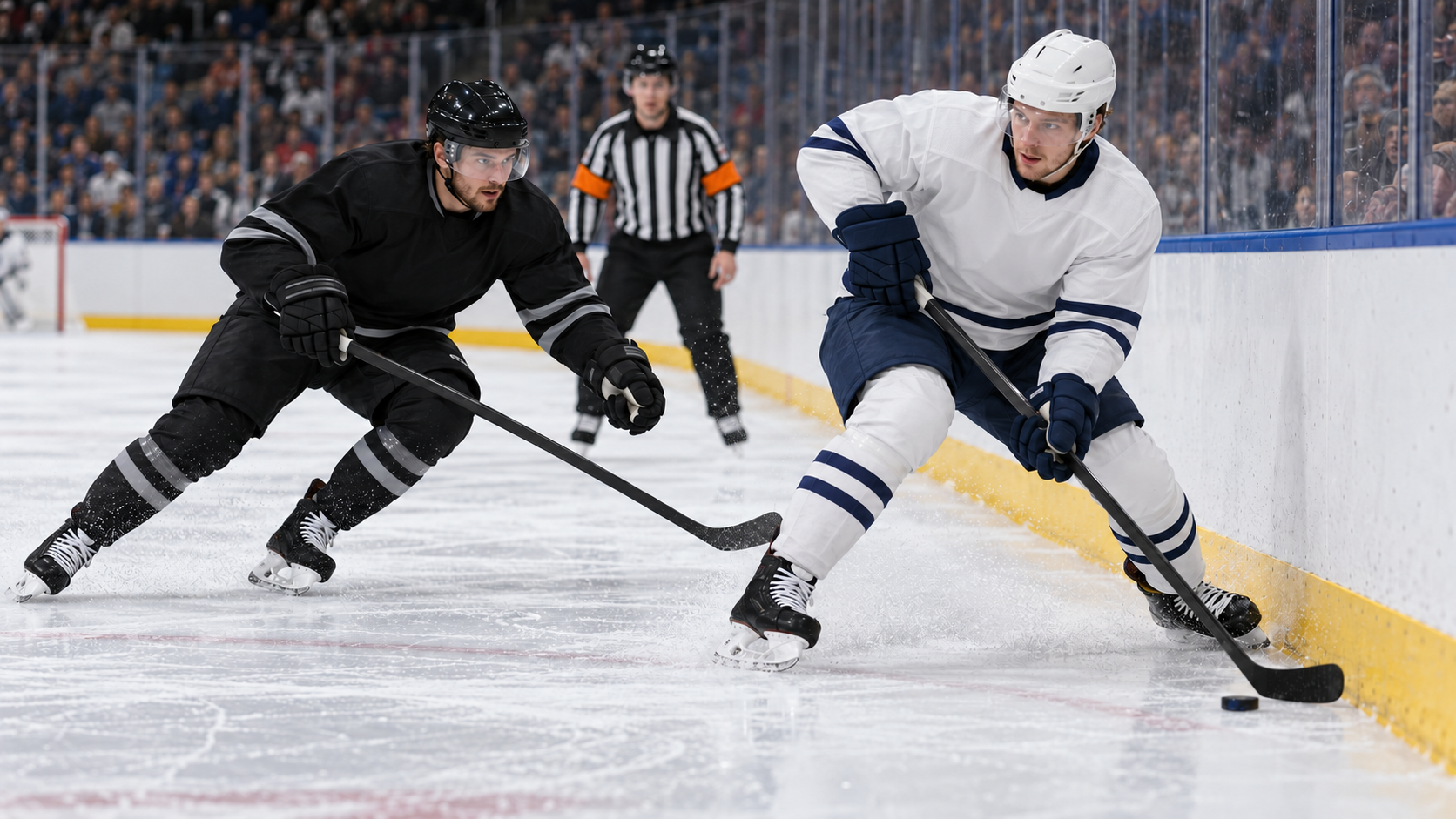
How Hockey Boarding Penalties Work Explainer
Boarding is called when a player checks, cross-checks, elbows, charges, or trips an opponent so that the opponent is thrown violently into the boards. The rule focuses on the dangerous result and the checker's responsibility, not merely on whether contact happened near the wall.
Officials consider the force of the hit, the opponent's position, the distance from the boards, and whether the opponent was vulnerable. A player who turns at the last instant can affect the judgment, but that does not erase the checker's duty to avoid a dangerous impact.
The referee may assess a minor or major penalty based on violence and circumstances. A major generally carries a game misconduct under NHL rules, and an injury can increase the severity. Supplementary discipline may follow after league review even if the on-ice call was smaller.
A legal body check separates an opponent from the puck without recklessly driving that player into the boards. The key visual clue is the path after contact: officials ask whether the hitter launched or propelled a vulnerable opponent into the wall in a way that could have been avoided.
No. The call depends on a dangerous, avoidable impact that violently sends an opponent into the boards.
It can affect the ruling, but the checking player still has a duty to avoid a dangerous hit.
Yes. Officials may assess a major and game misconduct when the violence or circumstances warrant it.
Explore more "Explainers"
Discover additional explainers across politics, science, business, technology, and other fields. Each explainer breaks down a complex idea into clear, everyday language—helping you better understand how major concepts, systems, and debates shape the world around us.