

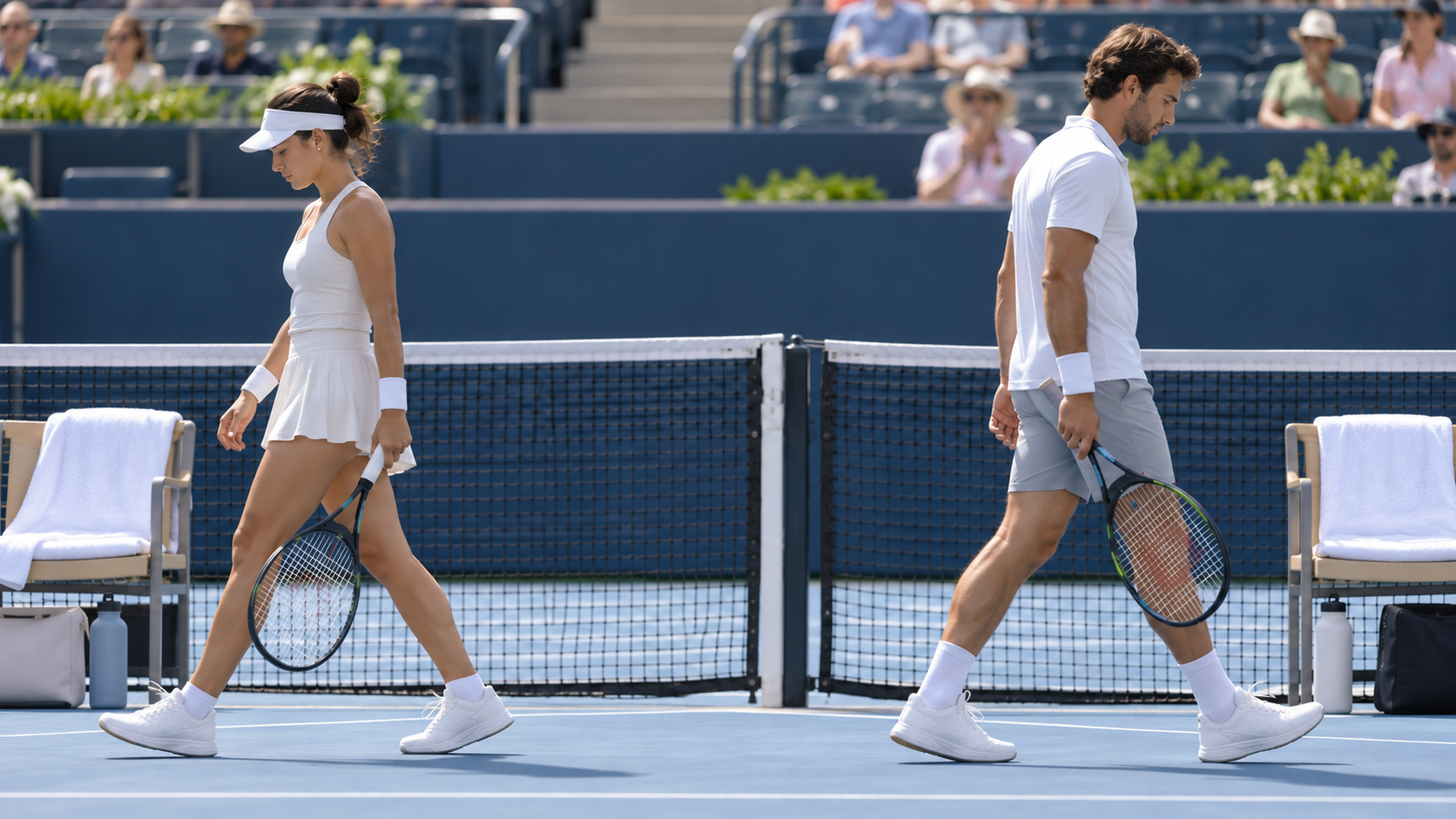
How Tennis Changeovers Work Explainer
Tennis players change ends after the first game, then after every odd-numbered game of each set. They also change ends at the end of a set unless the set's total number of games is even, in which case they switch after the next set's first game.
A standard changeover allows up to 90 seconds from the end of one point to the start of the next game's first serve. The first-game changeover is different: players switch ends without a seated rest. Between sets, the normal interval is up to 120 seconds.
During a tie-break, players change ends after every six points. The brief switch is part of continuous play rather than a full changeover. These movements balance sun, wind, court background, and other conditions that may favor one end.
Officials announce time before the interval expires, and delay penalties can follow if a player is not ready. Medical treatment and extreme-weather procedures use separate rules. For ordinary viewing, count completed games: an odd total usually signals the next trip across the net.
After the first game and every odd-numbered game, with additional set-end rules.
Up to 90 seconds between the end of one point and the next game's first serve.
No. They change ends without a rest after the first game of each set.
Explore more "Explainers"
Discover additional explainers across politics, science, business, technology, and other fields. Each explainer breaks down a complex idea into clear, everyday language—helping you better understand how major concepts, systems, and debates shape the world around us.