

How Own Goals Work in Soccer Explainer
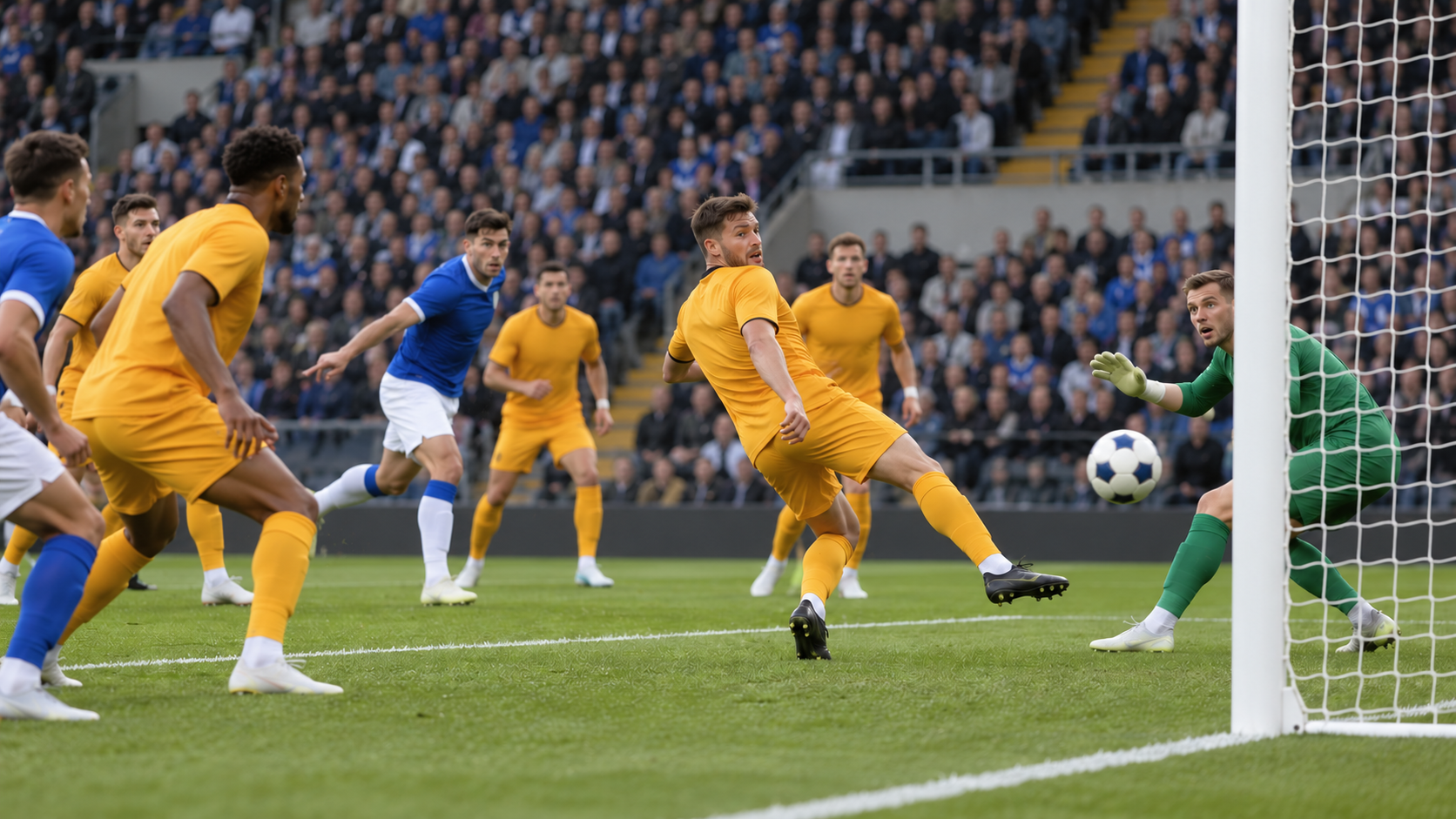
An own goal is recorded when a player sends the ball into that player's own goal and the whole ball legally crosses the goal line between the posts and under the crossbar. The opposing team receives the goal and restarts play after the kickoff.
Competition statisticians decide whether a deflection is an own goal or a goal for the attacker. A shot already heading on target usually stays with the attacker; a defender's touch that redirects an off-target attempt into the net is more likely recorded as an own goal.
The Laws prevent a player from scoring directly against their own team from several restarts. If a throw-in, free kick, corner kick, or goal kick goes untouched into the taker's own goal, play restarts with a corner kick rather than an own goal.
An own goal can result from an attempted clearance, pass, block, or accidental touch. The referee rules only on whether a legal goal occurred; statistical credit may be confirmed later. Replays should track the attacker's original ball path and the defender's decisive change of direction.
The opposing team receives the goal.
No. A shot already heading on target is commonly credited to the attacker under competition statistics.
It cannot score; the opponents receive a corner kick.
Explore more "Explainers"
Discover additional explainers across politics, science, business, technology, and other fields. Each explainer breaks down a complex idea into clear, everyday language—helping you better understand how major concepts, systems, and debates shape the world around us.