

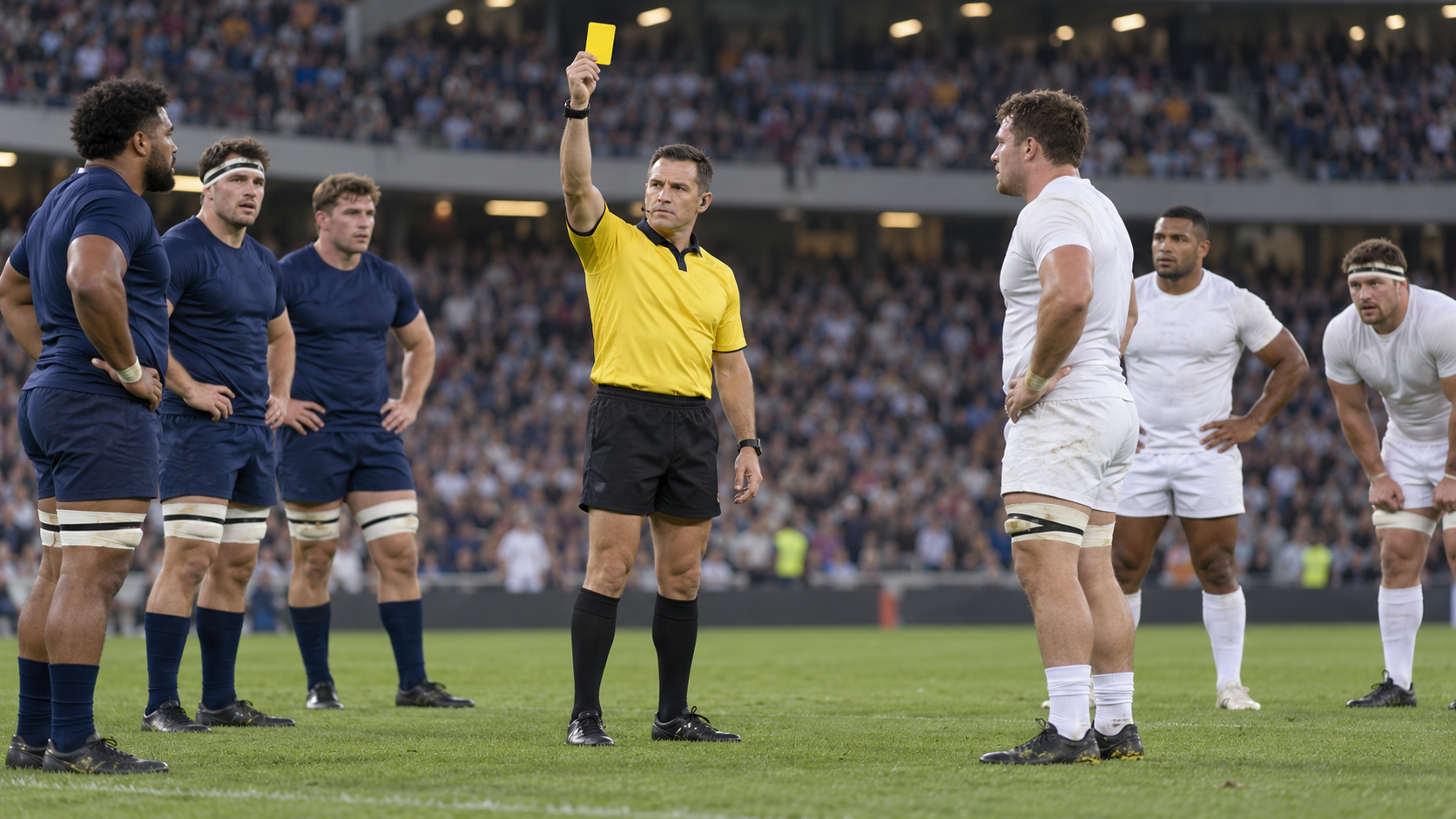
How Rugby Yellow and Red Cards Work Explainer
A rugby union yellow card cautions a player and sends that player to the sin bin for ten minutes of playing time. The team plays short during the suspension. In rugby sevens, the temporary suspension is two minutes because the entire match is much shorter.
A second yellow-card offence by the same player results in a sending-off. A red card removes the player for the rest of the match. The referee may show one immediately for serious foul play or upgrade an incident after the permitted review process.
Replacement consequences depend on the type of red-card process and the competition applying current World Rugby provisions. Elite competitions using the global framework can distinguish a permanent red sanction from one that permits a replacement after twenty minutes. The dismissed player never returns.
Cards punish dangerous play, misconduct, repeated infringements, and other serious breaches, but the color alone does not explain the underlying offence. Listen for the referee's signal and any review announcement, then check whether and when the team may restore fifteen players.
Ten minutes of playing time in the fifteen-a-side game; sevens uses a shorter suspension.
The player is sent off and cannot return.
It depends on the sanction and competition rules; current elite frameworks can allow a replacement after twenty minutes for specified red cards.
Explore more "Explainers"
Discover additional explainers across politics, science, business, technology, and other fields. Each explainer breaks down a complex idea into clear, everyday language—helping you better understand how major concepts, systems, and debates shape the world around us.