

How Soccer's Goalkeeper Eight-Second Rule Works Explainer
Under the current Laws, a goalkeeper may control the ball with the hands or arms for no more than eight seconds. The limit is designed to reduce time-wasting while giving the goalkeeper a practical window to stand, scan the field, and release the ball.
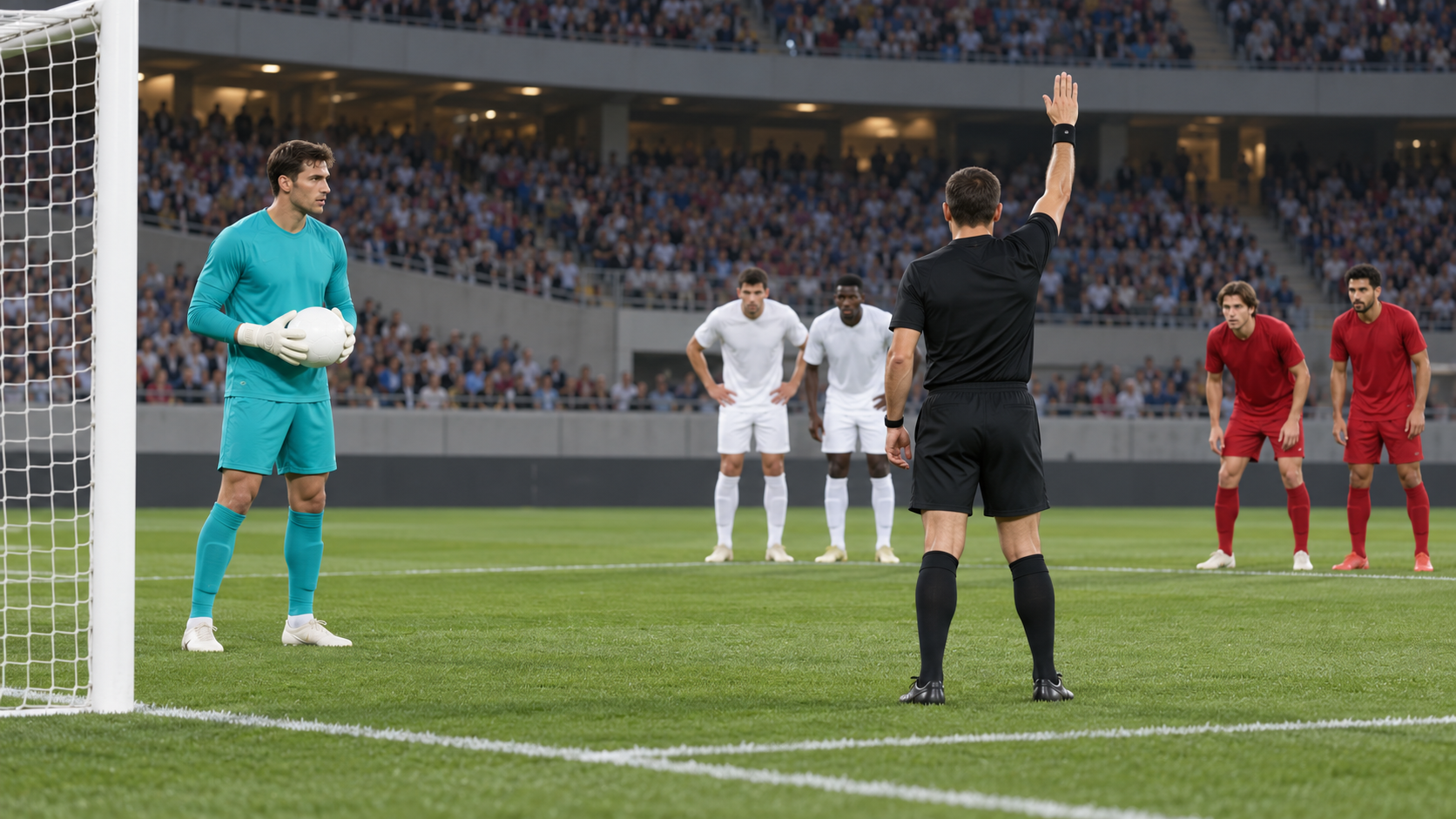
The referee decides when control begins. During the final five seconds, the referee uses a raised-hand visual countdown so the goalkeeper and both teams can see the remaining time. Bouncing the ball or tossing it into the air does not end hand control.
If the goalkeeper still controls the ball after eight seconds, the opponents receive a corner kick. The corner is taken from the side nearest the goalkeeper's position when penalized. This replaced the older six-second law and indirect-free-kick sanction beginning with the 2025-26 changes.
An opponent may not challenge the goalkeeper while the ball is under lawful hand control, but can prepare to press the release. Viewers should look for the referee's visible countdown rather than starting a private stopwatch at the instant of the save.
No more than eight seconds under the current law.
The referee gives a visible five-second countdown with a raised hand.
A corner kick to the opposing team.
Explore more "Explainers"
Discover additional explainers across politics, science, business, technology, and other fields. Each explainer breaks down a complex idea into clear, everyday language—helping you better understand how major concepts, systems, and debates shape the world around us.