

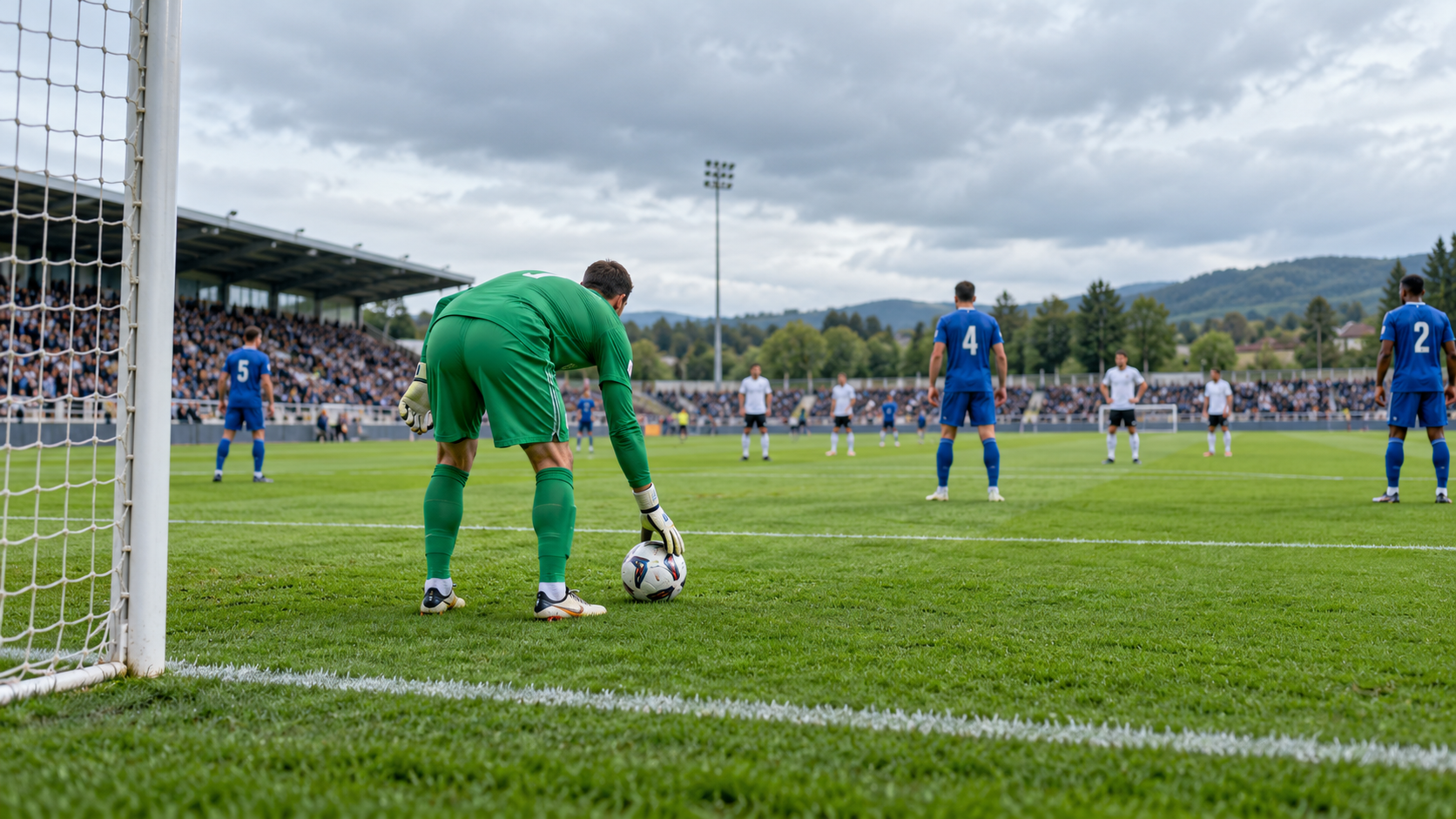
How Soccer Goal Kicks Work Explainer
A goal kick restarts play after the attacking team last touches the ball before it crosses the defending team's goal line without a goal being scored. The kick may be taken from anywhere inside the goal area. A goalkeeper often takes it, but any player on the defending team may do so.
The ball is in play once it is kicked and clearly moves. Opponents must remain outside the penalty area until that happens, although defenders may stand inside and receive a short pass. This modern wording lets teams build possession near their own goal instead of always sending a long kick upfield.
If an opponent who was outside the penalty area enters before the ball is in play, the kick can be retaken when that early movement affects the restart. A player deliberately staying inside or entering early may not unfairly challenge for the ball. The referee judges whether the requirement actually mattered.
A goal can be scored directly against the opposing team from a goal kick, but not directly into the kicker's own goal. If that unusual own-goal situation occurs, the restart is a corner kick. The simple signal therefore starts a structured restart with clear placement, distance, and scoring rules.
From any point inside the defending team's goal area.
As soon as it is kicked and clearly moves.
Yes. Opponents, not teammates, must be outside until the ball is in play.
Explore more "Explainers"
Discover additional explainers across politics, science, business, technology, and other fields. Each explainer breaks down a complex idea into clear, everyday language—helping you better understand how major concepts, systems, and debates shape the world around us.