

How Rugby Goal-Line Dropouts Work Explainer
A goal-line dropout is a rugby restart taken on or behind the defending team's goal line. It is used for specified in-goal outcomes, including situations where an attacking player takes or carries the ball into in-goal and it becomes dead there without a try, subject to the detailed Laws.
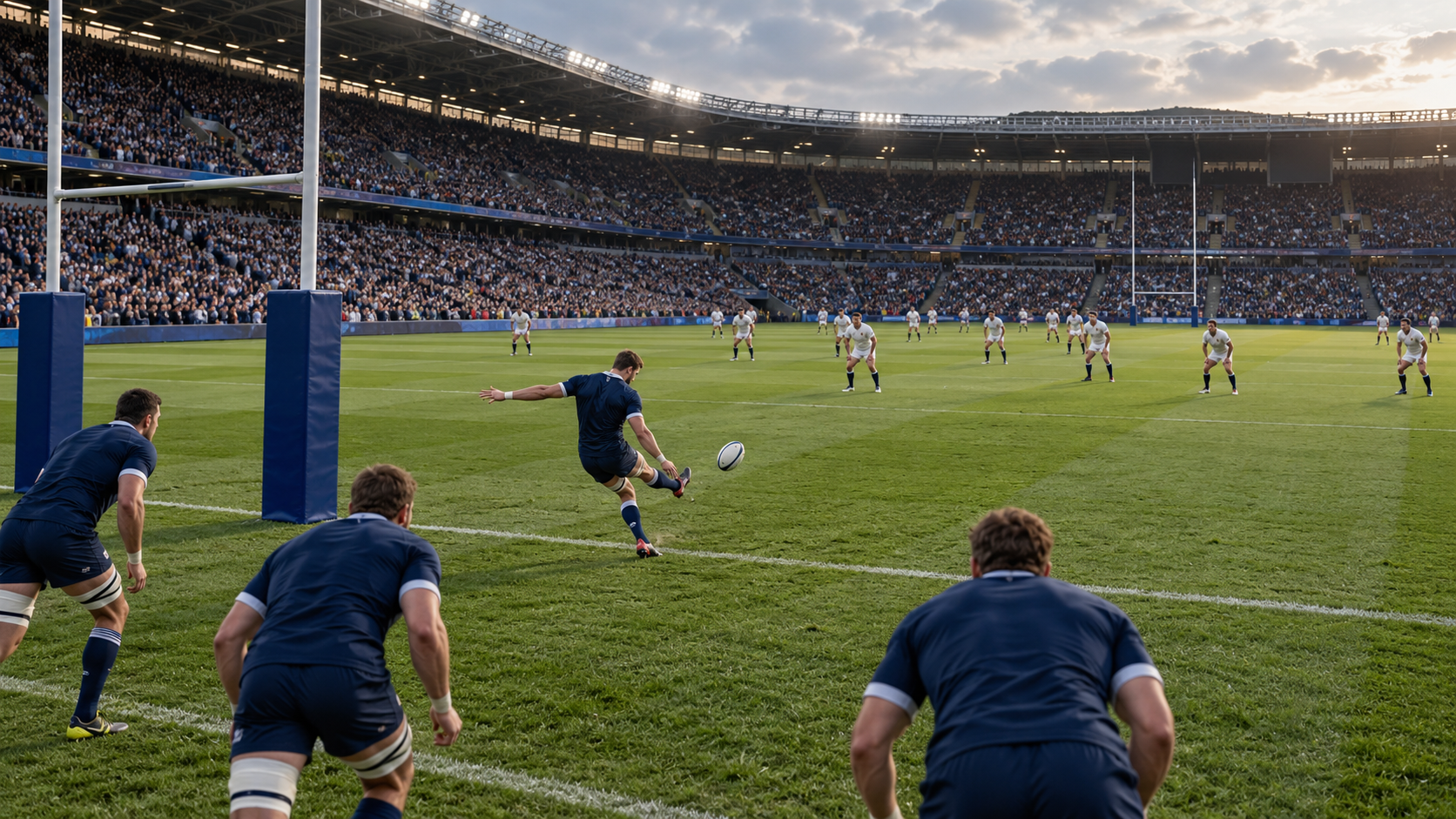
The defending team drop-kicks the ball from anywhere on or behind the goal line. Teammates must be behind the ball, and opponents must respect the required distance until the kick. The ball must travel the necessary distance and cross the goal line plane into the field of play.
Unlike a traditional 22-meter dropout, the goal-line location gives the receiving side stronger field position and a better chance to return the ball under pressure. That affects attacking decisions near the try line: a speculative kick that is grounded by the defense may produce another organized attacking opportunity.
Not every in-goal stoppage leads to this restart. A successful grounding can be a try, while responsibility for taking the ball into in-goal and the way it becomes dead can produce a scrum or other restart. Referees identify who put the ball there and what happened next.
The defending team takes a drop kick from on or behind its goal line.
No. The restart depends on who put the ball in-goal and how play ended.
It often returns possession from deep territory while allowing the attacking side to organize pressure.
Explore more "Explainers"
Discover additional explainers across politics, science, business, technology, and other fields. Each explainer breaks down a complex idea into clear, everyday language—helping you better understand how major concepts, systems, and debates shape the world around us.