

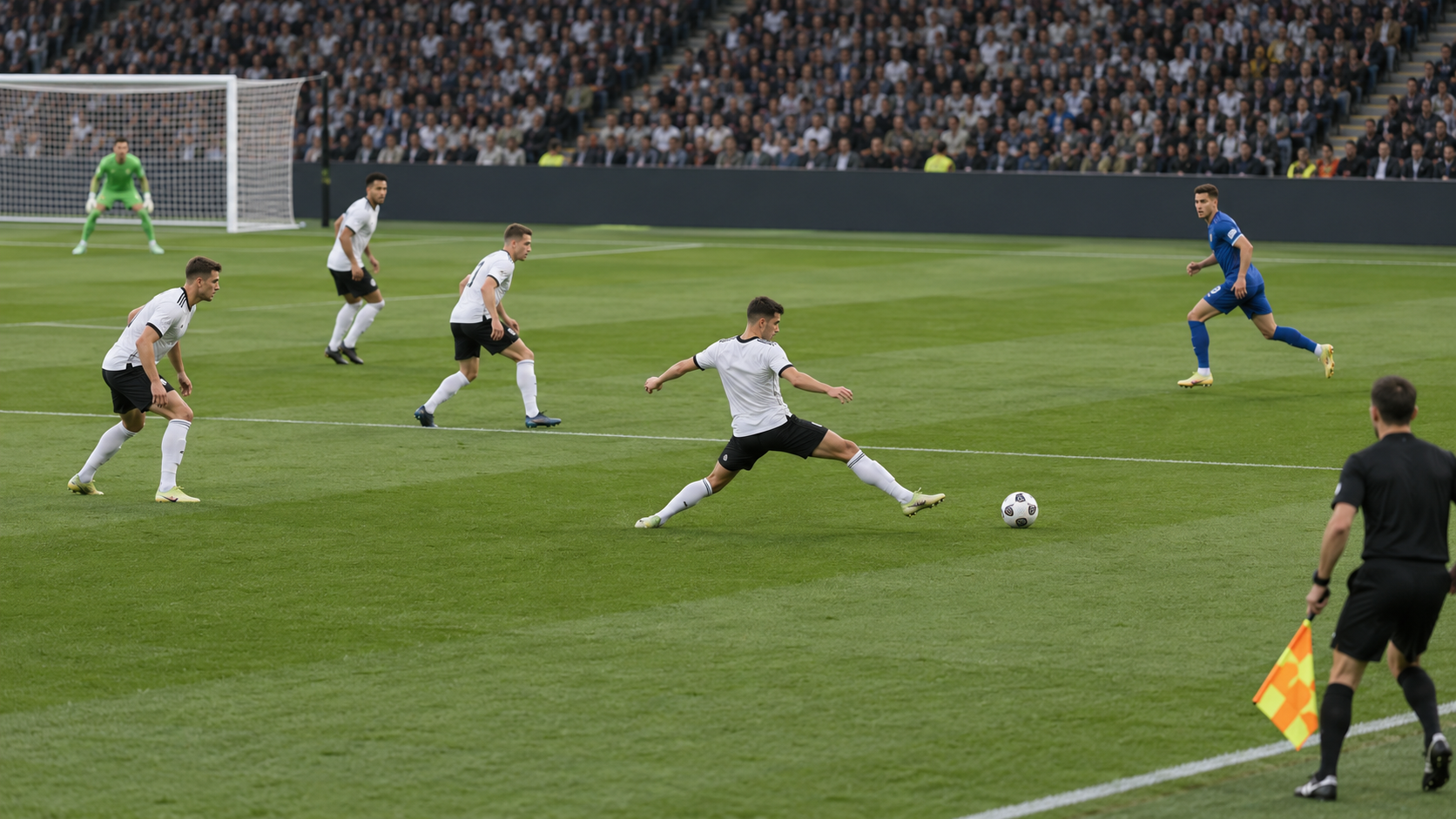
How 'Deliberate Play' Affects Soccer Offside Explainer
An attacker in an offside position is not automatically penalized. The offense is judged when the attacker becomes involved after a teammate last plays or touches the ball. If a defender then deliberately plays the ball, the attacker's earlier offside position can be reset, subject to the special rule for deliberate saves.
Deliberate play means the defender had a genuine possibility to control the ball and intentionally attempted a pass, clearance, or control. Officials consider the ball's speed and distance, whether its path was expected, the defender's time and coordination, and whether the movement was instinctive or controlled.
A mere deflection does not reset offside because the defender did not have meaningful control of the action. Neither does a deliberate save, which is an attempt to stop a ball going into or very close to the goal. In those cases, an offside-positioned attacker may still be penalized for becoming involved.
The quality of the defender's result is not decisive. A badly executed deliberate clearance can still be deliberate play, while a successful-looking ricochet may remain a deflection. Video review focuses on the opportunity and action available to the defender before the contact, not simply where the ball went afterward.
No. A deflection does not reset it; the contact must qualify as deliberate play.
Yes. The outcome may be poor even when the defender had time and intentionally played the ball.
No. Saves are specifically excluded from the deliberate-play reset.
Explore more "Explainers"
Discover additional explainers across politics, science, business, technology, and other fields. Each explainer breaks down a complex idea into clear, everyday language—helping you better understand how major concepts, systems, and debates shape the world around us.