

How Cycling Feed Zones Work Explainer
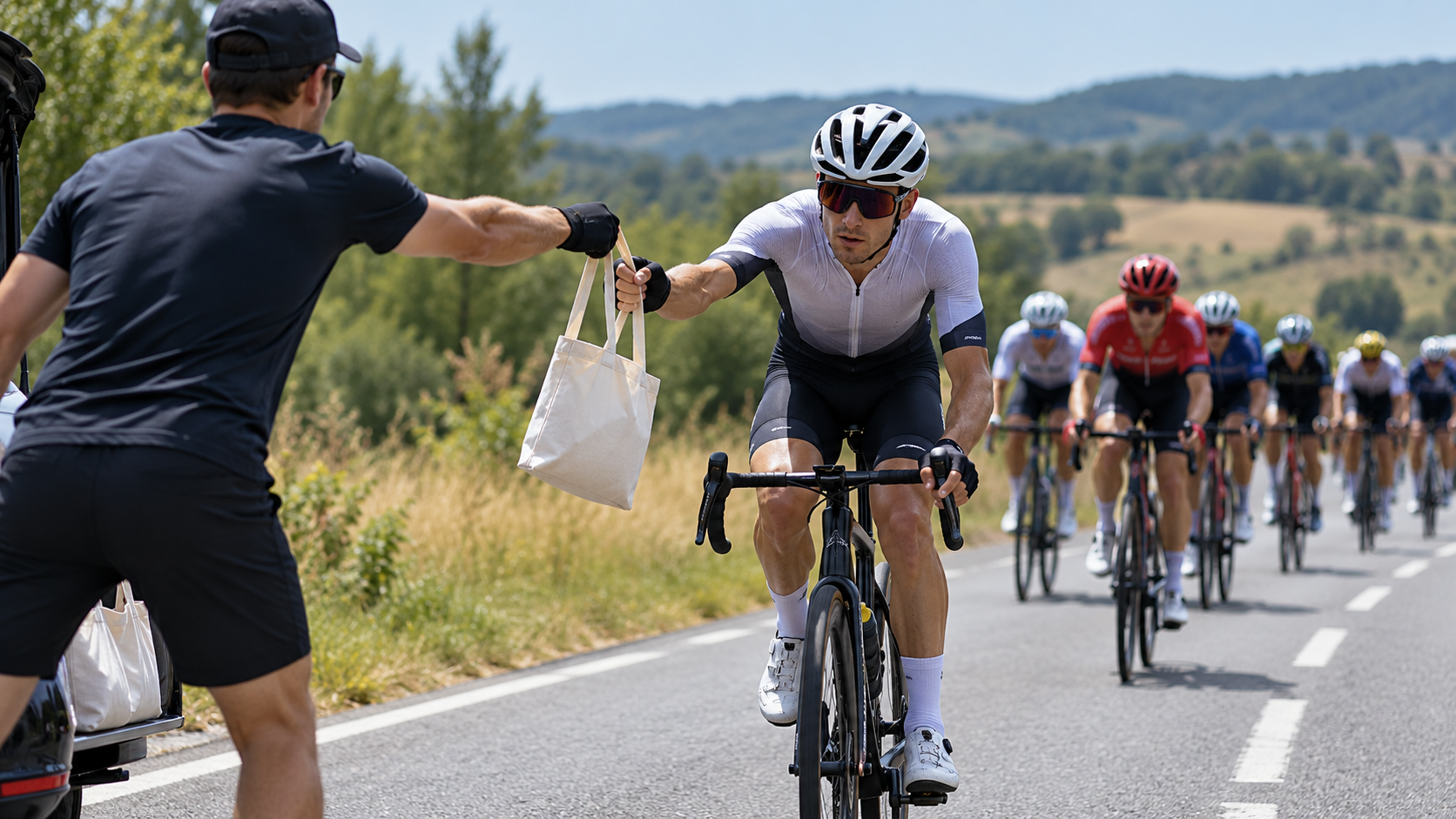
A road-race feed zone is a designated stretch where accredited team staff can hand riders food and drinks. Organizers choose locations with enough space, visibility, and manageable speed. Riders approach knowing that helpers will stand on the assigned side, reducing the need for improvised exchanges throughout the course.
Teams prepare small musettes or bottles that riders can take without stopping. The rider must control the bicycle while reaching, and the helper should extend the item without stepping into the racing line. Teammates may also collect supplies and carry them forward for others when the race situation allows.
Regulations can restrict feeding near the start, finish, steep sections, or other hazardous areas, and officials may change permissions because of weather. Extreme heat can lead to more flexible drink collection. Race communications tell teams which temporary rules and locations apply that day.
Litter zones often accompany feed zones so riders can discard bottles and wrappers where crews can collect them. Throwing items elsewhere can bring penalties and environmental harm. The system is therefore not just about calories; it organizes safety, fairness, logistics, and cleanup in a moving public-road event.
No. They normally collect food and bottles while continuing to ride.
Yes. Weather and safety conditions can alter where and when supplies may be taken.
They concentrate discarded bottles and wrappers where crews can collect them safely.
Explore more "Explainers"
Discover additional explainers across politics, science, business, technology, and other fields. Each explainer breaks down a complex idea into clear, everyday language—helping you better understand how major concepts, systems, and debates shape the world around us.