

Fashion Weeks Explainer
Fashion weeks are concentrated programs of runway shows, presentations, appointments, exhibitions, and events through which designers introduce collections to industry audiences and, increasingly, the public. Major cities maintain official schedules, while many independent activities occur around them. The week is not one centrally produced show. Fashion councils, venues, production companies, brands, showrooms, sponsors, buyers, press, stylists, photographers, models, and digital platforms each organize parts of a wider market and cultural event.
An official schedule gives the season structure and limits overlapping slots, but inclusion usually requires an application or invitation under the organizer's criteria. Designers choose physical runway shows, static or performative presentations, appointments, films, livestreams, or hybrid formats. Each approach serves different budgets and goals. A runway concentrates attention and movement; a presentation allows closer inspection; a showroom supports detailed commercial conversations about fabric, sizing, price, delivery, and orders.
Collections are planned around a selling and delivery calendar rather than the weather outside the venue alone. Buyers evaluate products for stores or ecommerce, editors and critics interpret ideas, stylists consider future shoots or clients, and sales teams follow up with line sheets and samples. The audience on opening night is visible, but appointments and later market work convert exposure into orders. Small brands must balance spectacle with production capacity, cash flow, minimums, and the ability to deliver what they showed.
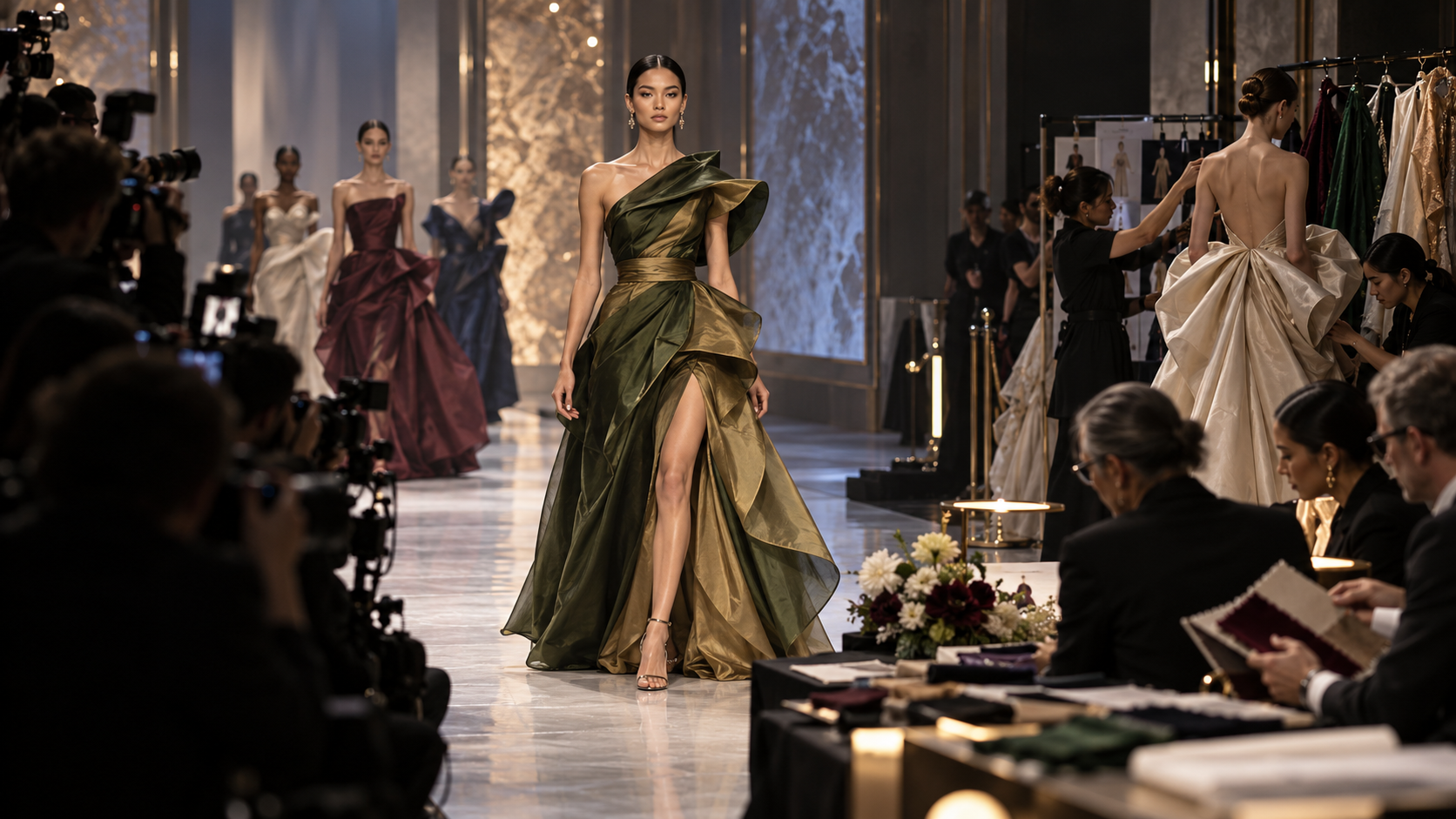
Show production coordinates casting, fittings, choreography, music, lighting, hair, makeup, seating, backstage changes, photography, and timing. Images can circulate globally within minutes, so front-of-house design and digital assets become part of the collection's first meaning. Accreditation distinguishes working press, buyers, and other professionals, while public screenings, shops, city programs, and open digital hubs broaden access. The mix varies by city and season. Fashion week is often described as a trend machine, but its effects are distributed. Designers respond to culture, materials, craft, retail data, and one another; buyers select only part of what appears; media frames recurring ideas; and consumers encounter adapted versions months later or immediately through direct sales. Viewers can read a show by separating garment construction, styling, staging, business context, and media reaction. The week matters because it compresses those systems into a shared moment where creative identity meets commercial decision. A practical way to read or discuss Fashion Weeks is to begin with the basic definition and then identify the choices made in a particular example. Fashion week combines official schedules with independently produced shows, presentations, appointments, exhibitions, and city events. Next, ask who sets the relevant rules, who performs the work, and which results follow from creative judgment, law, contracts, technology, budget, or production limits. Similar-looking examples can operate differently because their audience, market, format, timing, and agreements are different. Runway production coordinates casting, fittings, music, lighting, choreography, seating, backstage changes, photography, and strict timing. It also helps to distinguish a formal industry category from an informal critical label or one organization's current practice. That separation keeps a memorable anecdote from becoming a false universal rule. Dates and territories matter: tools, distribution systems, audience behavior, and standard agreements change, while older examples can preserve assumptions that no longer apply everywhere. When a claim sounds absolute, compare it with a second kind of source and look for the conditions under which the claim is true. Then trace the process from the visible result back through the less visible decisions, handoffs, and quality checks that produced it. Livestreams, digital hubs, public programs, and retail activations expand access beyond the accredited room without replacing trade work. Finally, compare the example with a contrasting case and note which part of the definition still holds. This method keeps the explanation grounded, highlights the people and systems behind the outcome, and leaves room for reasonable disagreement about hybrid or borderline cases.
Fashion week combines official schedules with independently produced shows, presentations, appointments, exhibitions, and city events.
Organizers curate schedule access, while designers select formats that fit their collection, audience, resources, and commercial goals.
Buyers assess price, delivery, quality, assortment, and customer fit; media and stylists interpret collections for wider audiences.
Runway production coordinates casting, fittings, music, lighting, choreography, seating, backstage changes, photography, and strict timing.
Showroom appointments and follow-up convert attention into orders, making operational capacity as important as the event's spectacle.
Livestreams, digital hubs, public programs, and retail activations expand access beyond the accredited room without replacing trade work.
Explore more "Explainers"
Discover additional explainers across politics, science, business, technology, and other fields. Each explainer breaks down a complex idea into clear, everyday language—helping you better understand how major concepts, systems, and debates shape the world around us.