

On This Day in AI: May 18, 2016
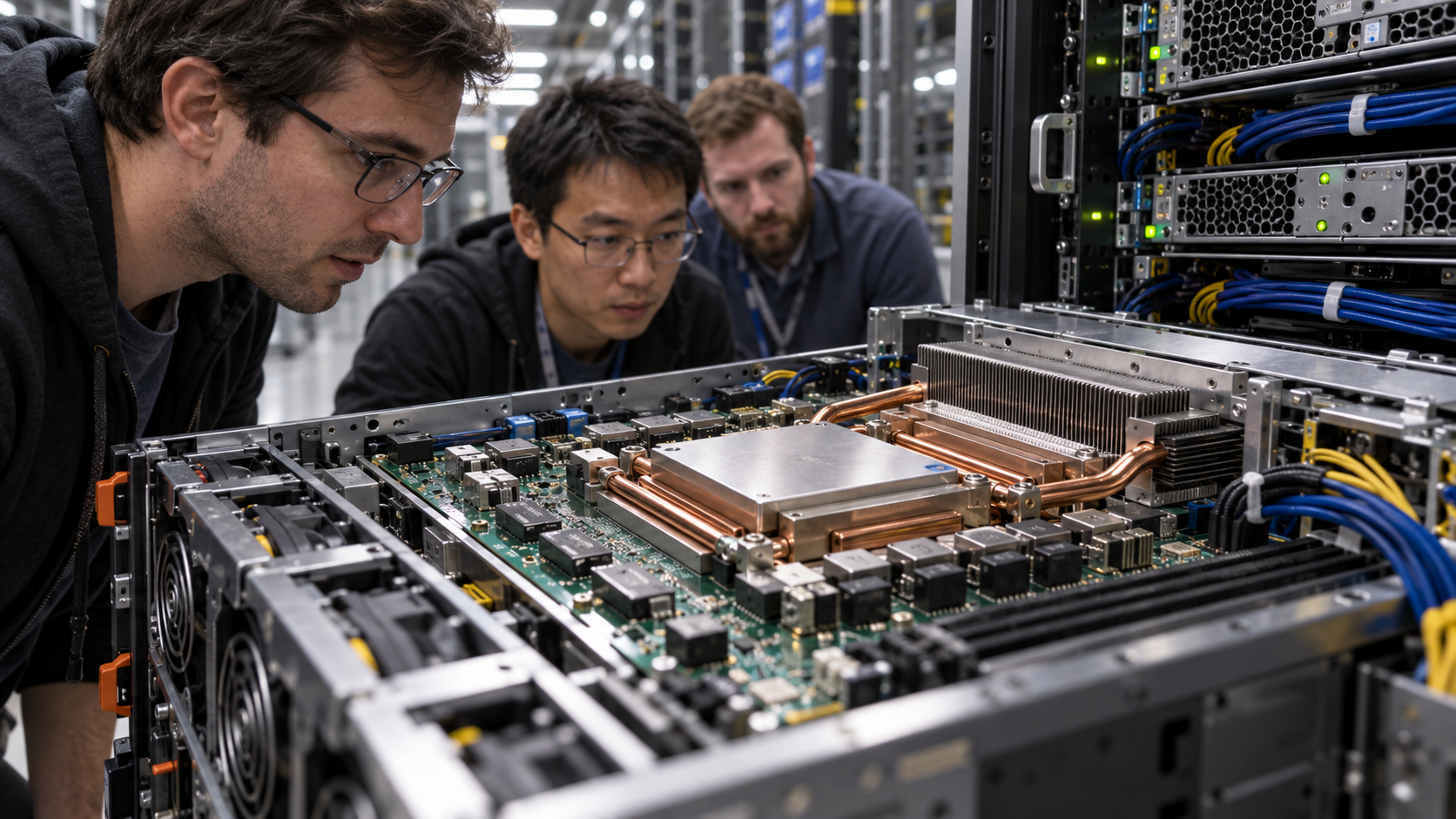
On May 18, 2016, Google publicly revealed the Tensor Processing Unit, a custom application-specific chip built to accelerate machine-learning workloads. TPUs had already supported services such as search, translation, and image recognition, including the AlphaGo system’s historic matches. Neural networks were demanding more matrix computation than general-purpose processors could provide efficiently. Graphics processors offered major gains, but Google’s scale encouraged a chip designed specifically around the numerical operations and latency requirements of deployed models. The date matters because it turned a fast-moving technical, policy, or commercial development into a visible milestone that people and institutions could evaluate.
The substance of Google’s public announcement of the Tensor Processing Unit was as important as the headline. The first TPU was an inference accelerator installed in Google’s datacenters and connected to existing servers. By narrowing the hardware around tensor operations, it delivered substantially higher performance per watt than conventional alternatives for selected neural-network tasks. Those choices reveal what the people behind the milestone believed was necessary at the time. AI history rarely advances through one breakthrough alone; research, infrastructure, product design, governance, and access all shape what a system can become.
The immediate consequences reached beyond the organization at the center of the event. The announcement showed that AI progress depended on specialized silicon as well as algorithms and data. It encouraged cloud providers and semiconductor companies to develop their own accelerators and made compute architecture a strategic advantage in machine learning. The moment also invited scrutiny, because new capabilities create new dependencies. Reliability, safety, cost, privacy, and human control determine whether an impressive demonstration becomes a trustworthy part of everyday life. Those practical limits are essential to understanding both the achievement and the response it received.
In retrospect, Later TPU generations supported large-scale training and became a foundation of Google Cloud and frontier-model development. The 2016 reveal foreshadowed an era in which access to purpose-built chips would shape the pace, cost, and geography of AI innovation. Looking back from today’s rapidly changing AI landscape, this event belongs to a larger transition from specialized machine-learning experiments to systems embedded in ordinary products, workplaces, institutions, and public decisions. Its enduring lesson is that technical progress becomes historically significant when it changes what people can do and what society expects next. It also reminds us that every celebrated capability is shaped by the data, institutions, hardware, and human judgment surrounding it. The anniversary therefore records a turning point, not simply an announcement.
Google publicly revealed the Tensor Processing Unit, a custom application-specific chip built to accelerate machine-learning workloads. TPUs had already supported services such as search, translation, and image recognition, including the AlphaGo system's historic matches.
The first TPU was an inference accelerator installed in Google's datacenters and connected to existing servers. By narrowing the hardware around tensor operations, it delivered substantially higher performance per watt than conventional alternatives for selected neural-network tasks.
The announcement showed that AI progress depended on specialized silicon as well as algorithms and data. It encouraged cloud providers and semiconductor companies to develop their own accelerators and made compute architecture a strategic advantage in machine learning.
The event connected a concrete technical, commercial, or policy decision with the wider development of artificial intelligence.
Later TPU generations supported large-scale training and became a foundation of Google Cloud and frontier-model development. The 2016 reveal foreshadowed an era in which access to purpose-built chips would shape the pace, cost, and geography of AI innovation.
Its influence can be traced through later products, research, governance, or industry practice.
Explore more of "On This Day ..."
Discover more events from the same date across news, politics, technology, sports, and other fields. Each link highlights significant moments that shaped history on different fronts.