

On This Day in AI: May 19, 2026
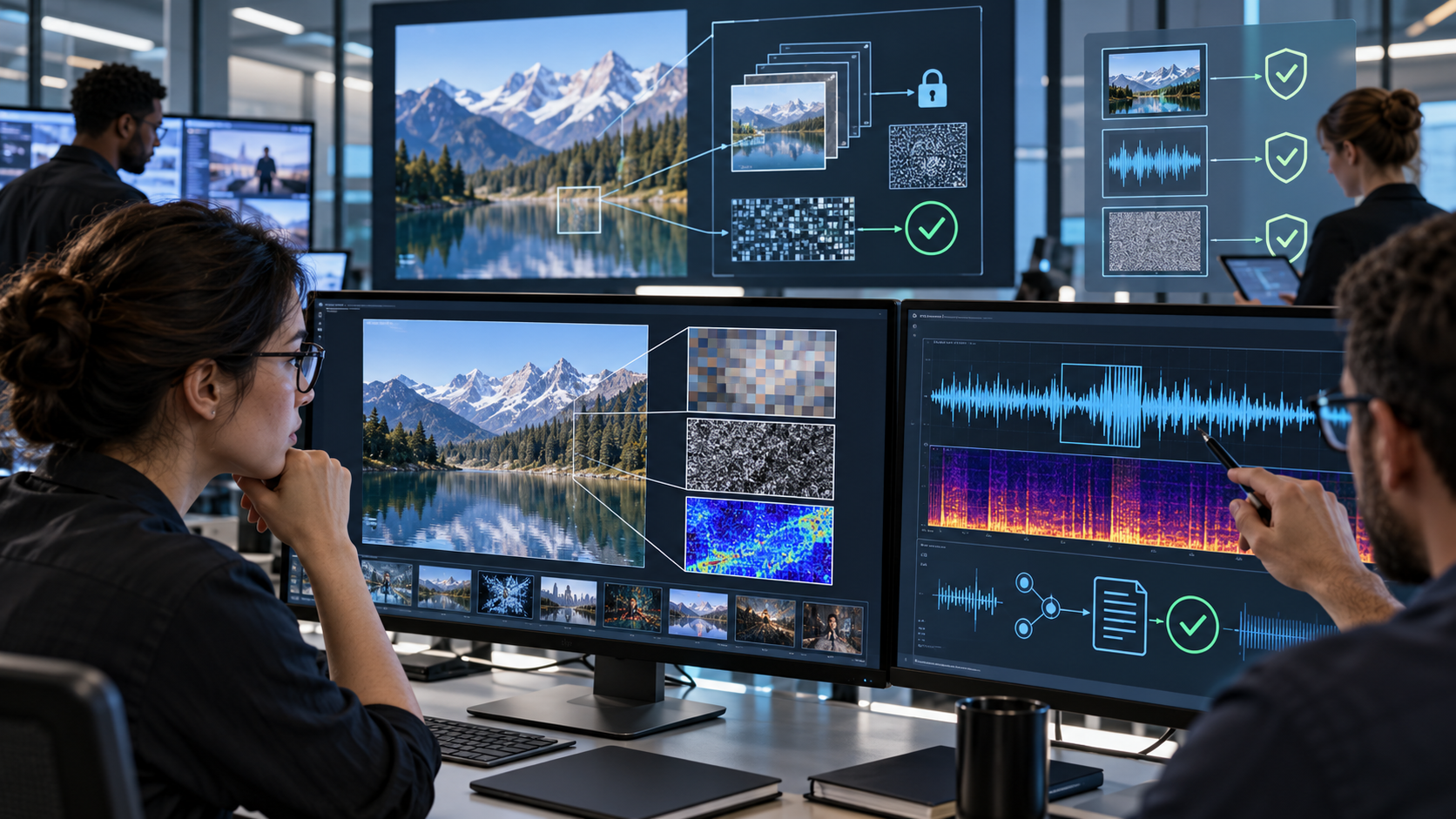
On May 19, 2026, OpenAI announced expanded content-provenance work combining C2PA Content Credentials, SynthID watermarking, and an early public verification tool. The approach aimed to give people multiple signals for understanding whether supported media came from an AI system. Generated images and audio had become increasingly realistic, while metadata could be removed and visible labels could be cropped. No single technique could reliably survive every transformation or identify media produced by an unrelated model. The date matters because it turned a fast-moving technical, policy, or commercial development into a visible milestone that people and institutions could evaluate.
The substance of OpenAI’s content-provenance initiative was as important as the headline. The initiative layered open cryptographic standards with durable watermarking and verification services. OpenAI framed provenance as infrastructure that creators, platforms, and viewers could use together, while acknowledging the limits of detection and the need for broad industry participation. Those choices reveal what the people behind the milestone believed was necessary at the time. AI history rarely advances through one breakthrough alone; research, infrastructure, product design, governance, and access all shape what a system can become.
The immediate consequences reached beyond the organization at the center of the event. The announcement moved authenticity work beyond a simple AI label. It emphasized interoperable credentials, persistent signals, and public checking tools as complementary defenses against deception and confusion. The moment also invited scrutiny, because new capabilities create new dependencies. Reliability, safety, cost, privacy, and human control determine whether an impressive demonstration becomes a trustworthy part of everyday life. Those practical limits are essential to understanding both the achievement and the response it received.
In retrospect, Provenance became a central response to synthetic-media risk in elections, journalism, entertainment, and everyday communication. The milestone reflects the industry’s shift from asking whether AI content can be detected perfectly toward building layered evidence about origin and editing history. Looking back from today’s rapidly changing AI landscape, this event belongs to a larger transition from specialized machine-learning experiments to systems embedded in ordinary products, workplaces, institutions, and public decisions. Its enduring lesson is that technical progress becomes historically significant when it changes what people can do and what society expects next. It also reminds us that every celebrated capability is shaped by the data, institutions, hardware, and human judgment surrounding it. The anniversary therefore records a turning point, not simply an announcement.
OpenAI announced expanded content-provenance work combining C2PA Content Credentials, SynthID watermarking, and an early public verification tool. The approach aimed to give people multiple signals for understanding whether supported media came from an AI system.
The initiative layered open cryptographic standards with durable watermarking and verification services. OpenAI framed provenance as infrastructure that creators, platforms, and viewers could use together, while acknowledging the limits of detection and the need for broad industry participation.
The announcement moved authenticity work beyond a simple AI label. It emphasized interoperable credentials, persistent signals, and public checking tools as complementary defenses against deception and confusion.
The event connected a concrete technical, commercial, or policy decision with the wider development of artificial intelligence.
Provenance became a central response to synthetic-media risk in elections, journalism, entertainment, and everyday communication. The milestone reflects the industry's shift from asking whether AI content can be detected perfectly toward building layered evidence about origin and editing history.
Its influence can be traced through later products, research, governance, or industry practice.
Explore more of "On This Day ..."
Discover more events from the same date across news, politics, technology, sports, and other fields. Each link highlights significant moments that shaped history on different fronts.