

On This Day in Sports: May 12, 1970
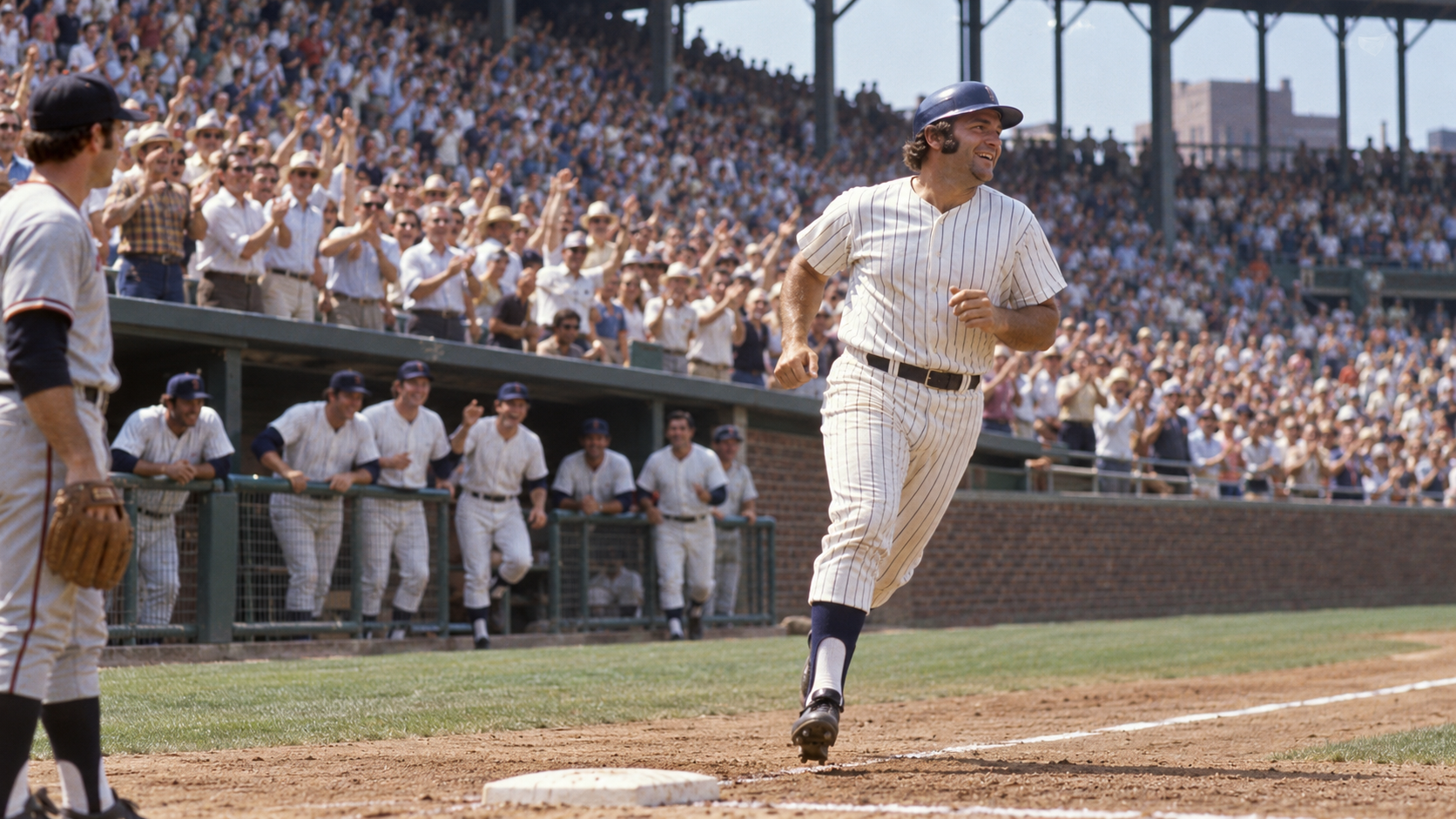
On May 12, 1970, Ernie Banks hit the 500th home run of his major-league career at Wrigley Field. The Chicago Cubs star connected in the second inning against Atlanta Braves pitcher Pat Jarvis, sending the ball into the left-field bleachers. The game stopped as teammates greeted Banks near home plate and the daytime crowd celebrated a milestone reached by only eight players before him. The public record fixes the central details with unusual clarity: Banks homered off Pat Jarvis. The drive landed in Wrigley Field’s left-field bleachers. Together, those facts explain why May 12, 1970 stands apart from the ordinary flow of a season and deserves to be remembered as a distinct historical moment.
The home run also tied the game, which Chicago eventually won 4-3 in eleven innings. Banks had built his reputation as a shortstop, winning consecutive National League Most Valuable Player awards in 1958 and 1959 despite playing for teams outside the pennant race. He later moved to first base, adapting his body and role while preserving the quick wrists and compact power that carried him toward 500. Two further details help reconstruct how the achievement unfolded: He became the ninth player to reach 500 home runs. Chicago won 4-3 in 11 innings. They move the story beyond a headline by showing the pressure, setting and competitive choices that shaped the decisive action in real time.
Known as “Mr. Cub,” Banks represented enthusiasm through long seasons without postseason baseball. His famous appetite to play two games captured both his personality and Wrigley Field’s sunshine identity. The milestone gave the home crowd a championship-like afternoon of its own: a beloved player crossing a historic threshold in the ballpark where generations had watched him remain optimistic through defeat. The wider context is equally important. Banks won National League MVP awards in 1958 and 1959. He finished his career with 512 homers. Those points connect one day’s performance to a longer career, institution or rivalry and clarify why the event continued to matter after the immediate celebration had ended.
Banks finished with 512 home runs and became the first Black player whose number was retired by the Cubs. He entered the Hall of Fame in 1977. The 500th homer endures as the cleanest expression of his bond with Chicago—one swing into the familiar bleachers, an entire park rising, and a franchise icon receiving the recognition that team standings had so often denied him. Seen from today, the milestone remains compelling because it joins a measurable result with the uncertainty of live competition. Nothing about the outcome was guaranteed beforehand. That combination of preparation, opportunity and execution is what transformed the date from another entry on the schedule into lasting sports history.
Banks homered off Pat Jarvis.
The drive landed in Wrigley Field’s left-field bleachers.
He became the ninth player to reach 500 home runs.
Chicago won 4-3 in 11 innings.
Banks won National League MVP awards in 1958 and 1959.
He finished his career with 512 homers.
Explore more "On This Day in Sports"
Discover more landmark games, records, championships, and turning points from sports history. Each day revisits the athletes, teams, and moments that shaped competition and culture.