

On This Day in Sports: May 21, 1904
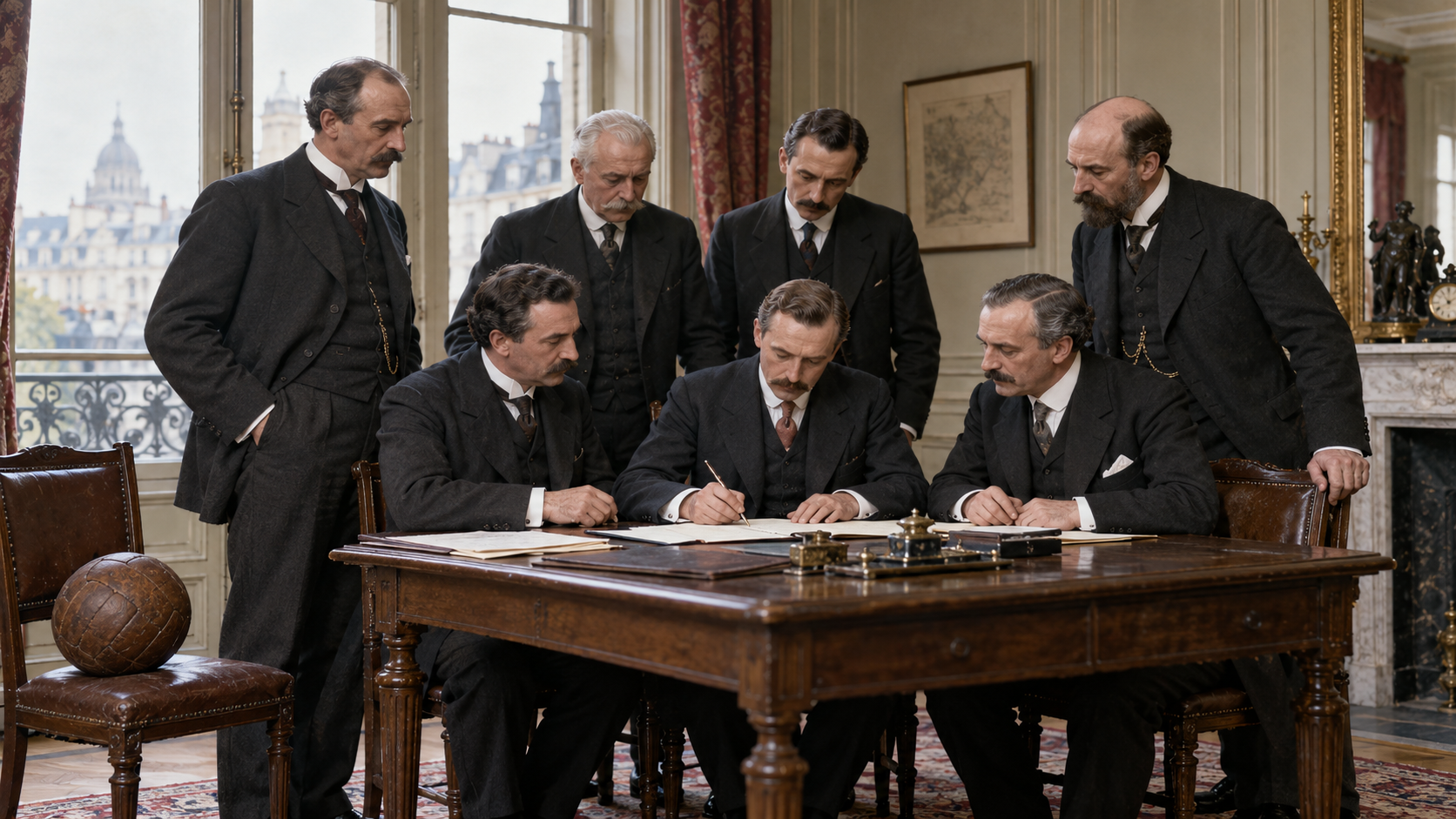
On May 21, 1904, representatives meeting in Paris founded the Fédération Internationale de Football Association, creating a permanent body to coordinate international association football. Delegates connected to Belgium, Denmark, France, the Netherlands, Spain, Sweden and Switzerland signed the founding act. The gathering was modest, but its ambition was large: establish shared authority for a sport spreading quickly across borders. The public record fixes the central details with unusual clarity: FIFA was founded in Paris. The founding act represented seven football associations. Together, those facts explain why May 21, 1904 stands apart from the ordinary flow of a season and deserves to be remembered as a distinct historical moment.
International matches already existed, yet national associations did not have a common institution for rules, recognition and future competition. England’s Football Association did not join the initial meeting, despite the game’s British origins, so continental organizers moved forward. French official Robert Guérin became FIFA’s first president, and the organization began the slow work of building membership and defining its place alongside existing rule makers. Two further details help reconstruct how the achievement unfolded: Robert Guérin became the first president. England did not join the initial meeting. They move the story beyond a headline by showing the pressure, setting and competitive choices that shaped the decisive action in real time.
Early FIFA endured financial weakness, war and uncertainty over who should control international football. The creation of the World Cup in 1930 gave the federation a tournament capable of turning administration into shared spectacle. Later expansion brought associations from every inhabited continent, while women’s football, youth competitions and new formats extended its reach far beyond the founders’ immediate plans. The wider context is equally important. The first men’s World Cup was held in 1930. FIFA now organizes football across the world. Those points connect one day’s performance to a longer career, institution or rivalry and clarify why the event continued to matter after the immediate celebration had ended.
FIFA’s history includes conflict and controversy as well as extraordinary growth, but the Paris foundation remains a decisive sporting event. The modern global game—with standardized competitions, qualification systems and a World Cup followed by billions—depends on the international structure begun that day. Seven represented football communities entered one room; a worldwide institution eventually emerged. Seen from today, the milestone remains compelling because it joins a measurable result with the uncertainty of live competition. Nothing about the outcome was guaranteed beforehand. That combination of preparation, opportunity and execution is what transformed the date from another entry on the schedule into lasting sports history.
FIFA was founded in Paris.
The founding act represented seven football associations.
Robert Guérin became the first president.
England did not join the initial meeting.
The first men’s World Cup was held in 1930.
FIFA now organizes football across the world.
Explore more "On This Day in Sports"
Discover more landmark games, records, championships, and turning points from sports history. Each day revisits the athletes, teams, and moments that shaped competition and culture.