

On This Day in Sports: May 24, 1935
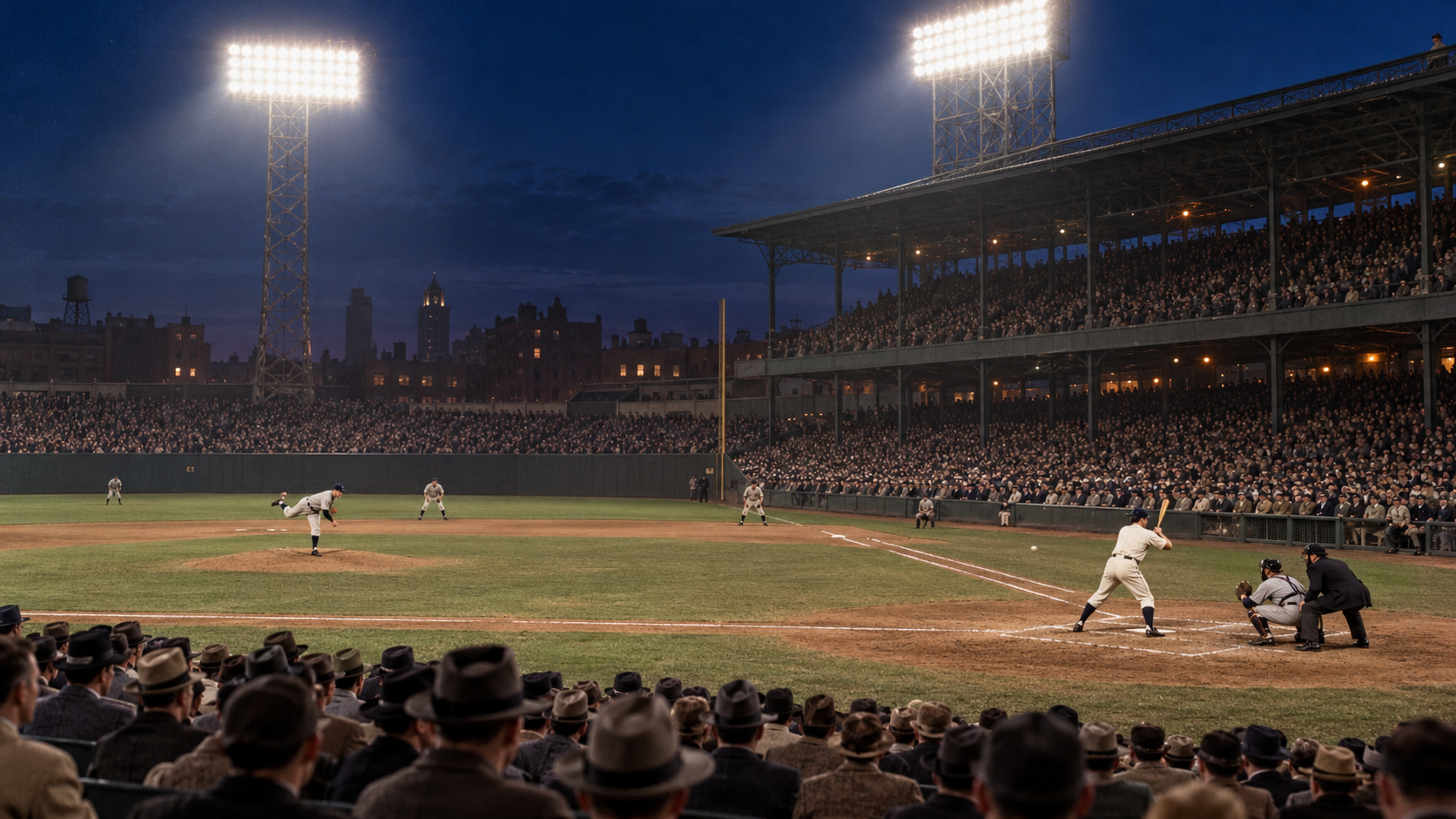
On May 24, 1935, the Cincinnati Reds defeated the Philadelphia Phillies 2-1 at Crosley Field in the first night game in major-league history. President Franklin D. Roosevelt sent a signal from Washington that helped begin the lighting ceremony, and 632 floodlights illuminated the field. The official crowd of more than 20,000 was several times larger than Cincinnati had drawn for a typical weekday afternoon game. The public record fixes the central details with unusual clarity: Cincinnati defeated Philadelphia 2-1. The game drew more than 20,000 fans. Together, those facts explain why May 24, 1935 stands apart from the ordinary flow of a season and deserves to be remembered as a distinct historical moment.
Cold and rain had postponed the planned debut by one day, but the novelty remained intact. Reds pitcher Paul Derringer worked all nine innings and allowed six hits. Cincinnati scored its two runs on groundouts, while the most dramatic defensive play came when center fielder Sammy Byrd crashed into the unpadded wall after catching a long drive. The game lasted a brisk ninety-five minutes. Two further details help reconstruct how the achievement unfolded: Crosley Field used 632 floodlights. Paul Derringer pitched a complete game. They move the story beyond a headline by showing the pressure, setting and competitive choices that shaped the decisive action in real time.
Night baseball had already been tested in the minor leagues, where owners recognized that working fans could attend after business hours. Many major-league traditionalists doubted that artificial light would preserve the quality of play. Crosley Field answered the practical question. Players tracked the ball, the contest proceeded cleanly and the larger gate offered struggling Depression-era clubs an important new source of revenue. The wider context is equally important. The game lasted 95 minutes. President Franklin Roosevelt participated from Washington. Those points connect one day’s performance to a longer career, institution or rivalry and clarify why the event continued to matter after the immediate celebration had ended.
Other teams gradually installed lights, although Wrigley Field waited until 1988. Night games soon changed broadcasting, attendance patterns and the rhythm of the sport itself. Cincinnati’s first experiment therefore extended far beyond one 2-1 result. By moving baseball into prime evening hours, it reshaped who could watch in person and when the national pastime occupied public life. Seen from today, the milestone remains compelling because it joins a measurable result with the uncertainty of live competition. Nothing about the outcome was guaranteed beforehand. That combination of preparation, opportunity and execution is what transformed the date from another entry on the schedule into lasting sports history.
Cincinnati defeated Philadelphia 2-1.
The game drew more than 20,000 fans.
Crosley Field used 632 floodlights.
Paul Derringer pitched a complete game.
The game lasted 95 minutes.
President Franklin Roosevelt participated from Washington.
Explore more "On This Day in Sports"
Discover more landmark games, records, championships, and turning points from sports history. Each day revisits the athletes, teams, and moments that shaped competition and culture.