

On This Day in Sports: May 26, 1959
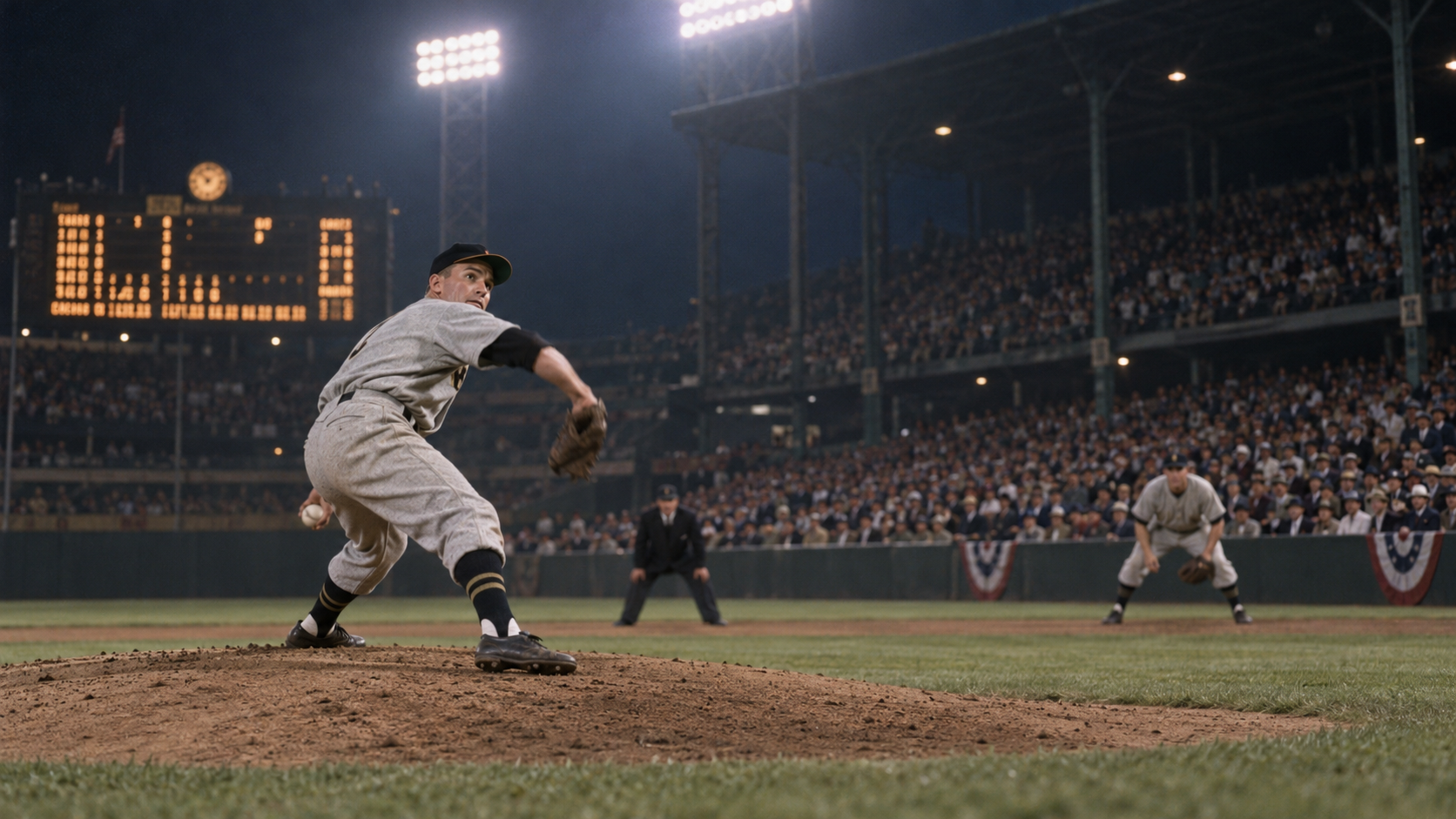
On May 26, 1959, Pittsburgh Pirates left-hander Harvey Haddix retired the first thirty-six Milwaukee Braves he faced—twelve perfect innings—yet lost the game in the thirteenth. No pitcher in major-league history has completed more consecutive perfect innings in a single game. Haddix accomplished it against the two-time defending National League champions, a lineup featuring Hank Aaron and Eddie Mathews, while receiving no run support. The public record fixes the central details with unusual clarity: Haddix retired 36 consecutive batters. He was perfect for 12 innings. Together, those facts explain why May 26, 1959 stands apart from the ordinary flow of a season and deserves to be remembered as a distinct historical moment.
Haddix needed only seventy-eight pitches to complete nine perfect innings, but Pittsburgh had not scored against Lew Burdette. He continued through the tenth, eleventh and twelfth, setting down every hitter as the tension moved beyond the dimensions of a normal no-hitter. The Braves reportedly had access to stolen signs from their bullpen, yet even knowledge of the coming pitches did not produce a baserunner. Two further details help reconstruct how the achievement unfolded: Pittsburgh did not score. Felix Mantilla reached on an error in the 13th. They move the story beyond a headline by showing the pressure, setting and competitive choices that shaped the decisive action in real time.
Felix Mantilla opened the thirteenth by reaching on an error, ending the perfect game. A sacrifice moved him to second, Haddix intentionally walked Aaron and Joe Adcock drove a ball to the wall. Confusion on the bases reduced what appeared to be a three-run homer to a 1-0 result. Haddix had lost his no-hitter, shutout and game in the span of three batters after retiring four extra innings’ worth without a flaw. The wider context is equally important. Joe Adcock delivered the winning hit. Milwaukee won 1-0. Those points connect one day’s performance to a longer career, institution or rivalry and clarify why the event continued to matter after the immediate celebration had ended.
Later scoring-rule changes removed Haddix’s performance from the official list of no-hitters, but no label can reduce it. Perfect games require twenty-seven straight outs; he recorded thirty-six. The defeat makes the achievement more haunting, not less, because it separates individual excellence from reward. “Hard-Luck Harvey” produced a pitching performance whose unfair ending is inseparable from its greatness. Seen from today, the milestone remains compelling because it joins a measurable result with the uncertainty of live competition. Nothing about the outcome was guaranteed beforehand. That combination of preparation, opportunity and execution is what transformed the date from another entry on the schedule into lasting sports history.
Haddix retired 36 consecutive batters.
He was perfect for 12 innings.
Pittsburgh did not score.
Felix Mantilla reached on an error in the 13th.
Joe Adcock delivered the winning hit.
Milwaukee won 1-0.
Explore more "On This Day in Sports"
Discover more landmark games, records, championships, and turning points from sports history. Each day revisits the athletes, teams, and moments that shaped competition and culture.