

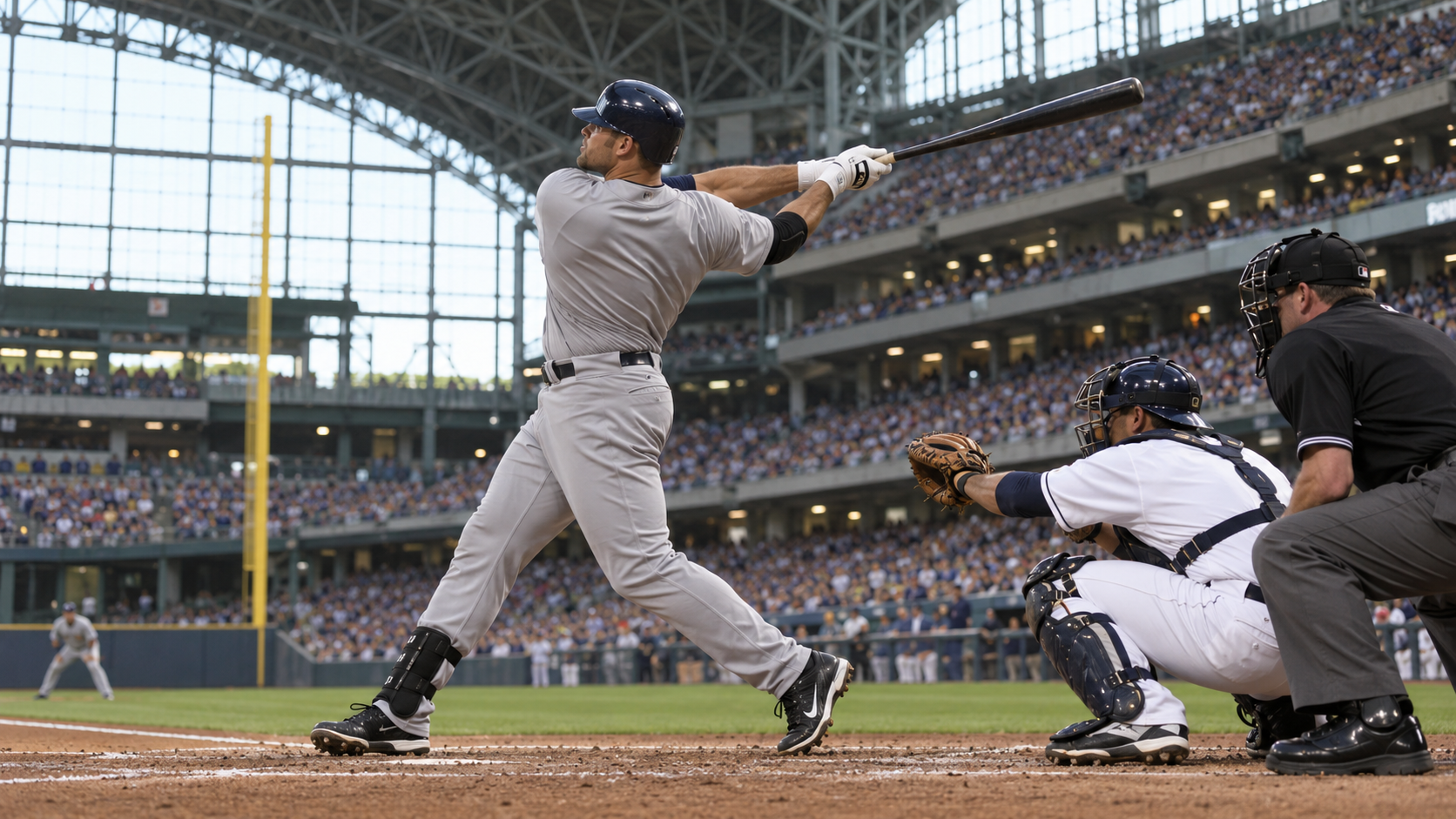
On This Day in Sports: May 23, 2002
On May 23, 2002, Shawn Green produced one of the greatest offensive games in major-league history, hitting four home runs as the Los Angeles Dodgers defeated the Milwaukee Brewers 16-3. Green went 6-for-6 with a double, single, six runs scored and seven runs batted in. His nineteen total bases established a single-game record that stood alone for more than two decades. The public record fixes the central details with unusual clarity: Green went 6-for-6. He hit four home runs and one double. Together, those facts explain why May 23, 2002 stands apart from the ordinary flow of a season and deserves to be remembered as a distinct historical moment.
Green entered the afternoon in a deep slump and had been booed by home fans before the road trip. At Miller Park, the swing suddenly aligned. He homered in the second inning, again in the fourth, added a double in the fifth and hit his third homer in the sixth. A single in the eighth preserved perfection at the plate before a two-run homer in the ninth completed the four-drive performance. Two further details help reconstruct how the achievement unfolded: The Dodgers beat Milwaukee 16-3. Green scored six runs and drove in seven. They move the story beyond a headline by showing the pressure, setting and competitive choices that shaped the decisive action in real time.
Only thirteen players before Green had hit four home runs in one major-league game. His combination of four homers and six hits was even more unusual, while the double created five extra-base hits. The third home run was also the 200th of his career. Every late plate appearance expanded the statistical boundaries of a game whose competitive outcome had already been decided. The wider context is equally important. His 19 total bases set a major-league record. The third homer was the 200th of his career. Those points connect one day’s performance to a longer career, institution or rivalry and clarify why the event continued to matter after the immediate celebration had ended.
The explosion began a larger power surge: Green hit seven home runs in three games and nine over one week, both extraordinary short-term records. Yet the Milwaukee box score remains his defining monument. It captures baseball’s capacity for abrupt reversal—a struggling hitter arriving at the park with questions, then leaving after six perfect plate appearances and the most productive accumulation of bases the game had recorded. Seen from today, the milestone remains compelling because it joins a measurable result with the uncertainty of live competition. Nothing about the outcome was guaranteed beforehand. That combination of preparation, opportunity and execution is what transformed the date from another entry on the schedule into lasting sports history.
Green went 6-for-6.
He hit four home runs and one double.
The Dodgers beat Milwaukee 16-3.
Green scored six runs and drove in seven.
His 19 total bases set a major-league record.
The third homer was the 200th of his career.
Explore more "On This Day in Sports"
Discover more landmark games, records, championships, and turning points from sports history. Each day revisits the athletes, teams, and moments that shaped competition and culture.