

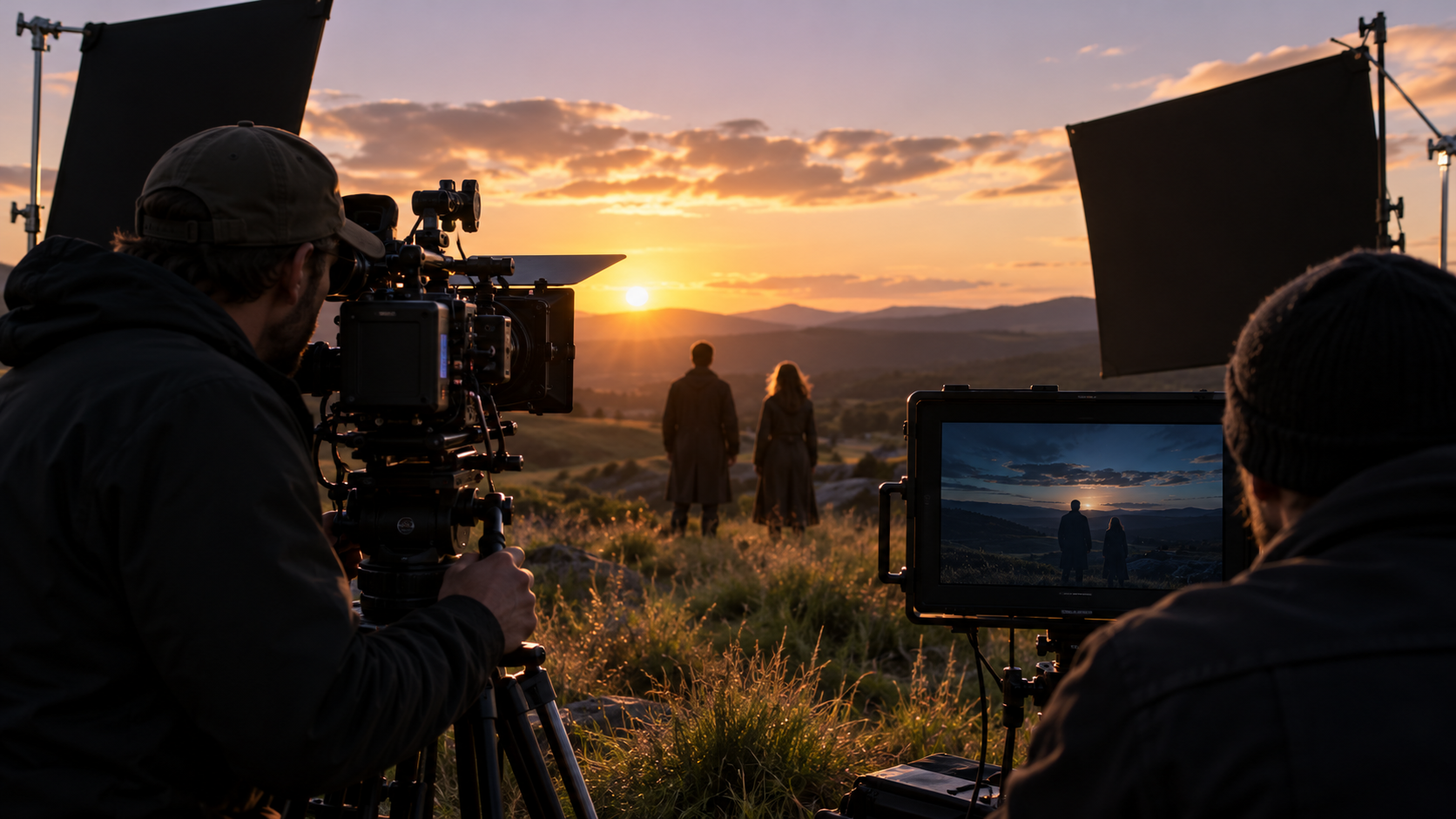
Day-for-Night Cinematography Explainer
Day-for-night is a technique for photographing a scene in daylight so the finished image appears to take place at night. Filmmakers use it when true night work would be unsafe, impractical, too slow, or unable to reveal a large landscape. The illusion depends on coordinated choices in camera position, exposure, filtration, lighting, production design, performance, and color finishing. Simply making a bright image blue and dark rarely works because daylight leaves recognizable clues in the sky, shadows, reflections, and human behavior.
Sun position is crucial. Backlight or side light can create rim highlights while keeping faces and foregrounds under controlled exposure; a front-lit noon landscape usually announces daytime. Crews may avoid showing the sky, use graduated filtration, polarizers, flags, or negative fill, and choose terrain that creates deep shadow. Underexposure can suggest low light, but excessive darkness destroys information and limits grading. Digital monitoring and tests help the team judge how the captured range will survive the final look.
Color is only one part of the effect. Cooler shadows may imply moonlight, yet real night scenes can contain warm windows, fire, street lighting, or neutral starlight. Strong highlights need a plausible source, and reflective surfaces must not reveal an overhead sun. Actors can support the illusion by using lamps, squinting less, and moving as if visibility is limited. Art direction can remove bright daytime details and add motivated practical light where appropriate.
Continuity becomes difficult because the sun moves, clouds change contrast, and long scenes may be assembled from several hours or days. Camera logs, reference stills, measured exposure, consistent filtration, and planned shooting direction help match shots. Visual-effects work can replace skies, remove hard shadows, add distant lights, or balance windows, but it cannot always rescue footage whose geometry contradicts the intended moon direction. Planning remains cheaper than extensive correction. Day-for-night can be naturalistic or openly stylized. Some films embrace luminous blue landscapes and sharp silhouettes rather than pretending the scene was captured in darkness. To assess the technique, look at shadow direction, sky brightness, eye light, practical sources, and whether shots cut consistently. The goal is not scientific imitation of what a camera sees at midnight. It is a coherent visual rule that lets the audience accept night while preserving the action and environment the story needs. A practical way to read or discuss Day-for-Night Cinematography is to begin with the basic definition and then identify the choices made in a particular example. Day-for-night records a daylight scene with choices designed to create a convincing or stylized nighttime result. Next, ask who sets the relevant rules, who performs the work, and which results follow from creative judgment, law, contracts, technology, budget, or production limits. Similar-looking examples can operate differently because their audience, market, format, timing, and agreements are different. Underexposure must preserve enough information for faces, action, noise control, and later color grading. It also helps to distinguish a formal industry category from an informal critical label or one organization's current practice. That separation keeps a memorable anecdote from becoming a false universal rule. Dates and territories matter: tools, distribution systems, audience behavior, and standard agreements change, while older examples can preserve assumptions that no longer apply everywhere. When a claim sounds absolute, compare it with a second kind of source and look for the conditions under which the claim is true. Then trace the process from the visible result back through the less visible decisions, handoffs, and quality checks that produced it. The technique works when every visual clue follows a consistent night rule, whether the result is naturalistic or expressive. Finally, compare the example with a contrasting case and note which part of the definition still holds. This method keeps the explanation grounded, highlights the people and systems behind the outcome, and leaves room for reasonable disagreement about hybrid or borderline cases.
Day-for-night records a daylight scene with choices designed to create a convincing or stylized nighttime result.
Backlight, side light, low horizons, shaded terrain, careful exposure, and controlled skies can hide obvious daylight clues.
Cooling the image may help, but believable highlights, reflections, practical sources, and performer behavior matter just as much.
Underexposure must preserve enough information for faces, action, noise control, and later color grading.
Sun movement and weather can break continuity, so crews rely on tests, logs, reference stills, and planned shooting direction.
The technique works when every visual clue follows a consistent night rule, whether the result is naturalistic or expressive.
Explore more "Explainers"
Discover additional explainers across politics, science, business, technology, and other fields. Each explainer breaks down a complex idea into clear, everyday language—helping you better understand how major concepts, systems, and debates shape the world around us.