

Soundtrack Albums Explainer
A soundtrack album is a recorded-music release connected to a film, television program, game, or stage work. It may contain an original score, songs heard in the production, newly commissioned tracks, cast performances, or a curated mixture. The album is not an automatic audio copy of the finished screen work. Music can be edited, reordered, expanded, omitted, or presented in different mixes, and some songs promoted as being inspired by a project may never appear in the final picture.
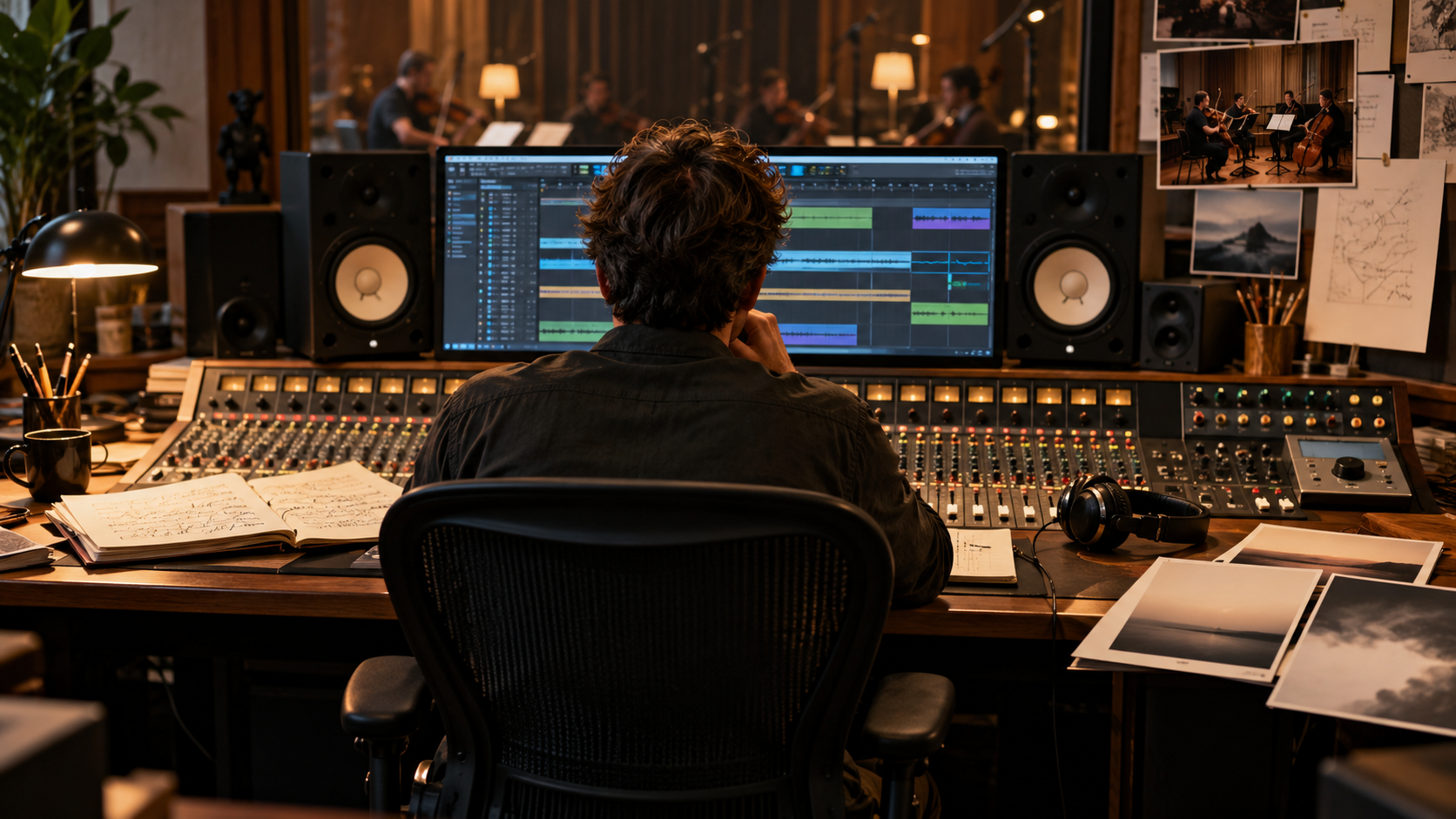
Score albums are usually shaped from music composed to support scenes, but screen cues may be short, layered under dialogue, revised late, or repeated in fragments. For an album, the composer and producers can combine cues, restore openings and endings, choose concert-like sequences, and create a satisfying listening arc. Song compilations face a different task: selecting tracks that represent the story and audience while balancing artist commitments, available masters, genre, runtime, and commercial strategy.
Each track involves rights and credits. The underlying composition and a particular sound recording are separate copyrighted works, often controlled by different parties. Using a recording on screen, placing it on an album, streaming it, pressing vinyl, including lyrics, and marketing with names or artwork can require distinct permissions. New recordings add performer, producer, studio, union, and label agreements. A cleared screen use therefore does not automatically authorize a soundtrack release.
Release metadata connects tracks to artists, writers, publishers, recording owners, identifiers, territories, dates, and deal terms. Deliveries to digital services need accurate resources and rights information; physical editions add manufacturing lead times, artwork, packaging, and inventory. Coordinating the album with a premiere can amplify attention, yet late picture edits or unfinished music may make simultaneous release difficult. Singles can arrive earlier, while deluxe or anniversary editions may follow later. To compare a soundtrack album with its source, listen for cue edits, alternate versions, missing songs, reordered chronology, and music created specifically for the release. Differences are often deliberate rather than errors. The screen soundtrack serves picture, pacing, dialogue, and dramatic perspective; the album must work as a stand-alone listening experience. Its credits and rights statement also reveal the many creative and commercial relationships hidden behind the simple phrase original soundtrack. A practical way to read or discuss Soundtrack Albums is to begin with the basic definition and then identify the choices made in a particular example. A soundtrack album is a separate recorded release associated with a screen or stage work, not a complete copy of its audio track. Next, ask who sets the relevant rules, who performs the work, and which results follow from creative judgment, law, contracts, technology, budget, or production limits. Similar-looking examples can operate differently because their audience, market, format, timing, and agreements are different. Composition rights and sound-recording rights are separate, and screen clearance may not include album distribution. It also helps to distinguish a formal industry category from an informal critical label or one organization's current practice. That separation keeps a memorable anecdote from becoming a false universal rule. Dates and territories matter: tools, distribution systems, audience behavior, and standard agreements change, while older examples can preserve assumptions that no longer apply everywhere. When a claim sounds absolute, compare it with a second kind of source and look for the conditions under which the claim is true. Then trace the process from the visible result back through the less visible decisions, handoffs, and quality checks that produced it. A soundtrack succeeds when it represents the project while functioning coherently for listeners away from the screen. Finally, compare the example with a contrasting case and note which part of the definition still holds. This method keeps the explanation grounded, highlights the people and systems behind the outcome, and leaves room for reasonable disagreement about hybrid or borderline cases.
A soundtrack album is a separate recorded release associated with a screen or stage work, not a complete copy of its audio track.
It may feature score cues, licensed songs, cast recordings, commissioned tracks, or music inspired by the production.
Album producers edit and sequence material for listening, so cue order and duration can differ substantially from the story.
Composition rights and sound-recording rights are separate, and screen clearance may not include album distribution.
Accurate credits, identifiers, territories, deal data, artwork, manufacturing, and platform delivery shape the release plan.
A soundtrack succeeds when it represents the project while functioning coherently for listeners away from the screen.
Explore more "Explainers"
Discover additional explainers across politics, science, business, technology, and other fields. Each explainer breaks down a complex idea into clear, everyday language—helping you better understand how major concepts, systems, and debates shape the world around us.