

On This Day in Pop: May 8, 1886
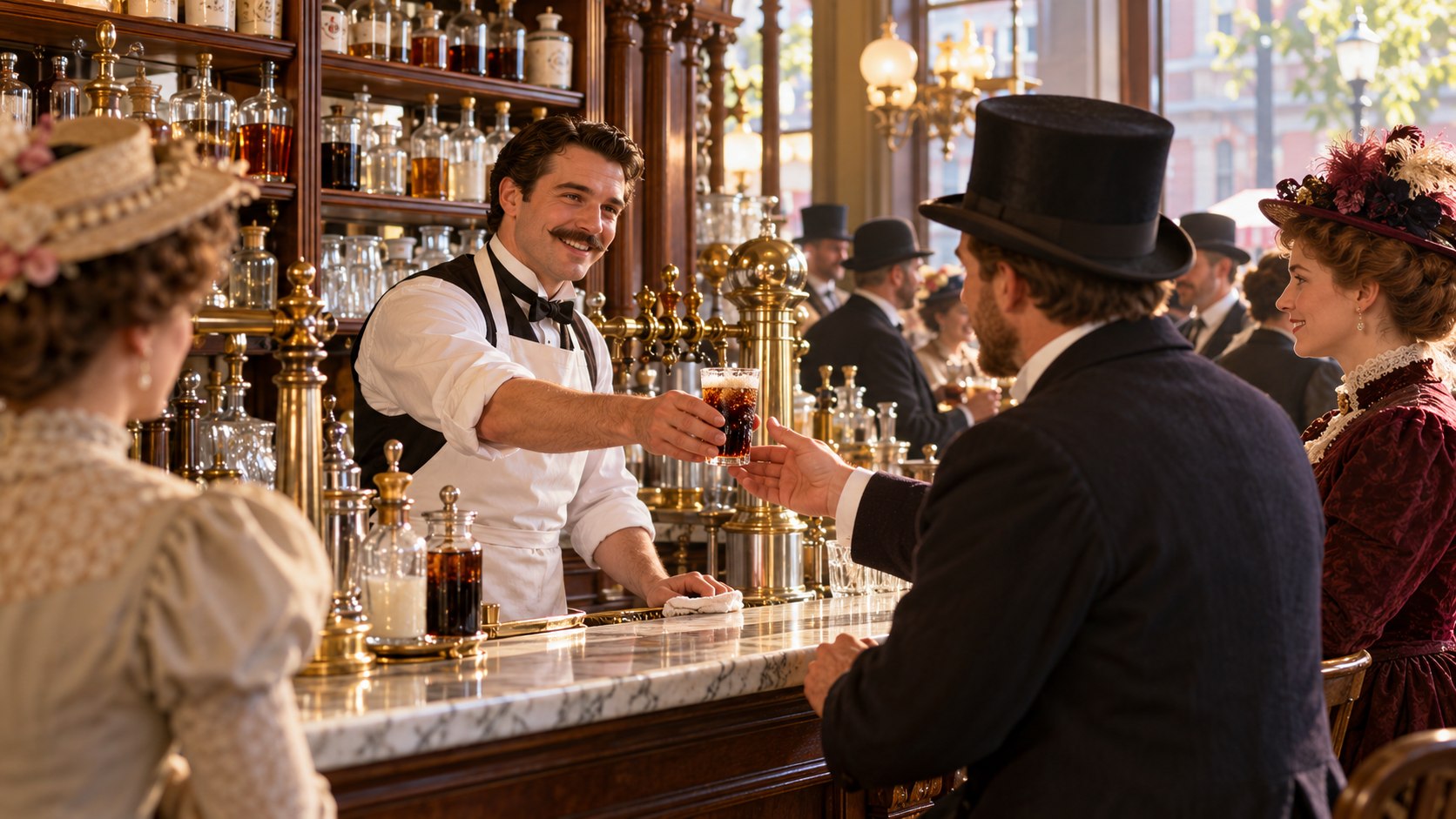
On May 8, 1886, pharmacist John Stith Pemberton brought a jug of his new syrup to Jacobs’ Pharmacy in downtown Atlanta, where it was mixed with carbonated water and sold at the soda fountain for five cents a glass. Pemberton’s bookkeeper, Frank M. Robinson, proposed the name Coca-Cola and wrote it in the flowing script that became the product’s signature. The first-year business was tiny, averaging about nine drinks a day, and the beverage was one of many patent-era tonics and fountain refreshments competing for attention. The first serving was therefore not a corporate launch in the modern sense. It was a local experiment at a pharmacy counter, dependent on customers choosing a new flavor from a menu of drinks made by combining concentrated syrups with soda water.
Soda fountains were social spaces as well as retail counters, and pharmacists frequently created proprietary mixtures. Pemberton had developed earlier medicinal products and promoted the new drink with claims common to the period. Robinson’s naming and advertising instincts proved essential, while businessman Asa Candler gradually acquired control of the formula and built a wider company after Pemberton’s death. Coupons, painted signs, calendars and branded objects helped turn the drink into a familiar name. Bottling later separated consumption from the fountain and allowed distribution across far greater distances. The history also includes ingredients and medical claims that changed over time, making it misleading to treat the 1886 glass as identical in composition, regulation or meaning to the beverage sold around the world today.
Coca-Cola became one of the most recognizable products in global consumer culture, shaped by standardized bottling, refrigeration, wartime distribution and decades of advertising. Its contour bottle, red-and-white visual identity and campaigns entered art, music and public memory far beyond the original recipe. That reach also brought criticism concerning sugar, labor, water use, plastics and the cultural power of multinational brands. The contrast between nine daily glasses and an international system is part of what makes May 8 significant. The anniversary identifies a concrete point of origin without pretending that the finished corporation appeared at once. A pharmacist, a bookkeeper, a soda fountain and a five-cent purchase began a long process in which chemistry, design, franchising, transport and storytelling turned an ordinary glass of flavored carbonated water into a symbol repeatedly adapted to new places and generations. The fountain counter also reminds us that brands begin in particular social settings. Before bottles, vending machines and supermarkets, the drink depended on a person mixing and serving it directly to another person in downtown Atlanta.
Pemberton carried the syrup to Jacobs' Pharmacy in Atlanta on May 8, 1886.
The fountain mixed it with carbonated water and sold each glass for five cents.
Frank Robinson proposed the alliterative name and wrote the early script.
Sales averaged roughly nine drinks per day during the first year.
Asa Candler later consolidated control and expanded advertising and distribution.
Bottling, design and marketing transformed a local fountain drink into a global brand.
Explore more of "On This Day ..."
Discover more events from the same date across news, politics, technology, sports, and other fields. Each link highlights significant moments that shaped history on different fronts.