

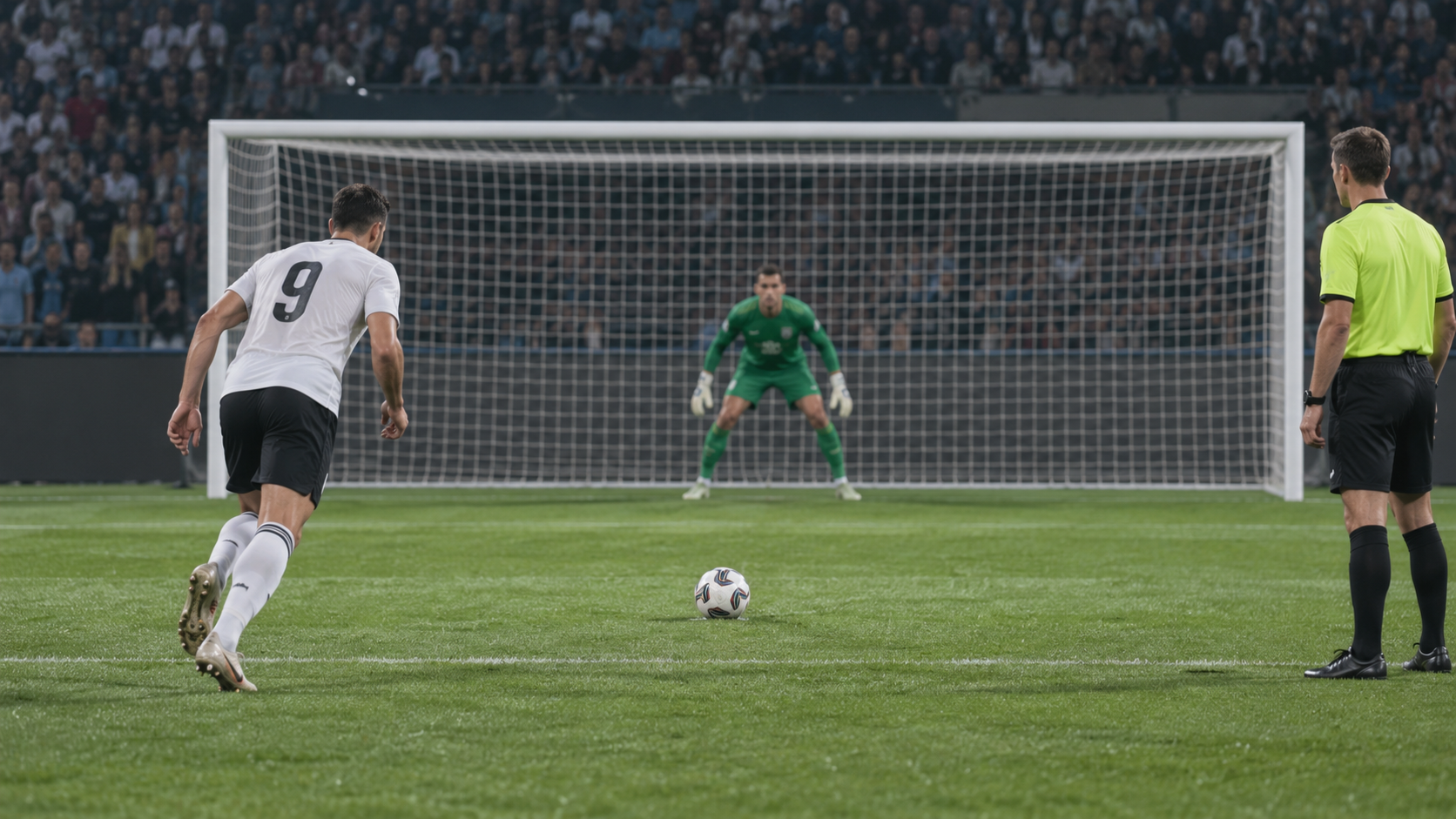
How Soccer Penalty-Kick Feints Are Judged Explainer
A penalty taker may use changes of pace and body movement while running toward the ball. That kind of feinting is part of soccer. The illegal act is pretending to kick after the run-up has been completed, such as stopping at the ball to make the goalkeeper commit before taking the actual kick.
When the prohibited feint occurs, the taker is cautioned for unsporting behavior. The restart depends on whether the ball entered the goal and on other infringements, but the attacking team does not benefit from the illegal deception. The referee must distinguish a fluid stutter from a completed run-up.
The goalkeeper has separate obligations. At the moment the ball is kicked, at least part of one foot must touch, be in line with, or be behind the goal line. Encroachment by players and misconduct by either participant can interact, so Law 14 provides a detailed outcome table.
The boundary is meant to preserve skill without turning the final kicking motion into a trick after the goalkeeper must react. A taker can vary approach speed, pause earlier, or shape the body, but once the approach is complete the kick itself must be one continuous action.
Yes. Feinting during the approach is allowed.
Pretending to kick after the run-up has been completed.
The player is cautioned for unsporting behavior, with the restart set by Law 14.
Explore more "Explainers"
Discover additional explainers across politics, science, business, technology, and other fields. Each explainer breaks down a complex idea into clear, everyday language—helping you better understand how major concepts, systems, and debates shape the world around us.