

How Rugby High-Tackle Sanctions Work Explainer
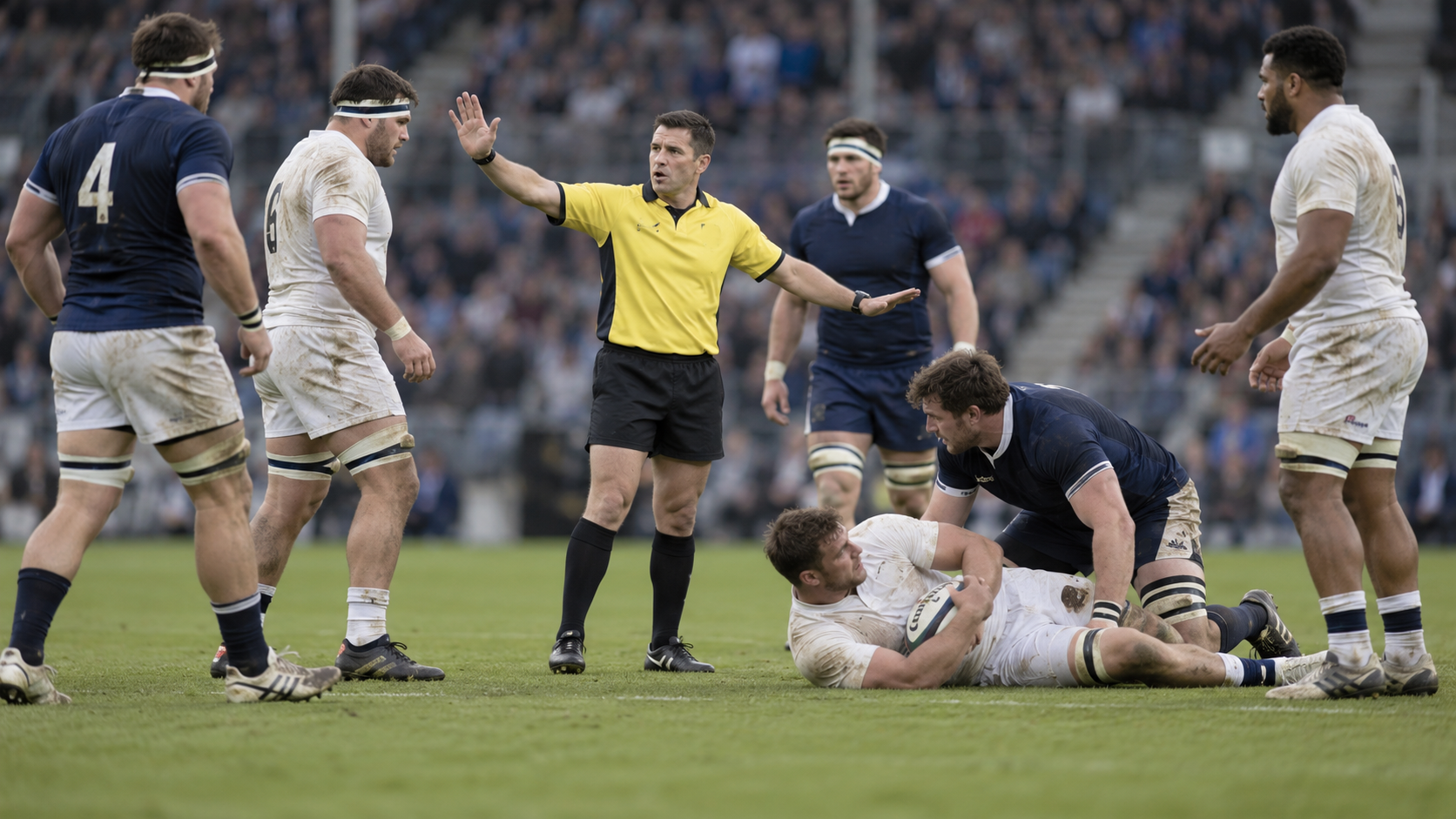
Rugby treats dangerous high contact as foul play, but the sanction is not automatic from a single freeze-frame. Officials first identify whether there was head, neck, or throat contact, whether the tackler committed an illegal action, and how much danger the action created through speed, force, control, and body position.
High danger without mitigation can reach the red-card threshold. Lower danger may bring a yellow card or penalty. Clear and obvious mitigation, such as a sudden significant drop by the ball carrier when the tackler had little time to adjust, can reduce the sanction by one level in applicable cases.
The Head Contact Process aims to make those decisions consistent, but referees retain authority under the foul-play law. Intentional or always-illegal acts are not excused by mitigation. Video officials may help establish the point of contact and the tackler's line of sight.
Tackle-height standards can also differ. Elite rugby uses the shoulder line, while community organizers may adopt a lower line such as the base of the sternum or waist under approved variations. Players and viewers must therefore separate the universal focus on safety from the exact competition rule in force.
No. Officials assess foul play, degree of danger, and any clear mitigation.
A clear, sudden circumstance that materially changed the contact and left little time to adjust may provide mitigation.
No. Approved community variations may use a lower line than elite rugby.
Explore more "Explainers"
Discover additional explainers across politics, science, business, technology, and other fields. Each explainer breaks down a complex idea into clear, everyday language—helping you better understand how major concepts, systems, and debates shape the world around us.